Jaxon Strong: The Boy Who Defied the Odds and Changed Hearts
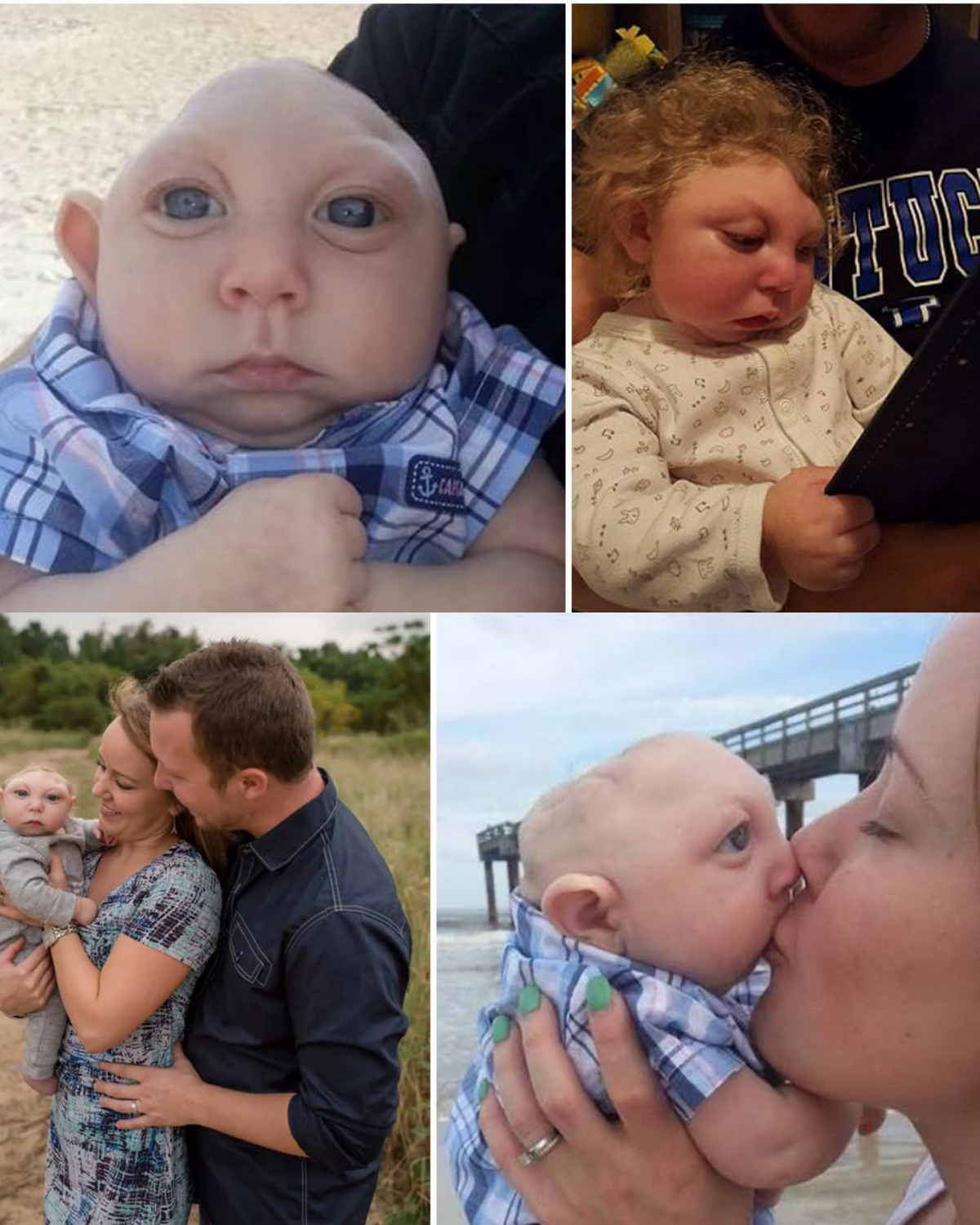
Doctors were not sure Jaxon Buell would survive his first week. He went on to live more than five years.
Jaxon Emmett Buell was born on August 27, 2014, in Orlando, Florida, with microhydranencephaly, an extremely rare brain malformation combining features of microcephaly (an abnormally small brain and skull) and hydranencephaly (parts of the brain replaced by fluid). Roughly 80 percent of his brain never formed. His cerebral cortex was largely absent, his cerebellum severely underdeveloped, and a significant portion of his skull was missing. Doctors initially struggled with the diagnosis, at times suggesting anencephaly or other conditions. Many expected him to live only hours or days, if he survived birth at all.
His parents, Brittany and Brandon Buell of Tavares, Florida, learned of abnormalities during a 17-week ultrasound. They were offered the option of terminating the pregnancy but declined, citing their Christian faith and the medical assurance that the baby was not in pain and that continuing the pregnancy posed no extra risk to Brittany. Jaxon was delivered by cesarean section at 37 weeks. He spent his first three and a half weeks in the neonatal intensive care unit. He experienced frequent seizures, required a feeding tube, and faced repeated health challenges. There was no clear medical roadmap for what his life would look like.
Instead of focusing solely on the prognosis, his parents concentrated on the moments they had. They shared Jaxon’s life online through a Facebook page called “Jaxon Strong.” The page attracted hundreds of thousands of followers worldwide. People watched him smile, make eye contact, roll over, reach for toys, and communicate in his own way through sounds and expressions. He received physical and occupational therapy. Supporters raised funds through a GoFundMe campaign that surpassed $100,000 to help with medical costs. Major outlets including CNN, NBC’s Today, and international media covered his story.
Jaxon celebrated five birthdays. In March 2020 his health declined and he entered hospice care. He died peacefully on April 1, 2020, at age 5 in North Carolina, surrounded by family. His father later said he was holding him in his arms when he passed. The cause was complications from his condition, with his body and organs gradually shutting down.
People first discovered Jaxon because of an extraordinarily rare medical condition. His family wanted them to remember something else: behind every diagnosis was their little boy—a son who was loved every day he was here.
Can stories like Jaxon’s change the way people see children living with severe disabilities?
Yes. Stories like Jaxon’s humanize conditions that statistics and clinical descriptions often leave abstract or frightening. When the public sees a child smiling, making eye contact, responding to parents, and being fiercely loved, it becomes harder to reduce that child to a list of deficits or a “poor prognosis.” Jaxon’s parents repeatedly emphasized that, to them, he was simply Jaxon—not a medical case. Their decision to share ordinary moments of joy alongside the challenges invited others to see capability, personality, and worth where society sometimes sees only limitation.
Such narratives can reduce stigma, encourage families facing similar diagnoses to seek support rather than isolation, and prompt broader conversations about the value of every life. They remind viewers that quality of life is not measured solely by typical developmental milestones or expected lifespan, but by connection, presence, and love. While no single story erases systemic barriers or medical complexities, personal accounts like Jaxon Strong’s have repeatedly shown the power to shift perspectives—from pity or fear toward empathy, respect, and recognition of shared humanity.
Sources
- Wikipedia: Jaxon Buell
- Wikipedia: Microhydranencephaly
- TODAY / NBC: Coverage of Jaxon’s life and 2020 death
- CNN: “Baby born without complete skull” reports
- People magazine and other contemporary news accounts of his passing
- Boston Children’s Hospital evaluations and parental interviews reported in 2015–2016 media