Katie Stubblefield: The Youngest U.S. Face Transplant Recipient and a Story of Remarkable Resilience
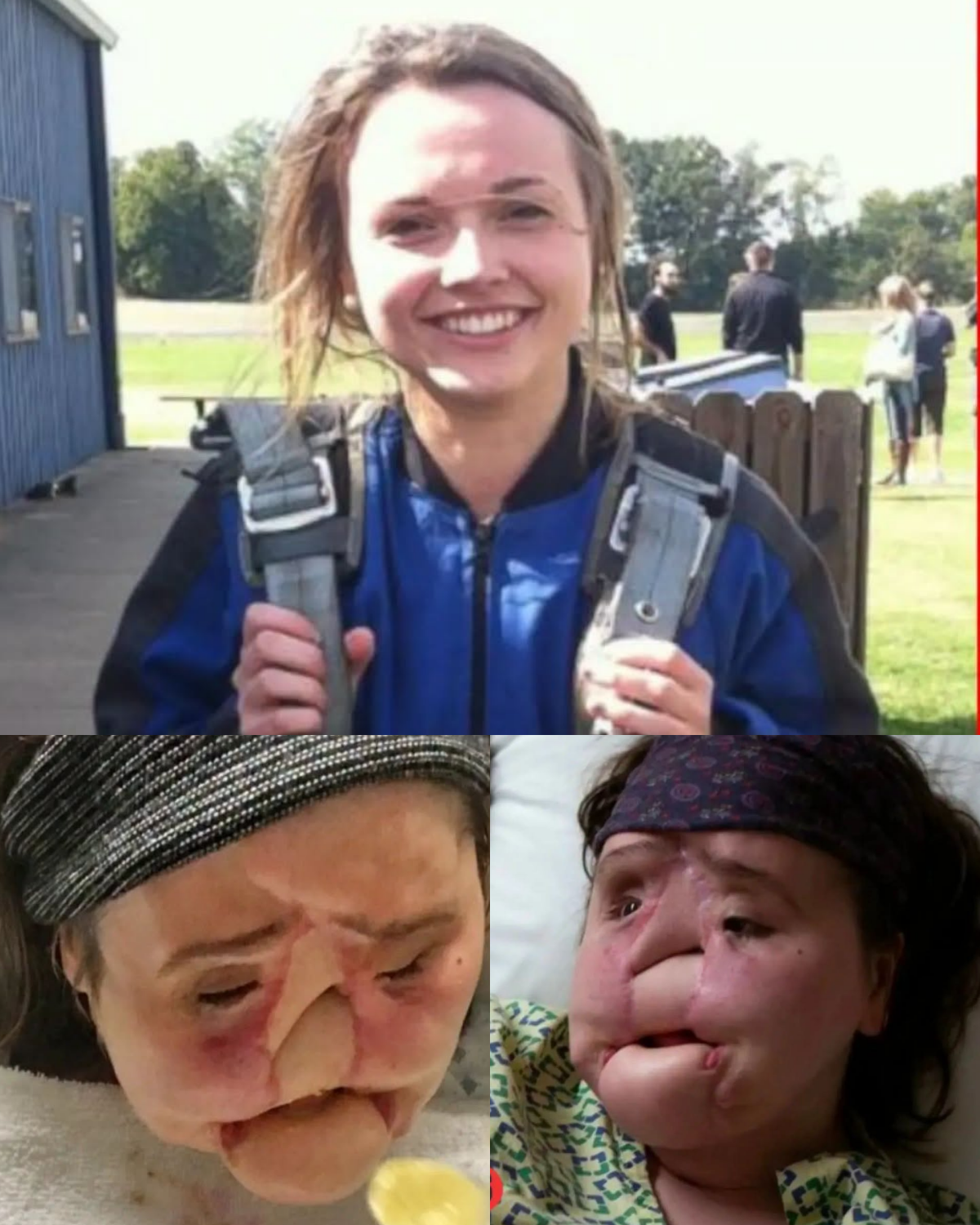
In 2017, Katie Stubblefield became the youngest person in the United States to undergo a face transplant. At just 21 years old, she received a new face at Cleveland Clinic after suffering devastating facial trauma as a teenager. Her case became one of the most closely documented face-transplant procedures in medical history and was later featured on the cover of National Geographic.
Katie arrived at Cleveland Clinic after an injury that destroyed much of her face, including portions of her nose, mouth, jaws and forehead, and severely affected her vision. Before the transplant, surgeons performed numerous reconstructive operations in an effort to restore basic functions. Cleveland Clinic later reported that she underwent more than 17 surgeries at the institution before receiving the transplant.
For Katie, the problem was about far more than appearance. Her injuries affected essential functions such as eating, speaking, breathing and interacting with the world around her. Doctors ultimately concluded that a face transplant offered the best opportunity to significantly improve both her facial function and quality of life.
The operation took place in May 2017 and lasted approximately 31 hours. It involved a huge multidisciplinary team, including surgeons, anesthesiologists, ophthalmologists, dentists, psychiatrists, infectious-disease specialists, therapists and nurses. Cleveland Clinic described the procedure as its first total face transplant and said it involved replacement of effectively 100 percent of the patient’s facial tissue.
The operation itself became even more complicated than originally planned. Surgeons had initially expected to perform a partial transplant, preserving more of Katie’s existing facial tissue. During the procedure, however, they determined that using more of the donor’s face would provide a better functional and aesthetic result. The decision required the surgical team and Katie’s parents to carefully weigh additional risks against the potential benefits.
The donor was Adrea Schneider, a 31-year-old woman whose family agreed to donate her face as well as other organs. National Geographic reported that Adrea’s heart, liver, lungs, kidneys and corneas were also donated, while her uterus was used for medical research. Her grandmother, Sandra Bennington, made the difficult decision to allow Adrea’s face to be donated after learning that it could give another young person an opportunity to rebuild her life.
Following the transplant, Katie faced another long and demanding stage: rehabilitation. A face transplant does not instantly restore normal movement or sensation. The transplanted nerves and tissues need time to reconnect and adapt, while the recipient must take lifelong immunosuppressive medication to reduce the risk of rejection.
Over time, Katie gradually regained facial movement. National Geographic documented her ability to close her eyes, wrinkle her nose, pucker her lips and smile more naturally as she recovered. Her transplanted face also gradually became integrated with her own underlying facial structure, creating a unique appearance that was neither simply her original face nor the donor’s face.
Her journey was also about rebuilding confidence and independence. Katie had to learn new ways of communicating and performing everyday activities while adapting to her changed appearance and physical abilities. She expressed hopes of attending college and eventually working as a counselor or teacher. One of her greatest wishes was simply to be able to walk outside without people staring at her.
National Geographic spent more than two years documenting Katie’s journey, gaining unusual access to her treatment and the Cleveland Clinic surgical team. The resulting story appeared in the September 2018 issue and brought worldwide attention to the possibilities and challenges of modern face transplantation. At the time of her operation, Katie was the 40th known face-transplant recipient in the world and the youngest in the United States.
Katie Stubblefield’s case represents more than a remarkable surgical achievement. It demonstrates how reconstructive medicine can go beyond repairing physical injuries to helping patients regain essential functions, social confidence and a sense of identity. At the same time, her experience highlights the extraordinary physical and emotional commitment required from both patients and their families.
Her story remains a powerful example of resilience—not because her life suddenly became easy after the transplant, but because she continued moving forward through years of surgeries, rehabilitation and uncertainty. Her new face gave Katie an opportunity to face the world again, while her journey helped show what may be possible when medical science, organ donation and human determination come together.
Sources
- National Geographic — “How a Transplanted Face Transformed Katie Stubblefield’s Life”: detailed account of Katie’s injury, transplant, donor Adrea Schneider and recovery.