Juliana Wetmore: The Extraordinary Story of a Girl Who Defied the Odds
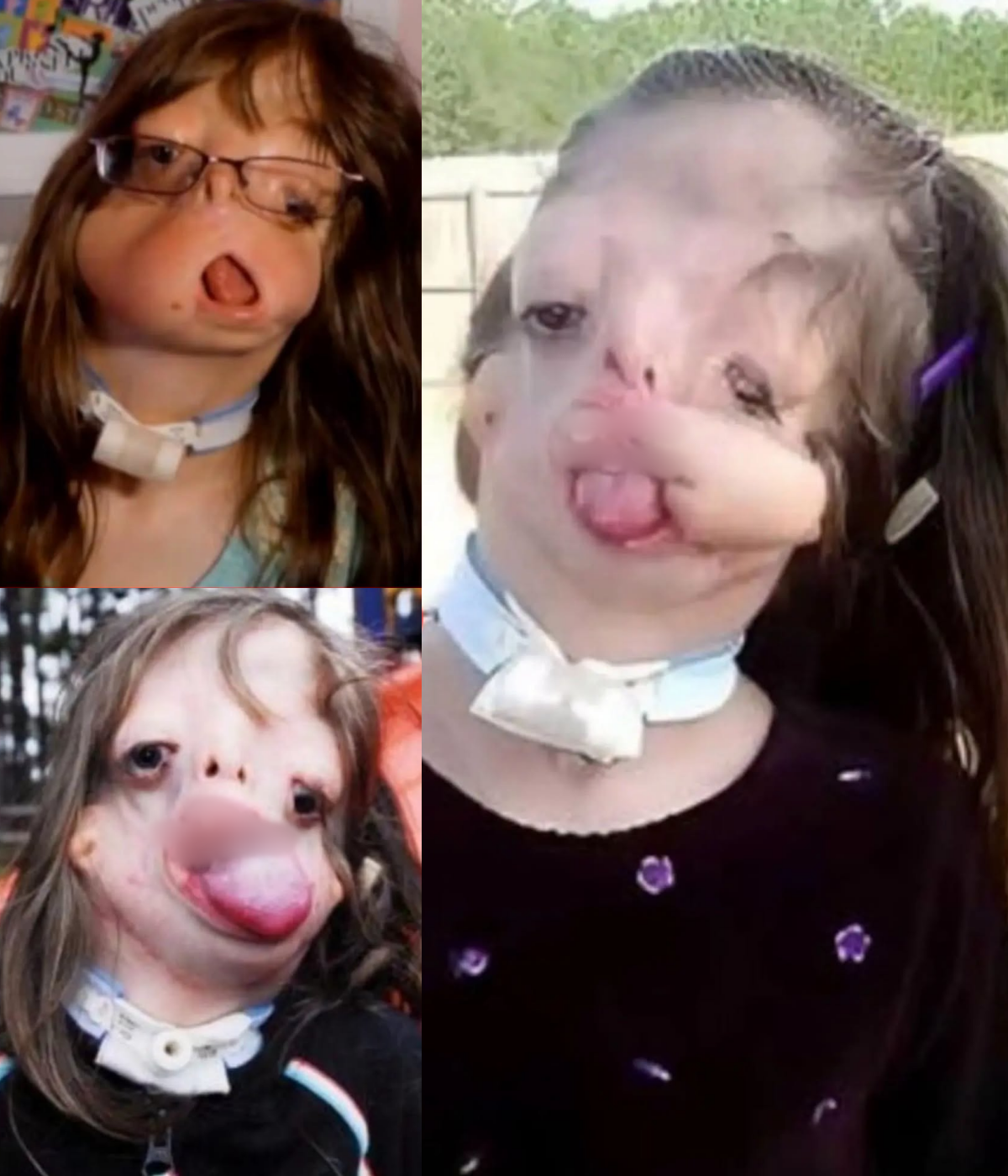
Juliana Wetmore was born in Jacksonville, Florida, in 2003 with an exceptionally severe form of Treacher Collins syndrome, a rare genetic disorder that affects the development of the bones and tissues of the face. Her case attracted international attention because reports at the time estimated that she was missing roughly 30–40% of her facial bones, including structures involving the upper jaw, cheekbones and eye sockets.
Treacher Collins syndrome can vary considerably from one person to another. According to the U.S. National Library of Medicine’s MedlinePlus Genetics, people with the condition may have underdeveloped cheekbones and jaw, abnormalities of the ears and eyelids, hearing loss, and, in severe cases, breathing difficulties caused by a restricted airway. Importantly, people with Treacher Collins syndrome usually have normal intelligence. The condition is associated with genetic variants in genes including TCOF1, POLR1C and POLR1D.
For Juliana, the physical challenges began immediately after birth. The severity of her facial abnormalities created major difficulties with breathing and eating. Contemporary reports described her as requiring a tracheostomy to help maintain her airway and a feeding tube for nutrition. These procedures were not simply cosmetic measures; they were essential parts of keeping her healthy and improving basic functions.
Over the following years, Juliana underwent an extraordinary number of reconstructive procedures. By the age of 11–12, reports stated that she had undergone approximately 45 facial surgeries. Doctors worked to reconstruct and support different parts of her face while addressing functional problems involving breathing, eating, hearing and vision. Her treatment illustrates how severe craniofacial conditions can require years of multidisciplinary medical care rather than a single operation.
Yet Juliana’s story was never only about surgery.
Despite the challenges associated with her condition, she attended school, communicated using sign language and participated in activities with other children. Reports from her childhood emphasized that her intellectual development was normal, consistent with medical information about Treacher Collins syndrome. Her experiences also demonstrated an important distinction between physical appearance and cognitive ability: a condition that dramatically affects facial development does not necessarily affect a person’s intelligence or personality.
Her family also became an important part of the story. Thom and Tami Wetmore publicly shared Juliana’s journey in an effort to encourage greater understanding and acceptance of people with visible differences. Rather than allowing her appearance to define her, the family emphasized her personality, interests and individuality.
That message became even more meaningful when the Wetmores adopted Danica, a girl from Ukraine who also had Treacher Collins syndrome, although her condition was considerably less severe. Reports published in 2015 said Danica had spent much of her childhood in a Ukrainian orphanage before the Wetmores brought her into their family. The two girls shared an unusual experience that few others could fully understand.
The Wetmores’ decision to adopt Danica showed how Juliana’s experience had affected the entire family. Her parents had already learned firsthand how challenging life with a rare craniofacial condition could be. Bringing another child with the same condition into their home gave Juliana a sister who could relate to some of the difficulties she faced.
Juliana’s story has often been described in sensational terms because of the severity of her facial differences. However, focusing only on phrases such as “born without a face” can obscure the person behind the diagnosis. Medically, Treacher Collins syndrome is a disorder of craniofacial development—not a condition that determines someone’s intelligence, character or worth.
More than a remarkable medical case, Juliana Wetmore’s childhood became a story about resilience, family and inclusion. Her long series of treatments showed the possibilities of modern reconstructive medicine, while her education and family life challenged assumptions about people who look different. Her journey also offered a broader lesson: a person’s appearance may be the first thing others notice, but it does not tell the full story of who that person is.
Sources : U.S. National Library of Medicine, covering symptoms, genetics, hearing loss, breathing complications and normal intelligence.