THE “MASK BOY”: HOW TWO SURGERIES GAVE A CHINESE CHILD A SECOND CHANCE
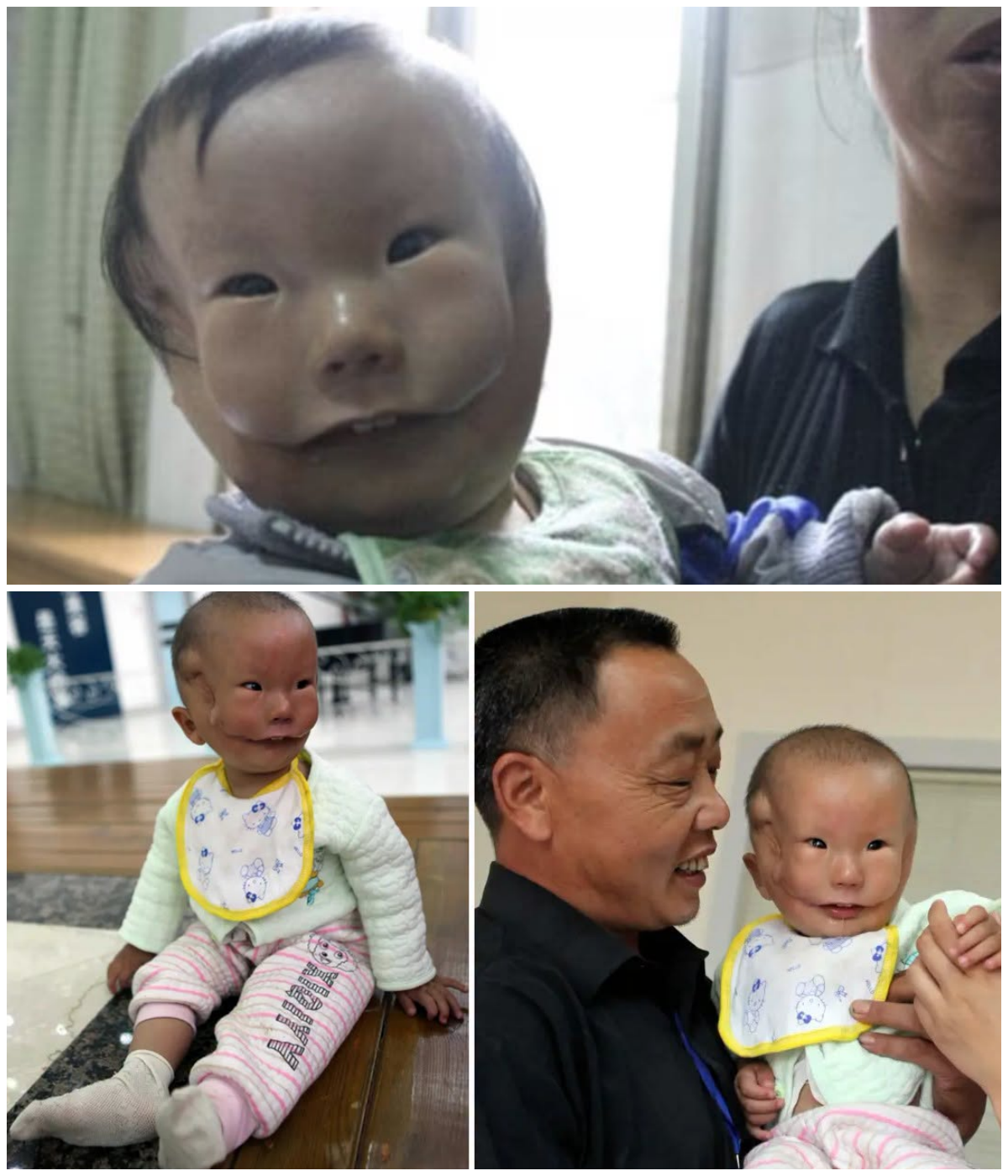
When Zhao Huikang was born, strangers saw a face they did not understand. His mother saw her son. Years later, his story remains a powerful reminder of what compassion can mean for a child born with a rare facial difference.
In 2009, in China’s Hunan Province, a little boy named Zhao Huikang, affectionately known as Kang Kang, was born with an extraordinarily rare congenital condition called a transverse facial cleft.
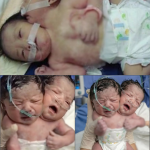
The condition caused deep clefts to extend from both sides of his mouth toward his cheeks and ears, giving his face an appearance that led some media outlets to call him the “mask boy.”
But there was nothing frightening about the child himself.
He was simply a little boy born with a rare medical condition that required highly complex reconstructive surgery.
“MY WHOLE BODY FELT NUMB”
For his mother, Yi Lianxi, the first moments after Kang Kang’s birth were overwhelming.
She had undergone several ultrasound examinations and a Doppler ultrasound during pregnancy, but according to reports, none had revealed a facial abnormality. When she finally insisted on seeing her newborn son, she was devastated by what she saw.
She later recalled that her entire body felt numb.
“I saw him crying and I cried too,” she said, according to reports from Changsha Evening News.
The shock was followed by another painful reality.
The family lived in a rural area and struggled financially. Instead of receiving understanding from everyone around them, they reportedly faced staring and cruel comments because of their son’s appearance.
Yet they never considered abandoning him.
For Kang Kang’s parents, there was never a question of whether he deserved their love.
He was their child.
FAR MORE THAN A SKIN-DEEP CONDITION
Doctors soon discovered that Kang Kang’s condition was considerably more complex than it appeared from the outside.
According to Dr. Wang Duquan, who treated the boy at No. 163 Military Hospital in Changsha, the abnormalities affected not only his facial soft tissues but also deeper structures, including the temporal bone, cheekbones, sphenoid bone and upper jaw.
That made reconstruction exceptionally difficult.
A transverse facial cleft is different from the more familiar cleft lip or cleft palate. It is a rare congenital facial anomaly involving abnormal development of facial structures, and it may occur alongside other craniofacial abnormalities.
Medical literature has estimated its occurrence at approximately one case per 60,000 to 300,000 live births, although the exact frequency is difficult to establish because of its rarity.
For Kang Kang, correcting the appearance of his face was not simply a cosmetic procedure.
Surgeons needed to reconstruct damaged and displaced tissues while also addressing underlying bone abnormalities.
A FAMILY THAT COULD NOT AFFORD THE OPERATION
The treatment came with a price his family could not easily afford.
Reports at the time estimated that the required surgeries could cost 300,000 to 400,000 yuan, an enormous amount for the family.
Then people who had heard about Kang Kang’s story began to help.
Media coverage brought attention to the family, and public donations eventually helped make surgery possible.
In 2010, Kang Kang underwent two major reconstructive operations at the military hospital in Changsha.
The first took place on May 19, followed by a second operation on September 1. Doctors reported that both procedures were successful.
After the surgeries, the dramatic clefts on both sides of his face were significantly reduced, giving the little boy a much more typical facial appearance.
For his parents, the photographs taken afterward represented something much more meaningful than an improved appearance.
They represented hope.
BUT THE SURGEONS COULD NOT PROMISE THE FUTURE
Even after the successful operations, doctors knew Kang Kang’s journey was far from over.
He was still a growing child.
Because his facial bones were affected, doctors explained that they would need to wait years to determine how his face would develop as he grew. Reports suggested it could take roughly 10 years before doctors could fully assess whether his facial bones would grow normally after reconstruction.
That uncertainty is common in complex pediatric craniofacial reconstruction.
A successful operation can dramatically change a child’s appearance and function, but growth can introduce new challenges and sometimes require additional procedures.
THE CHILD BEHIND THE PHOTOGRAPHS
Kang Kang’s photographs eventually spread far beyond China.
People around the world were fascinated by his unusual appearance, and headlines described him as having a “mask” or even “two faces.”
But those descriptions risked reducing a real child to the appearance of his medical condition.
Behind the photographs was a boy whose intelligence was reportedly considered normal and whose family wanted nothing more than the opportunity for him to grow up without being defined by his face.
And that may be the most important part of his story.
The surgeries could reconstruct bones and soft tissue.
They could close the clefts.
They could change the way strangers saw him.
But his parents had already understood something that medicine could not measure:
Kang Kang was never his condition.
He was their son.
WHERE IS KANG KANG TODAY?
Unfortunately, reliable public information about Huikang’s life after childhood is extremely limited.
Reports published years after his surgeries continued to circulate his childhood photographs, but they did not provide a verified update on his health or appearance as he grew older. A 2017 report specifically noted that his later progress remained unclear.
That uncertainty is important to acknowledge rather than filling the gap with speculation.
What is known is that his family refused to give up when the odds seemed overwhelming.
They sought treatment.
Strangers helped raise the money.
Surgeons took on an extraordinarily difficult reconstruction.
And a little boy who had once been photographed because people could not look away from his face was given a chance to grow up beyond the diagnosis.
A LESSON THAT GOES BEYOND MEDICINE
Kang Kang’s story began with a rare birth defect.
It became a story about surgery, medical skill and public generosity.
But ultimately, it is also a story about how society treats people who look different.
The world first noticed Kang Kang because his face was unusual.
His family saw something completely different.
They saw a child who deserved protection, treatment, affection and a future.
Perhaps that is the part of his story worth remembering most.
Before we judge a face, we can choose to see the person behind it.
Before we stare, we can choose kindness.
And before we call someone “different,” we can remember that every child deserves to be seen first as exactly what Kang Kang was from the beginning:
someone’s beloved son.
SOURCES
- detikHealth, “Cacat Lahir Langka, Wajah Bocah Ini Seperti Pakai Topeng” — details on Kang Kang’s diagnosis, family, surgeries, underlying bone involvement and the uncertainty surrounding his later development.
- Medical Daily, “Chinese Boy Born With ‘Two Faces’ Undergoes Surgical Procedures To Grow Facial Bones Normally” — details on the transverse facial cleft, maternal account, two 2010 surgeries and medical concerns about future facial growth.
- Plastic Surgery Practice — additional reporting on Kang Kang’s condition and reconstructive operations.
- Indian Journal of Plastic Surgery, cited in contemporary reporting — medical background concerning transverse facial cleft and its rarity.
Editorial note: Reliable sources confirm Kang Kang’s birth, diagnosis, family story and two successful operations in 2010. However, there is no sufficiently reliable recent source establishing his current health or appearance, so this article does not speculate about his life after childhood.