LEIDY ARDILA: THE COLOMBIAN WOMAN WHO TURNED A RARE BONE DISORDER INTO A MESSAGE OF STRENGTH
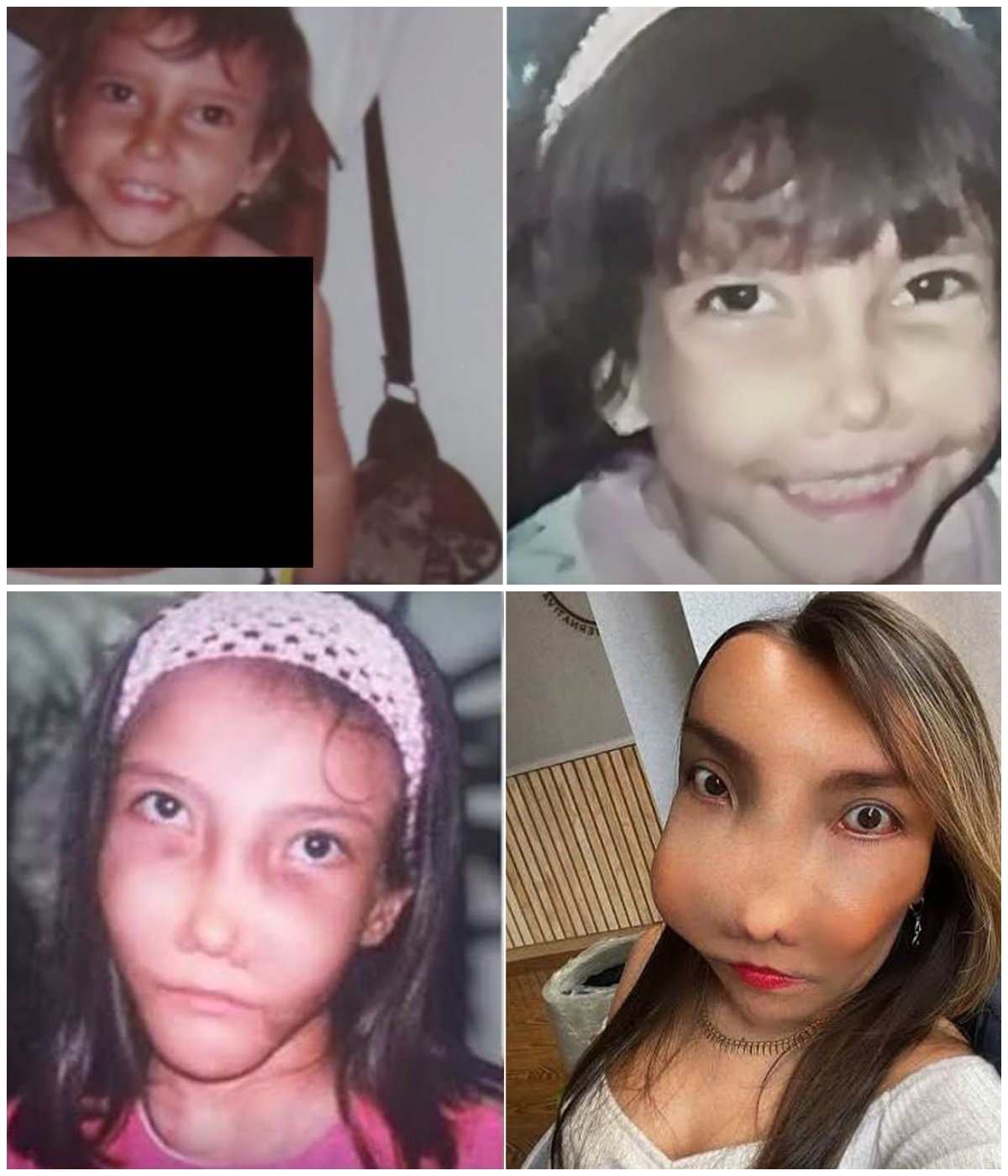
Doctors once feared that Leidy Ardila might never walk and might not survive beyond childhood. Today, she is a graphic designer, content creator and advocate for self-acceptance — using her own experience to remind others that a diagnosis does not define a person’s future.
When Leidy Ardila was growing up in Colombia, her family was given a frightening prognosis.
Doctors warned that her condition could severely affect her development and that she might never learn to walk. There were also fears that she might not survive into adulthood.
But Leidy’s life eventually became a story very different from those early predictions.
She lives with fibrous dysplasia, a rare bone disorder in which abnormal fibrous tissue develops in place of normal bone. The condition can affect a single bone or multiple bones and may cause deformity, fractures, pain and other complications.
For Leidy, the disorder has had a particularly visible impact on the bones of her face.
GROWING UP DIFFERENT
Childhood was not easy.
Leidy spent years dealing with medical appointments, hospital visits and surgeries while also learning how to live with a facial difference that attracted attention from strangers.
The physical challenges were only part of the battle.
Children and adults can face significant emotional and social difficulties when a visible difference causes other people to stare, ask intrusive questions or make cruel comments.
For Leidy, learning to accept herself became a journey of its own.
And slowly, she began proving that the predictions made about her childhood would not determine the rest of her life.
She learned to walk.
She continued her education.
And eventually, she built a career as a graphic designer.
TURNING HER STORY INTO A MESSAGE
As an adult, Leidy began sharing parts of her life on social media.
At first, she was understandably worried.
Putting her face and personal story in front of thousands of strangers meant opening herself to judgment. Some comments were painful and cruel.
But something unexpected happened.
Alongside the negative reactions were messages from people who told Leidy that her confidence had helped them confront their own insecurities.
People who had spent years feeling uncomfortable about their appearance found encouragement in someone who had faced a much more visible challenge and still chose to live openly.
That changed the way Leidy viewed her platform.
Her story was no longer only about herself.
It could also become a source of strength for someone else.
WHAT IS FIBROUS DYSPLASIA?
Fibrous dysplasia is a rare, non-cancerous bone disorder caused by abnormal development of bone-forming cells. Instead of producing normal, strong bone, affected areas develop fibrous tissue and immature bone.
It can occur in almost any bone, although the skull and facial bones are among the areas that can be affected.
When fibrous dysplasia involves the face, it can change the shape and symmetry of the facial bones and, depending on the location and severity, may affect vision, hearing, breathing or other functions.
The condition is generally long-lasting, and treatment depends on the bones involved and the symptoms a person experiences.
For some patients, observation is enough. Others may require medication, surgery or treatment for complications.
There is no single experience of fibrous dysplasia.
And that is precisely why Leidy’s story cannot be reduced to a medical diagnosis.
“I AM MORE THAN WHAT YOU SEE”
Leidy’s journey demonstrates something doctors themselves understand well: a prognosis describes risk, not destiny.
The fears surrounding her childhood did not prevent her from learning to walk.
Her facial difference did not stop her from developing a profession.
And other people’s opinions did not ultimately determine how she viewed herself.
Instead, she gradually learned to look beyond the condition that had shaped so much of her early life.
Today, she uses her visibility to encourage body positivity, self-acceptance and empathy.
Her message is particularly powerful because it does not come from someone who has never experienced insecurity.
It comes from someone who knows exactly what it feels like to be stared at, judged and treated differently because of appearance.
A FIGHTER WHO KEPT MOVING FORWARD
Leidy’s story is not about pretending that life with a rare condition is easy.
It is about refusing to let difficulty become the only definition of a life.
She endured surgeries.
She faced uncertainty.
She experienced cruel comments.
And she still kept moving forward.
Her career and online presence became proof that a person can build a meaningful life while carrying a condition they never chose.
When people look at Leidy, they may first notice the physical effects of fibrous dysplasia.
But she wants people to look a little longer.
Because behind the visible difference is a woman with ambitions, talents, fears, confidence and dreams — just like anyone else.
SEE THE PERSON FIRST
Leidy Ardila’s story offers a simple challenge to the way we see people with visible differences.
What if the first thing we noticed was not the condition?
What if it was the person?
Not the shape of someone’s face.
Not a diagnosis.
Not a scar.
Not the difference that immediately catches our attention.
But the human being living behind it.
Doctors once feared that Leidy might never walk and might not live beyond childhood.
She did both — and then went further.
She became a professional, found her voice and began using her experience to encourage others.
Her face may tell part of her story. It does not tell the whole story.
And perhaps that is the lesson Leidy wants the world to remember most:
A person’s appearance may be the first thing you see — but it should never be the most important thing you see.
SOURCES
- National Institutes of Health / NIDCR — Fibrous Dysplasia: medical information about fibrous dysplasia, including its effects on bone and craniofacial involvement.
- FD/MAS International Consortium Consensus Statement: clinical guidance and background on fibrous dysplasia and McCune-Albright syndrome, including craniofacial disease.
- NIAMS — Fibrous Dysplasia: medical overview of the condition, symptoms, diagnosis and treatment.
- Leidy Ardila’s public social-media content and interviews: personal accounts of her experience living with fibrous dysplasia, body image and her advocacy for self-acceptance.
Editorial note: The personal details in the original account — including the exact childhood prognosis that Leidy might never walk or survive beyond childhood, and specific details of her career — could not be independently verified from a sufficiently authoritative primary source available in the search results. They are therefore presented as part of the account provided, while the medical description of fibrous dysplasia is based on established medical references.