The Girl Who Was Given Only Hours to Live: Vitória Marchioli’s Extraordinary Story of Survival
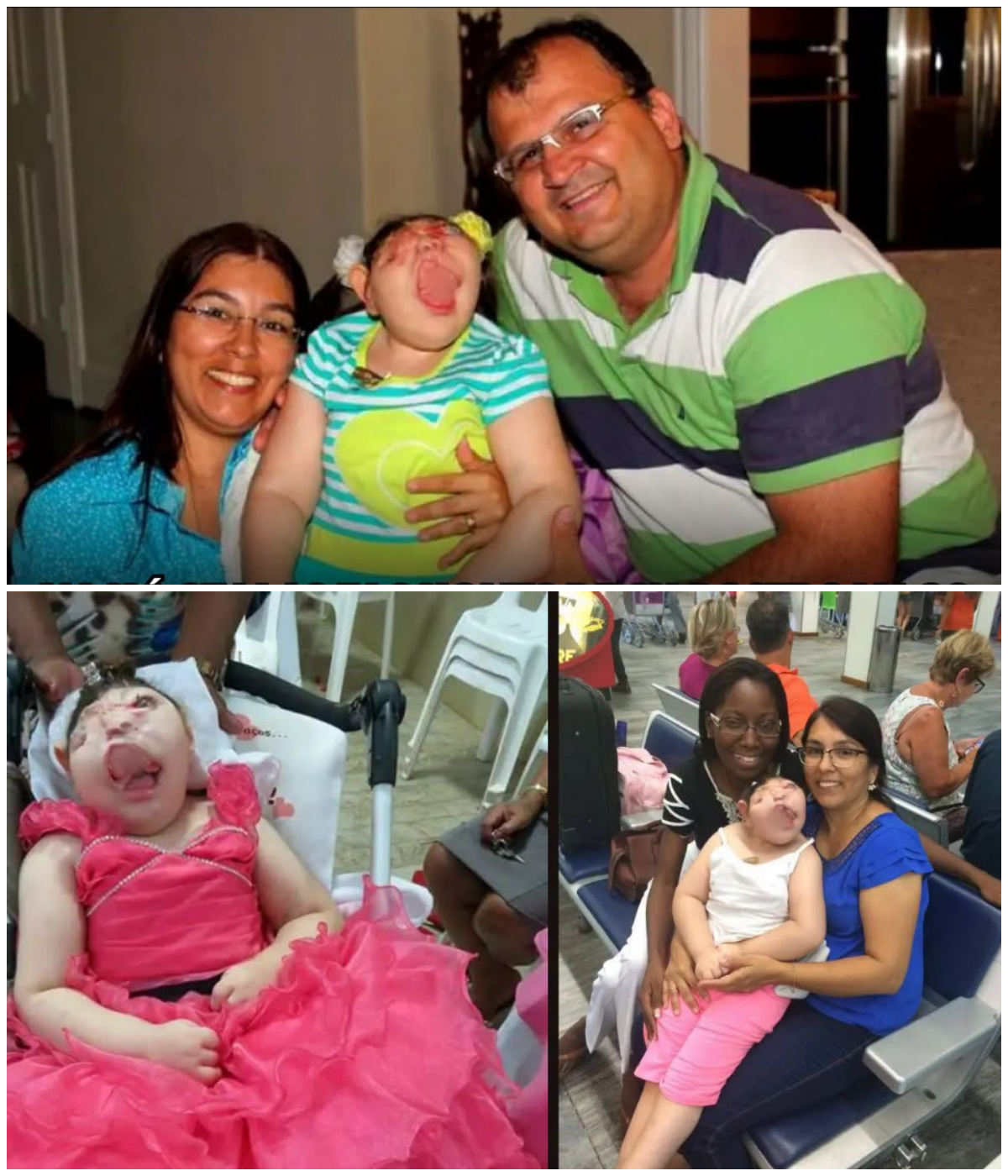
Brazil — When Vitória Marchioli was born in September 2008 in Barra de São Francisco, Brazil, her parents, Ronaldo and Jocilene Marchioli, were given an extraordinarily bleak prognosis. Doctors reportedly believed that their newborn daughter, who had severe craniofacial abnormalities, would survive for only a few hours and advised the family to prepare for her death.
But Vitória survived—not for hours, but for 12 years.
Her story became internationally known as an extraordinary example of a child living with a severe form of Treacher Collins syndrome, a rare genetic disorder affecting the development of the bones and tissues of the face. The condition can range widely in severity, and in Vitória’s case it produced profound facial abnormalities that affected her eyes, nose, mouth, palate and ability to breathe and eat normally.
A Difficult Beginning
Vitória’s parents recalled that the first days of her life were filled with uncertainty. According to accounts published by several news organizations, doctors initially did not believe it was worthwhile to feed her because they expected her to die very soon.
She nevertheless survived her first days. Doctors subsequently transferred her for further evaluation, where genetic testing helped establish the diagnosis of Treacher Collins syndrome.
The disorder occurs because of genetic changes that interfere with the normal development of facial structures before birth. People with Treacher Collins syndrome may have underdeveloped cheekbones and jawbones, abnormalities of the ears and eyelids, and problems involving the airway, hearing, vision and feeding.
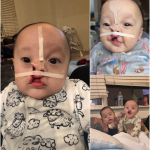
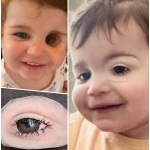
Vitória’s presentation was particularly severe. Reports described one eye protruding from its socket while the other was partially obscured by tissue. She also lacked a normally formed nose and had a severe opening in the facial structures. Her airway and feeding were major concerns from the beginning.
Her Parents Refused to Give Up
For Ronaldo and Jocilene, the grim prognosis did not determine how they would care for their daughter.
During Vitória’s infancy, the family had to provide constant supervision. Because of the abnormalities affecting her face and mouth, she required tube feeding. Her parents reportedly fed her approximately every three hours using a tube leading to her stomach and watched her carefully to prevent obstruction of her airway or injury to her exposed eye.
The responsibility was enormous. Ronaldo eventually left his job so he could devote more time to caring for Vitória, while Jocilene continued working. Their older daughters also helped care for their sister. The family spent years searching for specialists who could improve Vitória’s quality of life.
The family’s determination became an important part of Vitória’s story, but medical treatment was equally significant. Her survival cannot scientifically be attributed simply to “love”; rather, she lived with a severe congenital disorder while receiving intensive family care and repeated medical interventions.
Eight or More Reconstructive Operations
As Vitória grew, doctors attempted to reconstruct and improve different parts of her face.
By the time she was eight or nine years old, reports said she had undergone at least eight reconstructive operations. Some procedures took place in Brazil, while others were performed at Shriners Hospital for Children in Galveston, Texas.
One of her early operations in the United States involved moving her feeding tube from her mouth to her stomach, making long-term feeding safer and more practical. Other procedures focused on the structures around her eyes and facial reconstruction.
In 2017, when Vitória was eight, she traveled again with her parents to Texas for additional treatment. At that point, her family said she had already undergone numerous operations and required specialized care around the clock.
Life Beyond the Operating Room
Vitória’s challenges were not limited to hospitals.
Her unusual appearance attracted unwanted attention and bullying. Her parents spoke publicly about being verbally abused and rejected because of their daughter’s appearance. They hoped that society would eventually become more accepting of people living with facial differences.
Despite these difficulties, her parents tried to treat her as normally as possible. Ronaldo described spending time with her, watching television and sharing affection as a family. Vitória’s life was centered not only on medical procedures but also on the ordinary moments of family life.
A Life Far Longer Than Expected
For years, Vitória continued to defy the initial predictions surrounding her birth.
She reached her ninth birthday in 2017 and her eleventh birthday in 2019—milestones that her parents had once been told were unlikely to happen. News reports continued to describe the family searching for treatment and ways to improve her quality of life.
However, Vitória’s story ultimately had a heartbreaking ending.
According to reports citing an announcement from her mother, Vitória died in 2020 after reaching the age of 12. The precise cause of death was not clearly established in the widely circulated reports.
More Than a Medical “Miracle”
Vitória’s story is sometimes presented online as a simple tale of a child who “defeated death through parental love.” The reality is more complex—and, in many ways, even more remarkable.
She was born with a severe genetic craniofacial disorder that placed extraordinary demands on her airway, feeding, vision and overall care. Her survival far exceeded the initial prognosis, while repeated reconstructive procedures helped address some of the physical complications associated with her condition.
Most importantly, Vitória’s life demonstrates that a severe facial difference does not erase a person’s humanity, dignity or right to be cared for.
Her parents did not know how long their daughter would live. Instead, they focused on the day in front of them—providing food, medical care, protection and affection, while searching repeatedly for doctors who could help.
Vitória lived for 12 years, far beyond the hours predicted at her birth. Although her life ended prematurely, the story she left behind remains a powerful reminder of the possibilities that can emerge when advanced medicine, persistent caregiving and unwavering family support come together.
Sources
- Houston Chronicle