🚨 Lindsay Clancy Trial Heads Into Final Arguments as Prosecutors Challenge Her Psychosis Defense
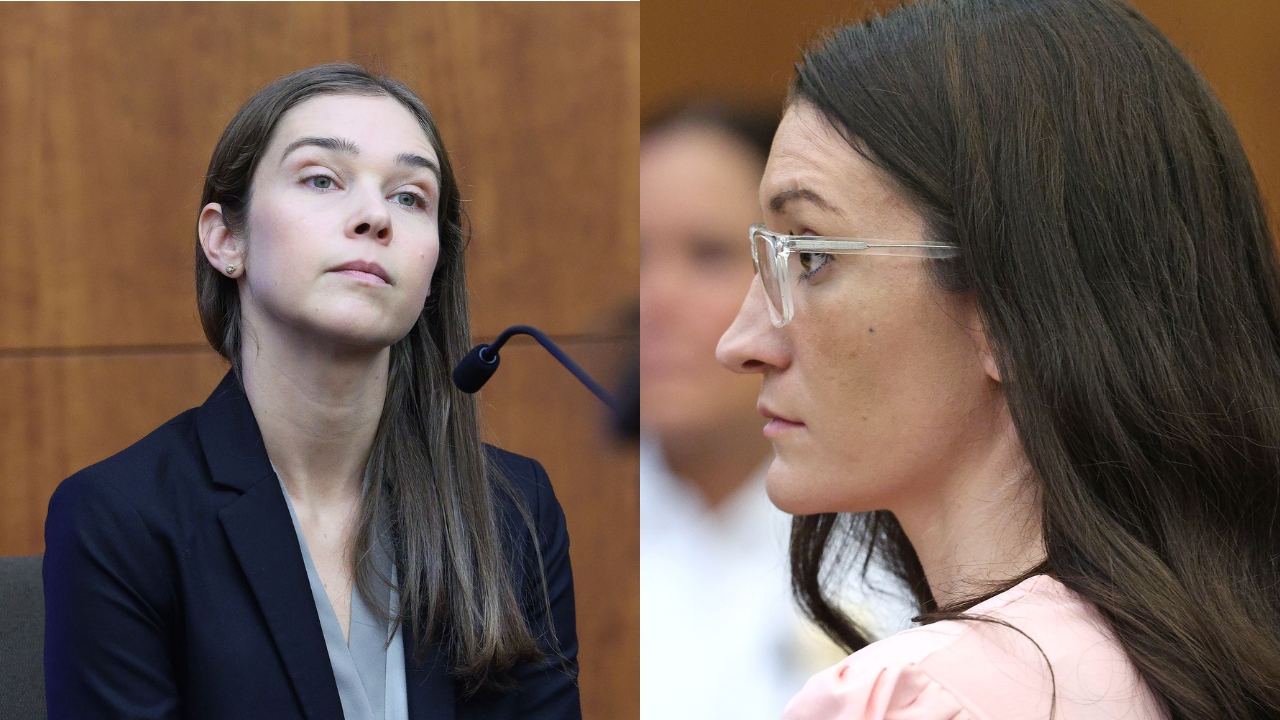
PLYMOUTH, MASSACHUSETTS — After five weeks of testimony and dozens of witnesses, the Lindsay Clancy murder trial has reached its final stage, with jurors now preparing to decide whether she was legally responsible for the deaths of her three young children.
Clancy, 36, has pleaded not guilty by reason of a lack of criminal responsibility in the January 2023 deaths of Cora, 5, Dawson, 3, and Callan, 8 months. Her defense says she was experiencing severe postpartum psychosis, worsened by mental illness and medication problems. Prosecutors argue that she understood what she was doing and deliberately carried out the killings.

The Defense’s Central Argument
Clancy’s attorneys have acknowledged that she killed her three children. Their case has instead focused on her mental state at the time.
Defense experts testified that Clancy was suffering from psychosis and severe delusions and believed she was acting to protect her children.
Forensic psychiatrist Dr. Phillip Resnick was one of the defense’s most important witnesses. He described Clancy as seriously psychotic when the killings occurred and said her thinking had become detached from reality.

The defense also presented evidence about Clancy’s deteriorating mental health, including insomnia, intrusive thoughts, suicidal thinking, psychiatric treatment and medication changes before the killings.
Prosecutors Present a Very Different Picture
The prosecution’s rebuttal experts challenged nearly every major part of that explanation.
Forensic psychologist Kirk Heilbrun testified that Clancy was mentally ill but still understood that killing her children was wrong.
He also questioned her claim that she was following instructions from a male voice.
According to Heilbrun, Clancy’s descriptions of the alleged voice were inconsistent and did not fit the behavior he would expect from someone experiencing the type of psychotic command hallucination described by the defense.
A Final Expert Says Clancy Was “In Control”
The prosecution’s final witness was FBI forensic psychiatrist Dr. Gregory Saathoff.
He testified that Clancy’s behavior on the day of the killings reflected planning and control rather than an uncontrolled psychotic episode.
Saathoff pointed to a series of actions Clancy took before the deaths, including arranging for her husband to leave the home, spending time with the children and ultimately using exercise bands in the basement.

He also disputed the defense’s claim that the alleged voice caused the killings, noting that the voice supposedly disappeared once the children had been killed.
Saathoff acknowledged that postpartum hormonal changes, mental illness and medication side effects can contribute to serious psychiatric symptoms.
But his conclusion was that Clancy remained capable of understanding right from wrong.
The Mysterious Voice Remains a Major Issue
Clancy has said a male voice told her to kill her children and then herself.
That claim has become one of the most heavily disputed parts of the case.
The defense has relied on the alleged voice as evidence that she was experiencing psychosis.
Prosecution experts, however, highlighted what they described as inconsistencies in her accounts.
Saathoff also said the fact that the voice reportedly did not tell Clancy exactly how or where to kill the children suggested that she retained control over her actions.
Defense Questions the Investigation
Clancy’s attorney Kevin Reddington also used his final questioning to challenge the investigation itself.
He questioned Saathoff about when the psychiatrist first interviewed Clancy and about the medical and psychiatric information he relied upon.
The defense has argued throughout the trial that important warning signs were overlooked and that Clancy repeatedly sought help before the killings.
Reddington also raised questions about the interpretation of medication found in Clancy’s bedroom and about statements made by her family concerning her mental condition.
Judge Rejects a Requested Special Instruction
After testimony ended, the defense asked Judge William Sullivan to give the jury a so-called Bowden instruction, which would have allowed jurors to consider alleged failures in the police investigation.
The judge refused that request.
However, Reddington will still be allowed to discuss what he considers shortcomings in the investigation during his closing argument.
A Mistrial Request Also Failed
Earlier in the week, the defense requested a mistrial after a prosecution witness referenced Clancy’s Catholic faith during testimony.
Judge Sullivan rejected the request and instructed jurors to disregard the religious reference.
The ruling allowed the trial to continue toward its conclusion.
The Jury Has Several Possible Outcomes
The jury’s decision is more complicated than simply guilty or not guilty.
Jurors can consider first-degree murder, second-degree murder or manslaughter.
They can also determine that Clancy was not criminally responsible because of mental illness.
A finding of not guilty by reason of insanity could result in commitment to a Massachusetts psychiatric facility rather than a conventional prison sentence.
If convicted of first-degree murder, Clancy could face life imprisonment without parole.
More Than 80 Witnesses Have Testified
The trial began on July 27 and continued for 21 days of testimony.
The jury has heard from family members, medical professionals, investigators and psychiatric experts.
The competing expert opinions have created two sharply different interpretations of the same events.
The defense says Clancy’s mind had become so severely distorted that she could no longer understand reality or control her actions.
The prosecution says she was deeply troubled but retained awareness and deliberately carried out the killings.
The Tragedy That Brought the Case to Court
The case stems from January 24, 2023, when Clancy’s husband, Patrick, returned to the family’s Duxbury home after leaving to pick up food and medicine.
He found the children unresponsive in the basement.
Prosecutors allege Clancy strangled them with exercise bands before attempting suicide by jumping from a second-story window.
She survived the attempt but suffered catastrophic injuries that left her paralyzed from the waist down.
Closing Arguments Now Begin
Testimony officially ended Wednesday after Saathoff completed his evidence.
The judge and attorneys then finalized the instructions that will be given to jurors.
Closing arguments are scheduled for Thursday, August 27, with each side receiving approximately one hour.
The jury will then begin deliberating.
After five weeks of testimony, the case has finally reached the moment when jurors must decide whether Clancy’s severe mental illness made her legally incapable of being held responsible for the deaths of her children.
A Final Decision Is Now Within Reach
The prosecution says the evidence shows planning, awareness and control.
The defense says those same actions were the product of a devastating psychiatric crisis that began long before the killings.
Both sides now have one final opportunity to explain their interpretation of the evidence directly to the jury.
For Clancy, the decision could determine whether she spends the rest of her life in prison or is found not criminally responsible and committed to psychiatric care.
For the families involved, the verdict will close one of the most emotionally difficult trials Massachusetts has seen in years.
The witnesses have finished. The experts have delivered their opposing conclusions. Now the jury must decide what Lindsay Clancy’s state of mind truly was on the night her three children died.
Sources: The New York Times — Lindsay Clancy trial, Aug. 25, 2026