Dominique: The Baby Born With a Parasitic Twin Who Was Given a Second Chance at Life
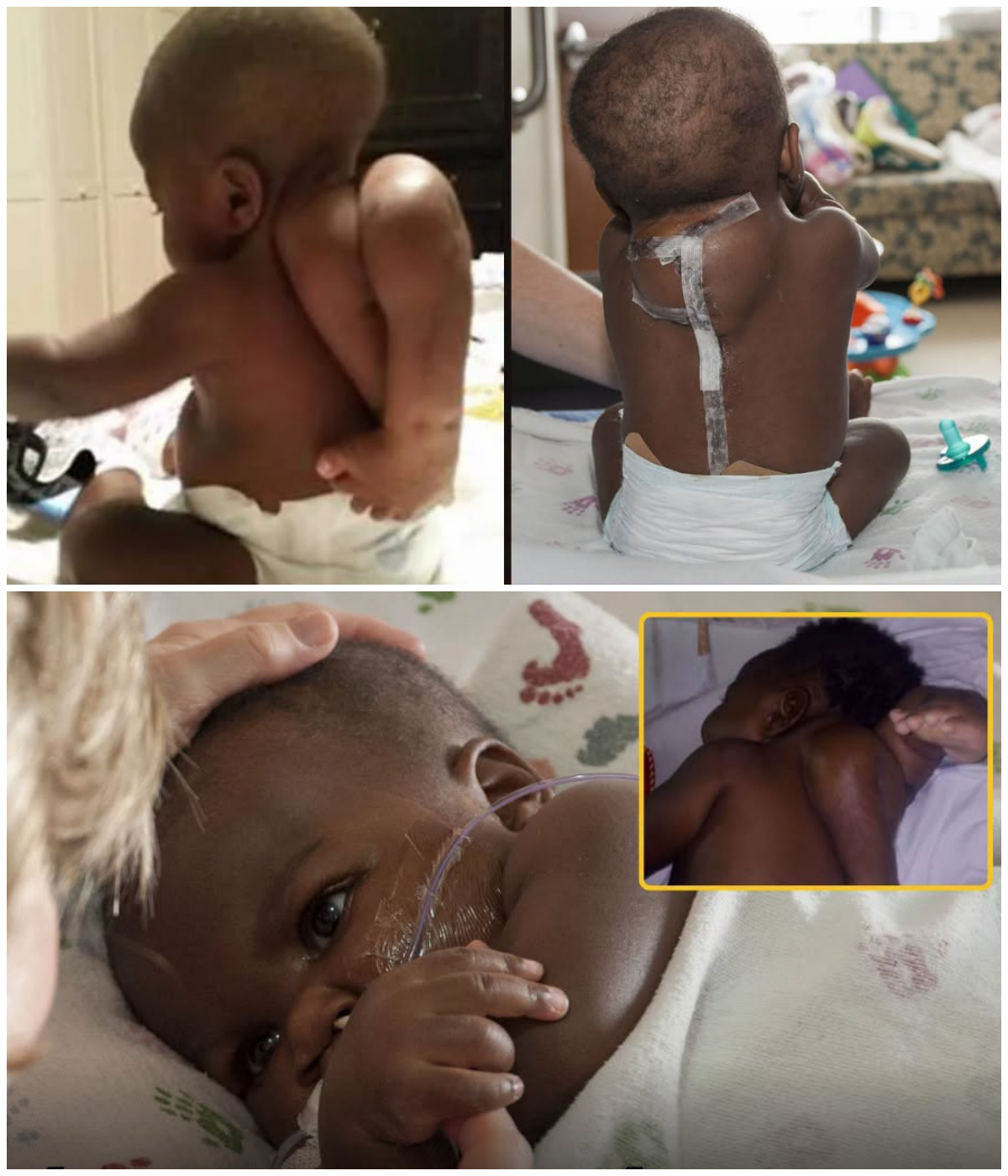
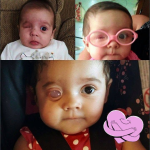
In 2016, a baby girl named Dominique was born in the Ivory Coast with an extremely rare congenital condition. From her upper back and neck protruded the lower half of an incompletely developed twin, including an extra pelvis, two legs and feet. She also had two spinal columns and a second bladder.
Doctors identified the condition as a parasitic twin, a rare form of conjoined twinning in which one twin develops normally while the other stops developing and remains physically dependent on the more developed twin.
Dominique’s case was particularly unusual because the parasitic twin was attached to her spine. Medical specialists said only a small number of similar cases had been documented. The additional structures were not simply an external growth—they were connected to Dominique through bones, blood vessels and nerves, making any attempt to separate them extremely dangerous.
Without treatment, doctors feared that the condition could eventually cause severe complications. The additional structures placed extra demands on Dominique’s body, while the connection to her spinal cord created a serious risk of paralysis.
Her family lived in the Ivory Coast and could not afford the specialized treatment she needed. A nonprofit organization called Children’s Medical Missions West helped arrange Dominique’s journey to the United States so she could receive treatment at Advocate Children’s Hospital in Park Ridge, Illinois.
In February 2017, the 10-month-old baby traveled more than 5,000 miles to Chicago. Because her parents could not accompany her, a local family, Nancy and Tim Swabb, agreed to care for her during her stay.
Before doctors could operate, Dominique underwent extensive examinations. Specialists used MRI scans, CT scans, X-rays and other imaging studies to understand exactly how her two spines and the parasitic twin were connected.
The medical team even created a three-dimensional model of her spine and used it to rehearse the complicated procedure.
On March 8, 2017, five surgeons and more than 50 medical professionals took part in the operation. The procedure lasted approximately six hours.
The surgeons carefully separated the parasitic twin from Dominique’s body, disconnecting the additional pelvis, nerves, blood vessels and other structures. One of the greatest concerns was damage to Dominique’s spinal cord, which could have left her paralyzed.
The operation was successful.
Doctors were able to remove the extra limbs and reconstruct the area of Dominique’s back. Although her anatomy remained unusual in some respects, physicians reported that her vital functions were normal and expected her to have a normal life.
Her recovery was remarkably quick. Just five days after the operation, Dominique was discharged from the hospital and returned to the care of her host family.
For the Swabbs, the months with Dominique became an unforgettable experience. They watched her grow stronger, learn to bear weight on her legs and experience ordinary childhood moments that had once seemed impossible.
Then came another emotional milestone.
In April 2017, less than two months after her surgery, Dominique returned to the Ivory Coast and was reunited with her parents and three older sisters.
The little girl who had traveled across the world carrying the lower half of an undeveloped twin on her back was finally able to return home without that enormous physical burden.
Dominique’s story is extraordinary not simply because of how rare her condition was, but because of the remarkable cooperation that made her treatment possible. Her family sought help despite enormous financial obstacles. A nonprofit organization arranged her medical journey. A foster family opened its home to a child from another continent. And a large team of surgeons, nurses and specialists spent weeks preparing for a procedure in which even a small mistake could have devastating consequences.
Her case also illustrates how far modern medicine can go when doctors are able to combine advanced imaging, careful planning and highly specialized surgery.
In the end, the most powerful part of Dominique’s story was not the unusual anatomy she was born with.
It was what happened afterward.
She survived a highly complex operation, recovered, returned to her family and was expected to grow up able to live a normal and fully functional life.
For one little girl, a journey that began with an extraordinary medical challenge ended with something wonderfully ordinary: the chance to simply grow up, surrounded by her family and free to discover life on her own terms.
Sources
- Advocate Children’s Hospital — Dominique’s Story and medical information about her surgery.
- The Washington Post — reporting on Dominique’s parasitic twin and the six-hour operation.
- CBS News — coverage of the surgery and Dominique’s return to her family.
- CBS Chicago — reports on the medical team and Dominique’s reunion with her parents.
- Live Science — medical explanation of parasitic twins and Dominique’s treatment.
- Voice of America — coverage of Dominique’s successful surgery and recovery.
- Daily Herald — reporting on Dominique’s condition and the operation at Advocate Children’s Hospital.