🚨 UPDATE: LINDSAY CLANCY JURY Ends Day 2 WITHOUT VERDICT — Key Evidence Puts Her Mental State Under the Microscope

PLYMOUTH, MASSACHUSETTS — The jury in the Lindsay Clancy murder trial has ended its second day of deliberations without reaching a verdict, leaving the courtroom waiting through the weekend for an answer in one of Massachusetts’ most closely watched criminal cases.
Clancy, 36, is charged with first-degree murder in the deaths of her three children, Cora, 5, Dawson, 3, and Callan, 8 months, who died at the family’s Duxbury home in January 2023.
The central dispute has never been whether Clancy caused the deaths. The defense says she was experiencing severe postpartum psychosis and was therefore not criminally responsible. Prosecutors argue that she was seriously mentally ill but nevertheless understood her actions and deliberately carried them out.
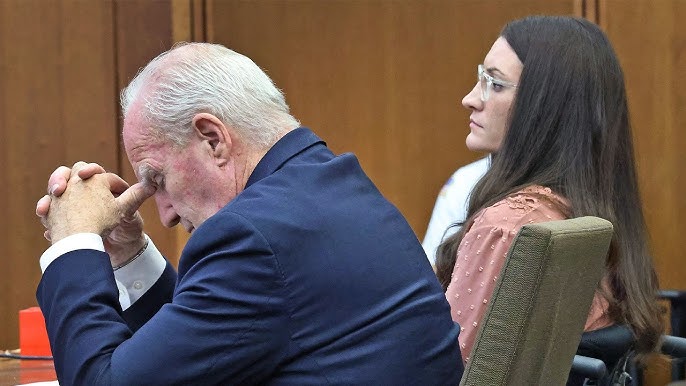
⏳ Jury Deliberations Now Exceed 10 Hours
Jurors began considering the case Thursday after weeks of testimony and closing arguments.
They deliberated for nearly four hours on the first day and returned Friday for another full day of discussion.
By Friday evening, they had spent approximately 10½ hours deliberating without reaching a verdict.
Judge William Sullivan then dismissed the panel for the weekend. Jurors are scheduled to return Monday, August 31.
The length of the deliberations does not necessarily indicate that jurors are deadlocked or favoring one side.
A jury consultant speaking with CBS Boston noted that the panel must work through testimony from 85 witnesses, hundreds of exhibits, medical records and Clancy’s journals, making a lengthy discussion unsurprising.
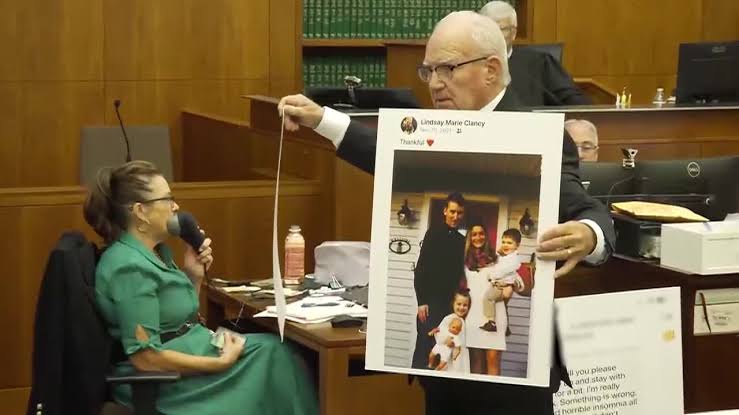
🔎 Jurors Ask to See Physical Evidence
The jury has already shown that it is taking a close look at the physical evidence.
On Friday morning, jurors asked to examine pill bottles entered into evidence as well as the knife Clancy used during her suicide attempt.
According to defense attorney Kevin Reddington, those were the only questions the jury had sent to the judge during deliberations as of Friday.
A psychologist and jury consultant told CBS Boston that the request could simply mean jurors wanted a closer look at physical evidence connected to Clancy’s mental-health history and suicide attempt.
It is not possible to determine what the request says about how jurors are leaning.
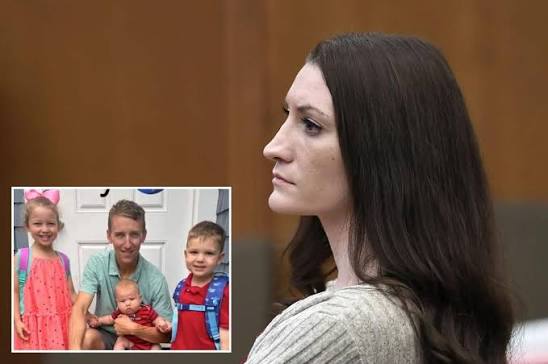
🧠 The Defense Says Severe Psychosis Changed Everything
Throughout the trial, Clancy’s defense has focused on her mental deterioration following the birth of her youngest child.
Her attorneys presented evidence involving severe insomnia, suicidal thoughts, psychiatric treatment, medication changes and disturbing beliefs.
Defense experts argued that she was experiencing postpartum psychosis, a severe psychiatric condition that can involve hallucinations and delusions.
Their position is that Clancy’s condition became so extreme that she could no longer properly understand the nature or wrongfulness of her conduct.
The defense has also argued that she repeatedly sought professional help before the killings but that the seriousness of her condition was not adequately recognized.
⚖️ Prosecutors Say She Remained Aware
The prosecution has offered a much different interpretation of the same evidence.
Their experts agreed that Clancy had significant mental-health problems but rejected the idea that she experienced an acute psychotic episode that eliminated her criminal responsibility.
Forensic psychologist Kirk Heilbrun testified that Clancy was capable of understanding that killing her children was wrong.
Prosecution psychiatrist Gregory Saathoff also disputed her account of hearing a male voice instructing her to kill the children. He pointed to inconsistencies in her descriptions of the alleged voice and argued that her actions demonstrated planning and control.
🔊 The Alleged Voice Is Still a Major Issue
Clancy has said a male voice ordered her to kill her children and then herself.
That claim became a crucial part of the defense’s explanation for the killings.
Defense witnesses treated the alleged voice as evidence of psychosis.
Prosecution witnesses questioned whether it was a genuine hallucination at all.
Jurors are now being asked to determine which interpretation better fits the evidence presented over the five-week trial.
🏠 Three Children Died in January 2023
The case stems from January 24, 2023.
Clancy’s then-husband, Patrick Clancy, left the family’s Duxbury home to pick up food and medicine.
When he returned, he found the children unresponsive in the basement.
Prosecutors allege that Clancy strangled them with exercise bands before attempting to take her own life.
She survived after jumping from a second-story window but suffered severe injuries and is now paralyzed from the waist down.
💔 Patrick’s Testimony Remains Important
Patrick Clancy’s testimony gave jurors a firsthand account of the family and the aftermath of the killings.
The defense has emphasized that he has expressed forgiveness toward Lindsay and has described her as suffering from a devastating mental illness.
Prosecutors, however, argue that sympathy for Clancy does not answer the legal question of whether she was criminally responsible.
The jury must make that determination based on the evidence and Massachusetts law.
👩⚖️ Five Different Outcomes Are Possible
Jurors are not limited to a simple guilty-or-not-guilty decision.
They can convict Clancy of:
First-degree murder
Second-degree murder
Manslaughter
They can also return a traditional not-guilty verdict or find her not criminally responsible because of mental illness.
The jury must consider the charges involving each of the three children.
A first-degree murder conviction would mean life in prison without parole.
A finding of lack of criminal responsibility would instead mean continued psychiatric confinement rather than a conventional prison sentence.
📚 Jurors Have a Huge Amount of Material to Review
The trial lasted more than five weeks.
Jurors heard from family members, police officers, medical professionals, psychiatrists, psychologists and other witnesses.
They must now work through testimony from 85 witnesses and more than 200 exhibits, according to recent courtroom reporting.
That includes medical documentation and evidence concerning Clancy’s mental-health treatment and medications.
The amount of material alone could explain why deliberations are taking longer than one day.
🚨 Clancy Is “Nervous” and “Scared,” Her Lawyer Says
As the jury continues deliberating, Clancy remains at Tewksbury Hospital.
Her attorney Kevin Reddington told reporters Friday that his client is nervous and scared while waiting for the jury’s decision.
He said the family has continued visiting her but that the ongoing trial has made those visits particularly difficult.
Reddington said he could not predict how long the jury might take.
With hundreds of exhibits and weeks of testimony to consider, he said the jury could potentially take several more days.
🧩 Why There Is No Verdict Yet
A lengthy deliberation should not automatically be described as a deadlock.
Jurors have to reconcile two competing psychiatric narratives while also considering the actual events surrounding the deaths.
They must determine whether Clancy’s actions demonstrate conscious control or whether they were the product of a severe psychotic disorder.
The physical evidence requested on Friday may be part of that broader evaluation.
But only the jurors know what questions are driving their discussions.
The Weekend Now Separates the Jury From Its Decision
After Friday’s session ended, the courtroom entered a pause that could last several days.
The jurors will return Monday morning and resume their deliberations.
There is no announced deadline for a verdict.
The court could continue waiting as long as necessary for the panel to reach the required unanimous decision.
What Happens Next?
The immediate development to watch is the jury’s return on August 31.
They will continue examining evidence after already spending more than 10 hours deliberating.
For now, there is no verdict, no indication of a split within the panel and no public way to know which argument is gaining traction.
The case remains centered on one extraordinarily difficult question:
Did Lindsay Clancy’s mental illness make her incapable of understanding and controlling her actions, or did she remain legally responsible when her three children died?
The jury will ultimately decide.
More than three years after the deaths of Cora, Dawson and Callan, the courtroom is now silent. The evidence has been presented, the arguments are over, and the decision rests with 12 jurors who will return Monday to determine Lindsay Clancy’s fate.
Sources:
NBC News — Lindsay Clancy trial live updates and jury deliberations
The New York Times — Lindsay Clancy trial coverage