“At Least I Had a Five-Year Break”: Emil’s Second Fight After a Childhood Brain Tumour
Emil was almost nine when the ordinary complaints of childhood stopped looking ordinary. Late in 2019 he had double vision, daily headaches and trouble concentrating. An eye test showed something wrong at the back of the eye. He was sent from Coventry to Birmingham Children’s Hospital and operated on the next day. An MRI found a brain tumour. Surgeons removed a large piece of it. A second operation followed before radiotherapy and chemotherapy at Queen Elizabeth Hospital in Birmingham. For two months the family drove there every day from home near Stratford-upon-Avon. After chemo, a scan found a cyst that needed a third operation when he was 11. The loud MRI tunnel, he later said, was one of the parts he liked least — not only the noise, but the wait for what it might find next.
Surveillance scans every six months became the rhythm of the years that followed. Then, around his birthday in September 2025, he needed the toilet constantly. The next day was worse. Doctors told him a second cancer had appeared, linked to the earlier chemotherapy and radiotherapy. His reply was the sentence that has travelled with his story: “At least I had a five-year break.” In Birmingham A&E a catheter drained 1.5 litres from his bladder. A full-body MRI found two masses, each nearly the size of an apple, stacked beside his pelvis. Chemotherapy was started to shrink them. Specialised radiotherapy followed. By the time he told his story to Children with Cancer UK he was three cycles from finishing radiotherapy and had been catheter-free for two months.
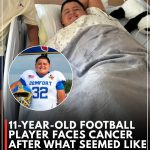
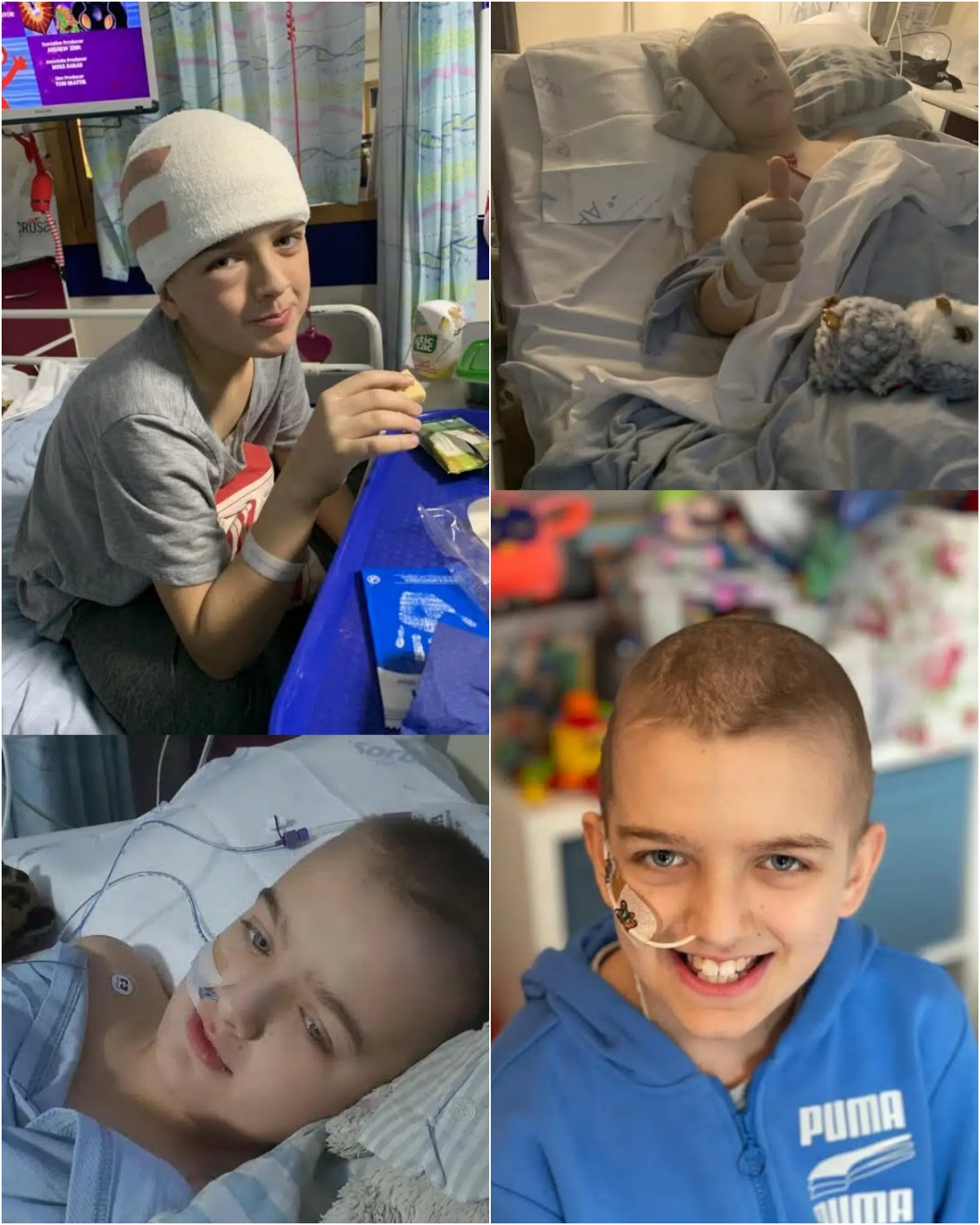
The photographs in his journey look like so many paediatric oncology albums: a thumbs-up from a hospital bed, a turban of bandages after theatre, a shaved head and a feeding tube, a boy in a blue hoodie who has decided to smile for the camera anyway. They are not evidence that treatment is easy. They are evidence that he kept showing up for it.
His message, written for other children, is short enough to fit on a ward noticeboard. Do not be scared because you can fight it. If it is painful you have your parents, family or friends beside you.
Hope, in Emil’s telling, is not a guarantee that cancer will stay gone. It is the decision to start the next cycle anyway — and to treat five clear years not as a debt the disease is collecting, but as time that was already won.
Sources
- Children with Cancer UK, “Emil’s Brain Tumour Story” (first-person account published March 2026)