Little Loki’s Fight: How a Toddler’s “Cold” Became Septic Shock — and How His Smile Returned
Little Loki Whiteside was a happy, active 17-month-old who loved running around the house with his cousins and was almost always smiling. In February 2018, that ordinary childhood scene changed in a matter of hours.
When Loki’s temperature suddenly rose, his parents, Naomi and Rob Whiteside of Sutton Coldfield, thought he had a common cold. Naomi took him to the doctor. The GP immediately recognized warning signs of septicaemia and sent the family to hospital by ambulance. “One minute he was playing with his cousins, running round the house, the next minute he was in intensive care being treated for septic shock,” Naomi later said.
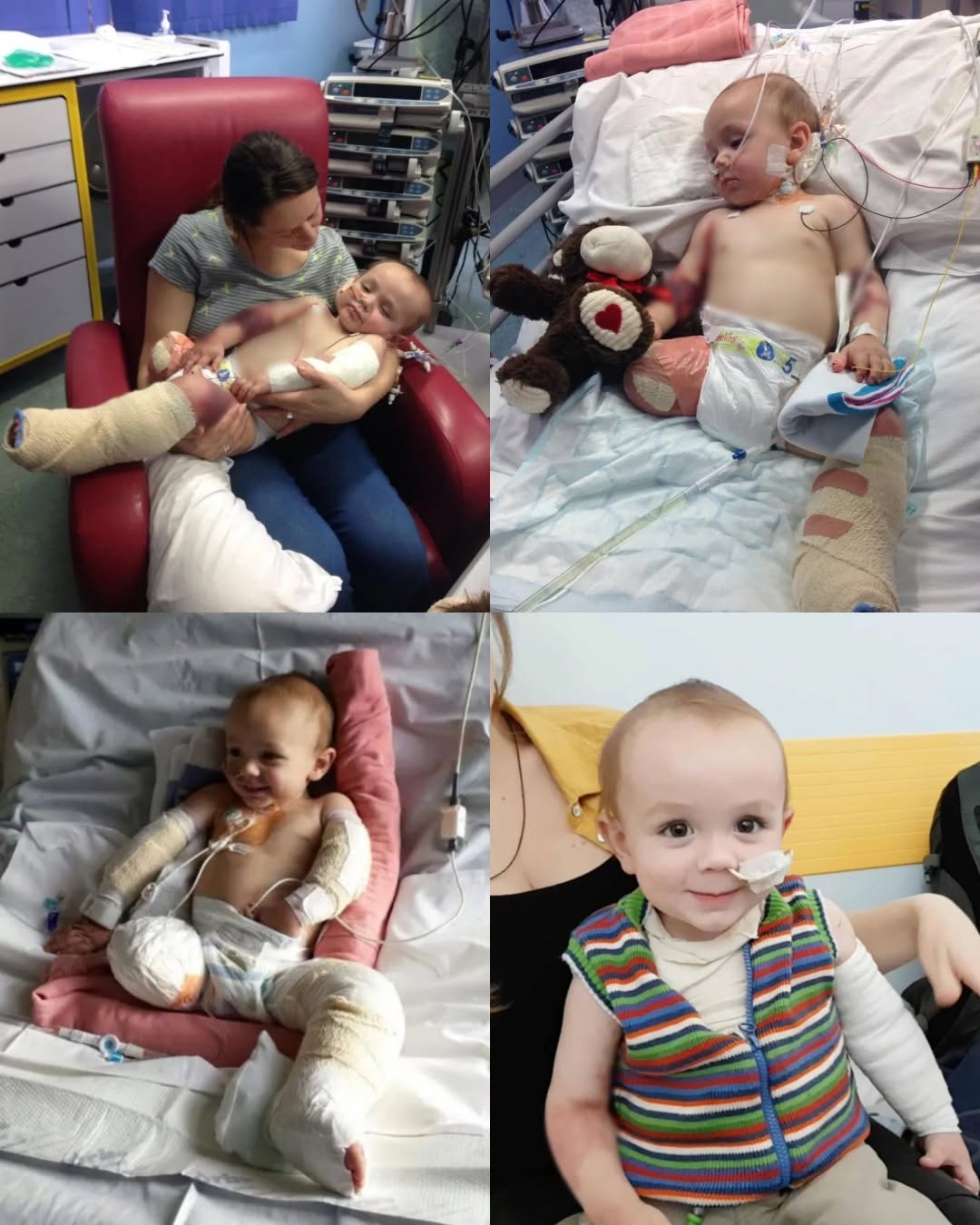
Septic shock is a life-threatening complication of sepsis. The body’s response to infection causes blood pressure to collapse, starving organs and tissues of oxygen. Blood flow to the extremities can fail so badly that tissue dies. Doctors at Birmingham Children’s Hospital started treatment at once and used medication in an attempt to save Loki’s limbs. They could not save his right leg. It was amputated above the knee. At one point they feared he would also lose his fingertips; those were spared, though he was left with significant scarring.
The first two weeks in intensive care were the hardest for his parents. “Before hospital, Loki was such an active happy boy who was practically always smiling,” Naomi said. “For the first two weeks in intensive care Rob and I didn’t see Loki smile. It was the hardest thing I’ve ever had to face.”
Then the smile came back. Nearly three weeks after admission, they saw the first “cheeky smile” of the boy they knew. Hospital “Giggle Doctors” — specialists who use play and humour with seriously ill children — helped lift his spirits and gave his parents strength as well. Six weeks after he was admitted, Loki was still on the burns unit and needed round-the-clock care, but he was improving. Naomi, who was expecting the couple’s second child that June, described the period as exhausting and stressful, yet she also spoke of her son’s resilience.
Loki’s case is a reminder that sepsis in young children can look, at first, like a routine illness. Early recognition — as happened when the family doctor acted quickly — can mean the difference between life and death. It cannot always prevent the loss of a limb. What it did preserve, in this family’s account, was Loki himself: a little boy who, after weeks without a smile, began to show it again.
Sources
Birmingham Mail / Birmingham Live, Zoe Chamberlain, 25 March 2018: “It looked like a common cold but this mum’s quick-thinking actions saved her son’s life.”
Metro, Harley Tamplin, 25 March 2018: “Toddler has leg amputated after suffering from septic shock.”
The Sun, Holly Christodoulou, 25 March 2018: “Toddler with sepsis left fighting for his life following leg amputation after parents believed he had ‘a cold’.”