Before the Knife: How a 3D Model Helped Separate Minal and Mirha
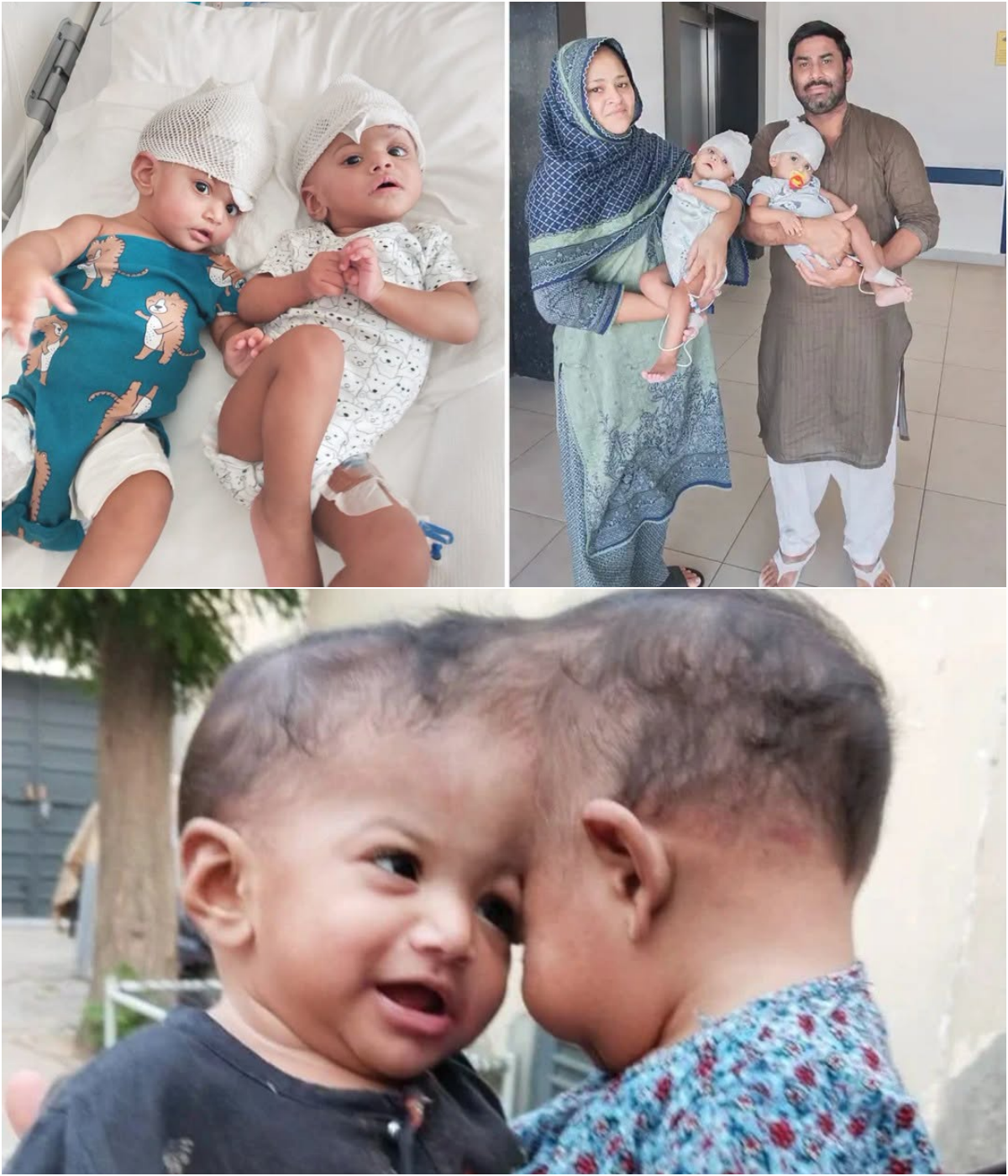
Minal and Mirha were born in Pakistan joined at the head — craniopagus twins, already a rare subset of an rare condition. The join was not only bone. They shared vital blood vessels and brain tissue. One error in the operating room could starve either child’s brain of blood. Their case was referred to Gemini Untwined, the charity founded by Great Ormond Street paediatric neurosurgeon Professor Noor ul Owase Jeelani, when they were a few weeks old. The family could not afford a UK operation. Turkey’s Ministry of Health funded treatment at Ankara Bilkent City Hospital. The girls arrived in May 2024.
The team did not go straight to the table. Using the twins’ scans they built a high-fidelity three-dimensional model of the shared anatomy. Mixed-reality goggles — the simXAR / XARlabs platform developed with neurosurgery researcher Ali Rezaei Haddad — let surgeons in Turkey and the United Kingdom inspect the same vessels and tissue, overlay digital anatomy on a real head, and rehearse the route before an incision. Jeelani later said the goggles could confirm a plan or reveal something the 2D scans had not made obvious. The separation itself was staged over about three months. On 19 July 2024 a team of roughly 60 clinicians completed the final operation, which lasted 14 hours. The girls were under a year old.
Two months later Jeelani described the recovery as excellent and said they were expected to fly home to Pakistan to grow up as separate children. Gemini Untwined called it the charity’s eighth successful craniopagus separation and a collaboration across seven countries. It was not Jeelani’s first marathon case: in 2022 he helped separate Brazilian twins Bernardo and Arthur Lima in an operation that ran more than 27 hours. What was new with Minal and Mirha was the systematic use of mixed reality so that teams thousands of miles apart could study one anatomy before they cut.
Craniopagus surgery remains among the highest-risk procedures in paediatric neurosurgery. A 3D model does not make shared vessels simple. It reduces the chance that the first time a surgeon sees a dangerous crossing is when the scalp is already open. For Minal and Mirha’s parents, the measurable result was two beds instead of one.
Sources
Gemini Untwined case page: Mirha and Minal (referral, Turkey funding, two-stage separation, mixed reality).
Evening Standard / ITV / Sky News, 17–18 September 2024: Jeelani interviews, 14-hour final operation on 19 July 2024, Ankara Bilkent City Hospital.