163 Children Were Recovered — Then a Missing Toddler’s Family Asked a Question That Changed Everything
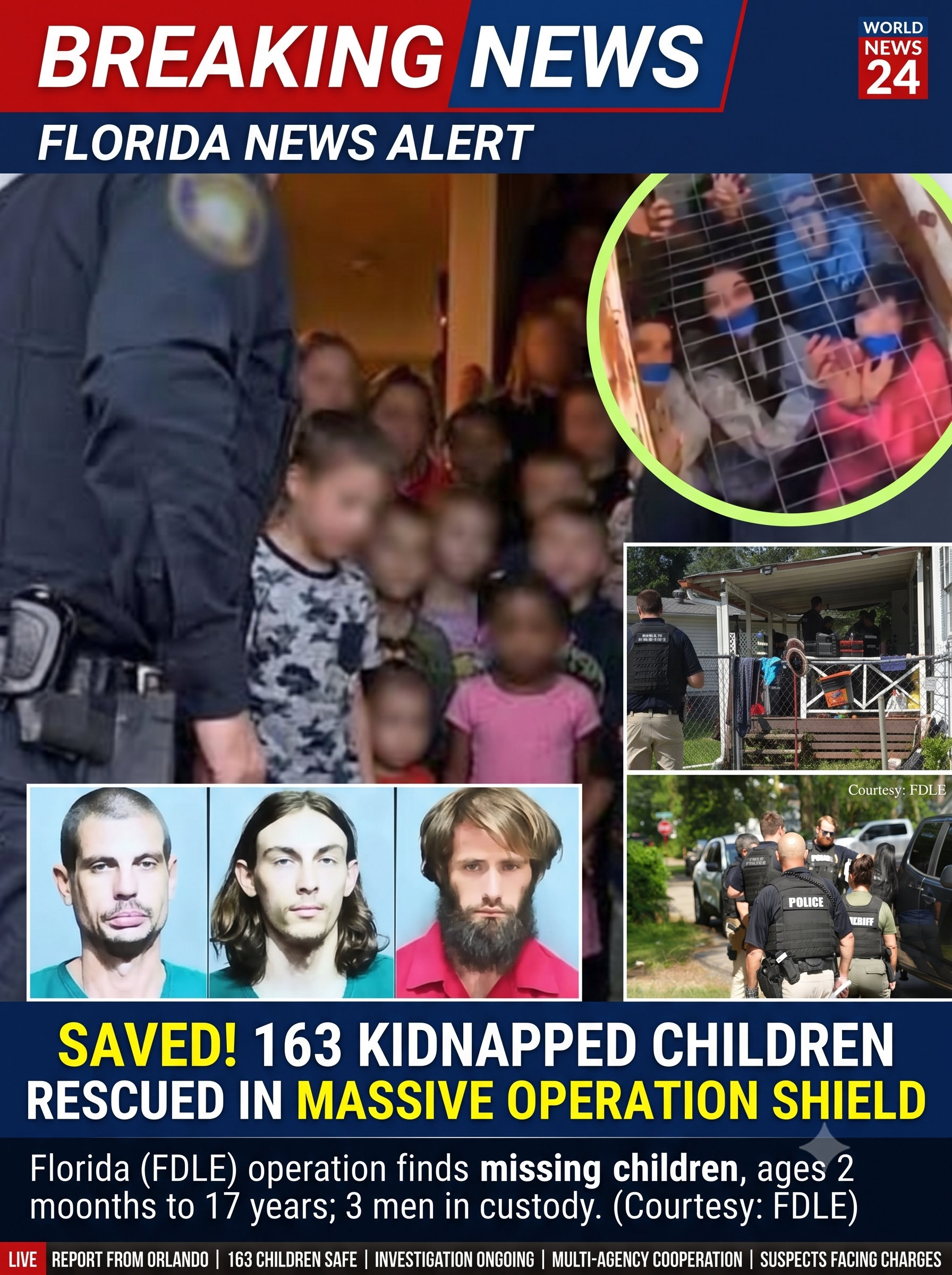
FLORIDA — When Florida authorities announced that 163 missing children had been recovered during Operation Statewide Shield, the news immediately attracted international attention.
Now, a new case from Brazil has added another layer of uncertainty.
The family of a missing two-year-old boy is asking whether their child could be among the children recovered during the Florida operation.
There is currently no official confirmation that he is.
But the question alone demonstrates why the international dimension of Operation Statewide Shield could become increasingly important.
The operation was conducted between August 17 and August 21 and was led by the Florida Department of Law Enforcement. Officials described it as the first state-led statewide child-recovery initiative in Florida and one of the largest operations of its kind in American history.
The final number announced by officials was 163 children.
They ranged from two months old to 17 years old.
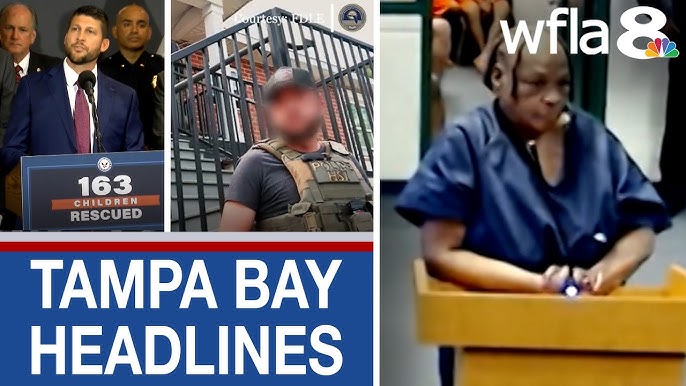
Recoveries occurred across Florida, including 46 in Tampa Bay, 41 in Miami, 32 in Jacksonville, 21 in Orlando, 12 in Fort Myers, eight in Pensacola and three around Tallahassee. Authorities also reported recoveries connected to six other U.S. states, one U.S. territory and 12 foreign countries.
For authorities, the operation demonstrated the potential of coordinated intelligence and multi-agency investigations.
For families, it demonstrated something even more powerful:
A child who had been missing could still be found.
But that success has also raised difficult questions.
Why were these children reported missing?
Where were they located?
Who were they living with?
Were they in danger?
And in cases involving abuse, neglect or exploitation, who was responsible?
Officials have said many of the children had experienced various forms of abuse, neglect, exploitation or exposure to criminal activity. But the cases were not all the same.
That point has become particularly important because of misleading claims circulating online.
Some posts suggested that 163 children had been kidnapped and held captive by three men whose mugshots were shared across social media.
That claim is false.
Fact-checkers found that Michael Prescott, Jayden Harwood and Robert Allison were associated with separate criminal cases involving individual victims. There is no evidence that the three men acted together to abduct all 163 children.
The distinction matters.
The real story is already serious enough without turning it into something investigators have not claimed.
Authorities have announced felony cases stemming from the operation, and prosecutors are handling those matters. Officials have also indicated that investigations remain active, meaning additional information could emerge as individual cases are reviewed.
Meanwhile, the children themselves have been at the center of the response.
Authorities said children needing assistance were transported to designated recovery hubs, where medical providers, social workers, child-welfare professionals and victim advocates could provide support.
This is important because recovery is not simply about locating someone.
A missing child may return with physical or emotional needs.
Some may need medical evaluation.
Some may need counseling.
Others may require protection while authorities determine where they can safely live.
Every individual case can therefore become a complicated process involving law enforcement, courts, social services and families.
And then came the Brazilian connection.
On September 4, Brazilian media reported that the family of José Arthur Sousa Barros, a two-year-old who disappeared in Pará in March, asked Brazil’s Federal Police to contact U.S. authorities and investigate whether the boy could be among the 163 recovered children.
The family reportedly wants the child’s information compared with records from the U.S. recovery operation, potentially through methods including facial recognition and fingerprints.
But authorities have not confirmed that José Arthur was recovered in Florida.
That means his case remains an unanswered question.
The situation is a reminder of how difficult missing-child investigations can become when national borders are involved.
A child may be missing in one country while investigators in another country locate a child whose identity is uncertain.
Names can be misspelled.
Records can be incomplete.
Children may not have documentation.
And families thousands of miles away may have no direct way of knowing whether a recovery operation has found their loved one.
That is why identification procedures are so important.
The emotional stakes are enormous.
For a family whose child has been missing for months, even a rumor that the child may have been found can bring hope.
But an unverified claim can also bring devastating disappointment.
That is why investigators must confirm identities through evidence rather than speculation.
The same principle applies to the criminal investigations.
The public may want immediate answers.
Families may want immediate justice.
But investigators must determine what actually happened in each individual case.
Operation Statewide Shield has already produced a remarkable result.
One hundred and sixty-three children were located and recovered.
But the number also represents a much larger investigative puzzle.
Each child has a history.
Each disappearance has a timeline.
Each recovery has circumstances.
And each potential crime must be examined individually.
As of September 5, officials have not announced that the Brazilian toddler is among the 163 children.
They also have not publicly provided a complete case-by-case account of all recoveries.
That means significant questions remain.
Could more families come forward asking whether their missing children were among those recovered?
Could additional identities be confirmed?
Could more criminal charges emerge?
Could investigators uncover connections between apparently unrelated cases?
For now, those questions remain unanswered.
What is certain is that Operation Statewide Shield has opened a new chapter in Florida’s effort to locate vulnerable children.
And perhaps the most powerful part of the story is not the number 163.
It is the possibility that somewhere, another family may still be waiting for the phone call that changes everything.
Because for investigators, 163 may be the final number announced for this operation.
For the families involved, each recovery is only the beginning of a much more personal journey.