Six Stone and Seventeen Hours: How Gary Jackson Became His Son’s Donor
Harry Jackson was born with intestinal malrotation: the bowel had not rotated and fixed in the usual place in the womb. The danger is volvulus—a twist that cuts off blood. He lived with that risk and with years of intravenous feeding. Parenteral nutrition kept him alive and, over time, injured his liver. Intestinal failure–associated liver disease moved the timetable. His parents, Gary Jackson and Annie Cerveno of Cambridge, had always known a bowel transplant might come. They had not expected the liver to fail first.
Both parents were tested at King’s College Hospital in London, one of three NHS centres that perform living-donor liver transplants. Gary was a 98 percent HLA match. Immune systems that similar improve the odds that a graft will be tolerated. There was a condition attached. To donate safely he had to change his own body. He was 47. He stopped drinking, tightened his diet, trained, and lost six stone—about 38 kilograms.
On 29 January 2025 they went into theatre together. Over about seventeen hours, Professor Nigel Heaton’s team took roughly 20 percent of Gary’s liver and 1.5 metres of small bowel through a vertical upper-abdominal incision and placed them in Harry. Combined living-donor liver-and-bowel transplants in children are almost unheard of: surgeons at King’s put the published world total at around ten, all paediatric, and said Harry’s case was only the second of its kind in the United Kingdom.
Gary recovered in about six weeks. Harry grew stronger. A living graft is not a fairy tale. Rejection, infection, and the lifelong work of immunosuppression remain. What changed is the source of the organs and the wait. Gary later called the donation the greatest privilege of his life and said he would do it again without a second thought. Annie had hoped the transplant day would be far in the future. When the liver failed, the future arrived.
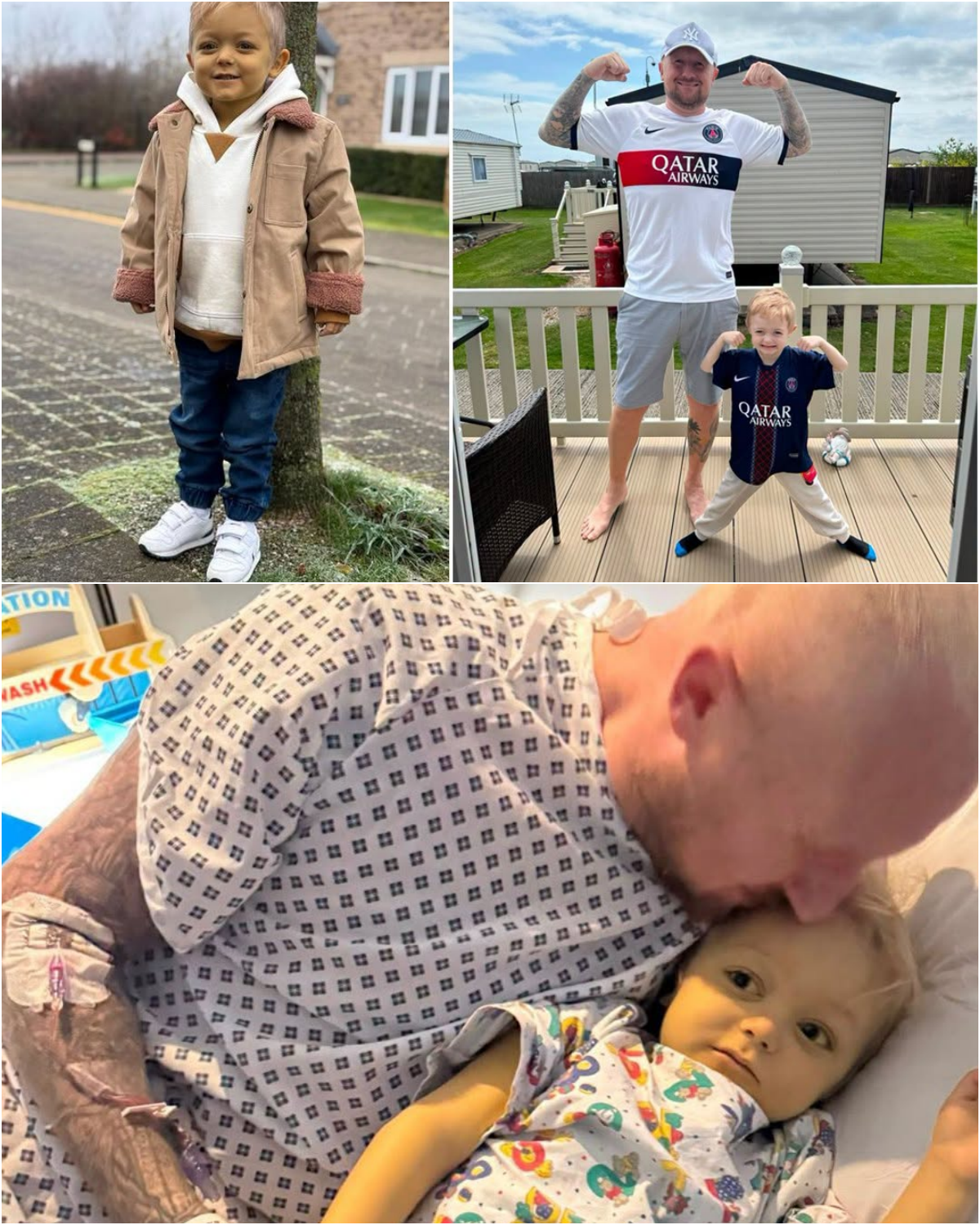
The photographs—hospital gowns, a father kissing a son’s hair, then both of them flexing in matching football shirts on a deck—are not proof that the hard part is over. They are proof that a parent was allowed to turn his own fitness into a graft. Most children who need two organs still wait on a deceased-donor list. Harry did not, because his father first had to become someone a surgical team would cut.
Sources
- BBC News, “Cambridge dad donates part of liver and bowel to young son,” September 1, 2026
- The Telegraph, “Father saves son’s life with double transplant,” September 1, 2026
- King’s College Hospital NHS statements; Prof. Nigel Heaton and Miriam Cortes-Cerisuelo, clinical lead for transplant surgery
- PA / Heart / Belfast Telegraph syndicated reports of the January 29, 2025 operation