Seven Bones at Birth, Then a Halo—and a Fight Over Who Gets to Nurse Eleanor Home
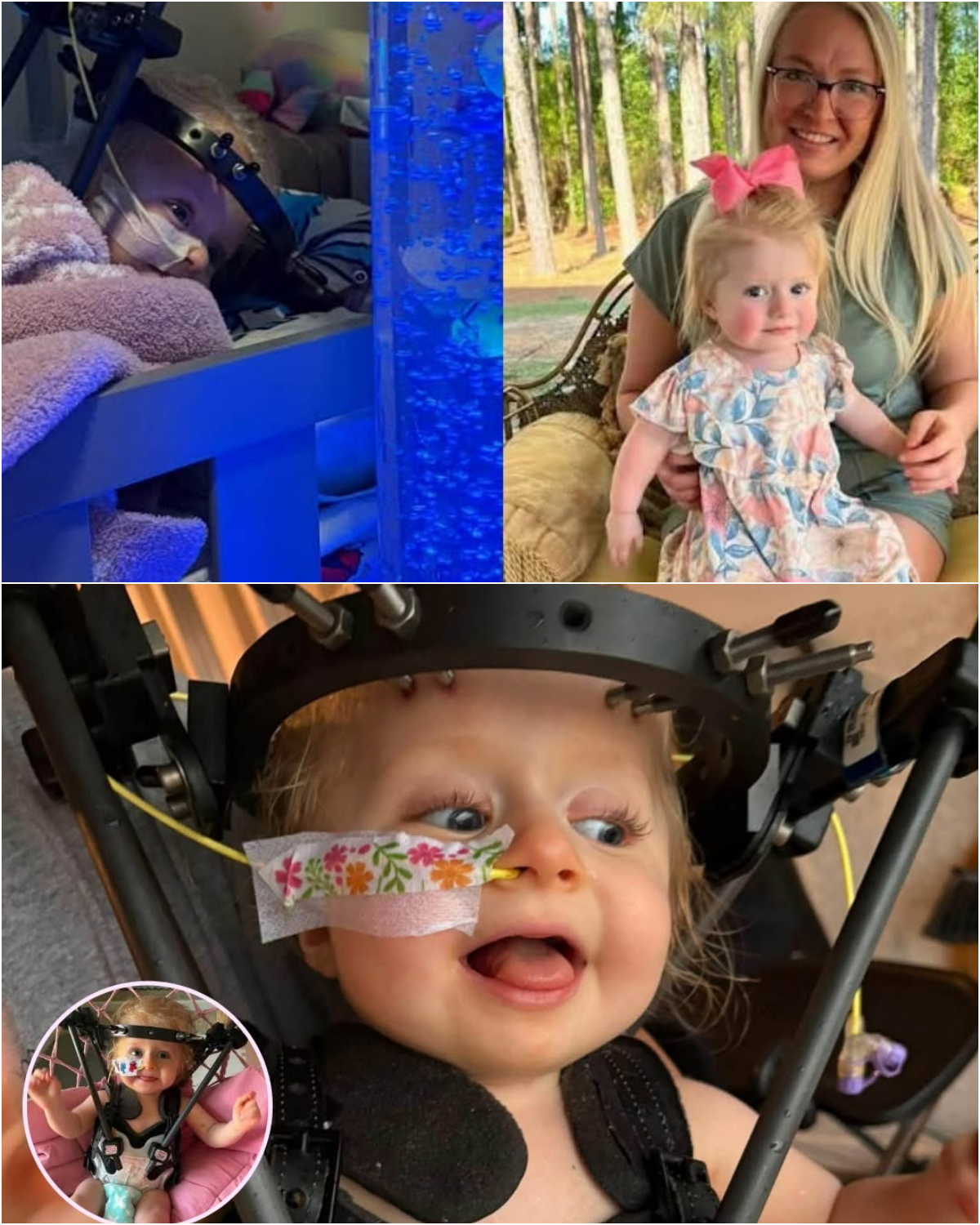
Eleanor Faith Butler was born in April 2024 at USA Health Children’s & Women’s Hospital in Mobile, Alabama. Her mother, Tasha Johnson, had learned at thirty weeks that the baby had osteogenesis imperfecta. They named her Eleanor Faith anyway.
Type III OI is the severe, deforming form of brittle bone disease: collagen that cannot build a skeleton that holds. Eleanor arrived with seven fractures—two legs, an arm, multiple ribs, a skull. She spent sixty-seven days in the NICU. Casts and ACE wraps were the first language of her body. She would later receive zoledronic acid every six months to try to put mineral into bone that keeps breaking. She crawled. She had not yet walked. Ribs could snap in her sleep.
The next crisis was her neck. At Children’s Healthcare of Atlanta she was placed in a halo—pins in a small skull, a vest, weights—to straighten the cervical spine before fusion. The family of six split itself: Stewart Butler settled them in Atlanta, then went back to South Alabama to work and keep her siblings. Tasha watched a toddler who could not turn her head without hardware. After the operation she still needed the halo until surgeons said the spine was stable. She still used a feeding tube.
Home should have been the quieter chapter. Instead the family described a second fight: the skilled nursing they said Eleanor needed while the halo was on was denied by Medicaid, and an appeal was denied too. That claim matches a pattern pediatric advocates know well. Private-duty nursing for medically fragile children is frequently refused on “medical necessity” or on the assumption that a parent is available to be the nurse. Federal Medicaid rules for children are supposed to cover what is needed to correct or ameliorate a condition. States and managed-care plans often decide otherwise. Alabama families in similar situations have turned to community fundraisers because travel to specialists and gaps in home care are not abstractions.
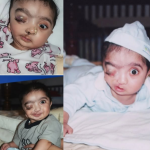
Baldwin County answered with a barrel race and a “Hope Blooms for Eleanor” benefit. Johnson said that when Eleanor first got sick they felt alone inside a hospital, and that strangers celebrating small victories mattered as much as the money. The photographs—halo and floral NG tape, a child asleep under a metal ring, then a dress and a pink bow on a porch with her mother—are the same child in two economies: one of pins and prior authorization, one of a family trying to keep a toddler a toddler.
OI type III does not resolve. Bones will break again. A halo comes off; the next fracture does not ask permission. What a two-year-old cannot do is argue a denial letter. That work falls to parents who are already the night shift.
Sources
- 1819 News, “Brittle but Brave: Baldwin County toddler to undergo extensive surgery,” and “Barrel race benefits Baldwin County toddler”
- Gulf Coast Media, “Hope Blooms for Eleanor”
- Rick Karle Good News / family interview: seven fractures at birth, 67-day NICU stay, OI type III, parents Tasha Johnson and Stewart Butler
- Children’s Healthcare of Atlanta halo and cervical spine care as reported by the family and local press
- Background on pediatric Medicaid private-duty nursing denials (EPSDT / shift-care advocacy literature)