Florida’s 163-Child Operation Is Now Crossing Borders — Could More Missing Children Be Identified?
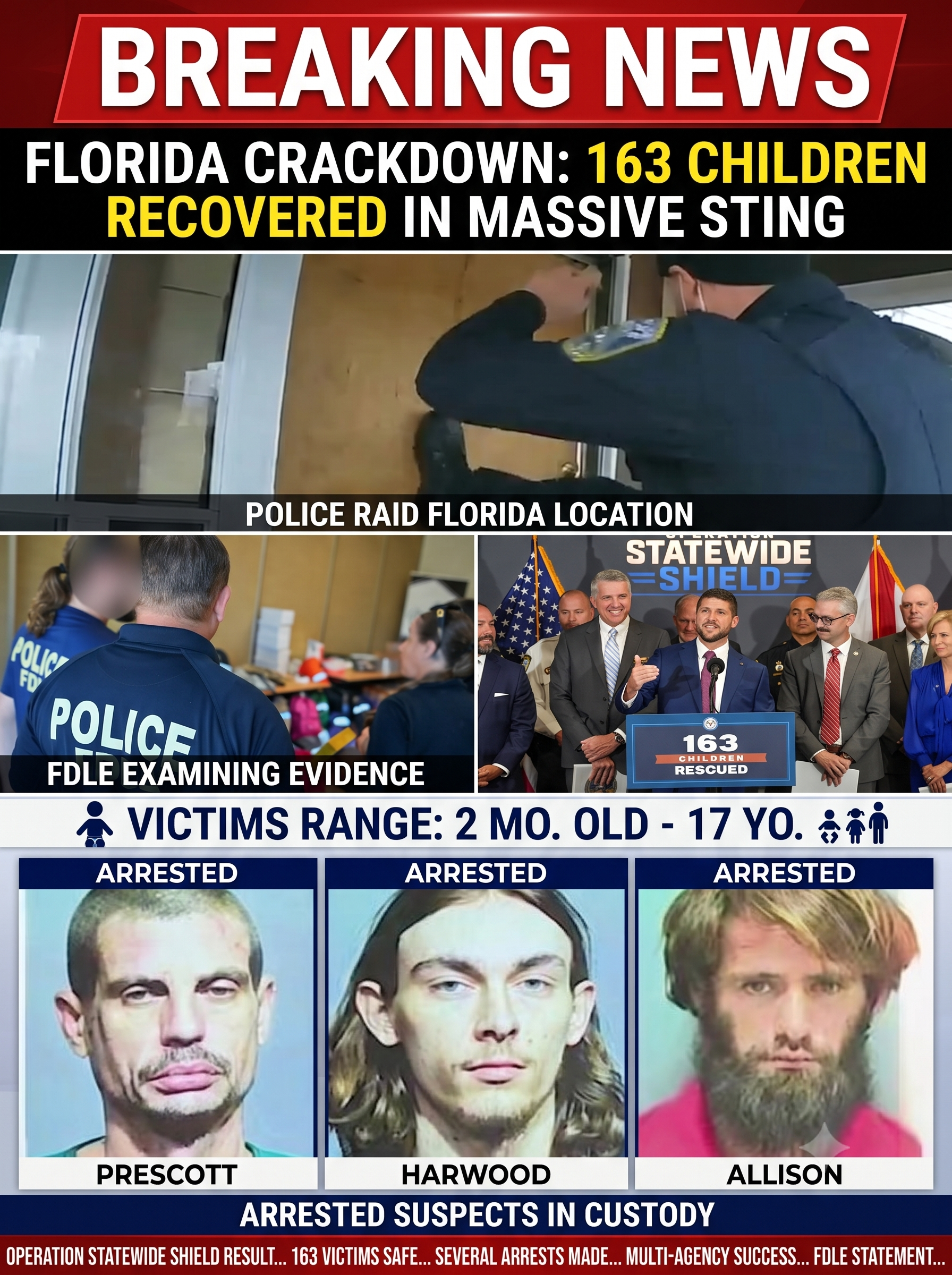
FLORIDA — What began as a massive statewide operation to locate missing children has now developed an unexpected international dimension.
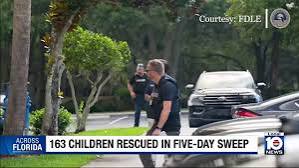
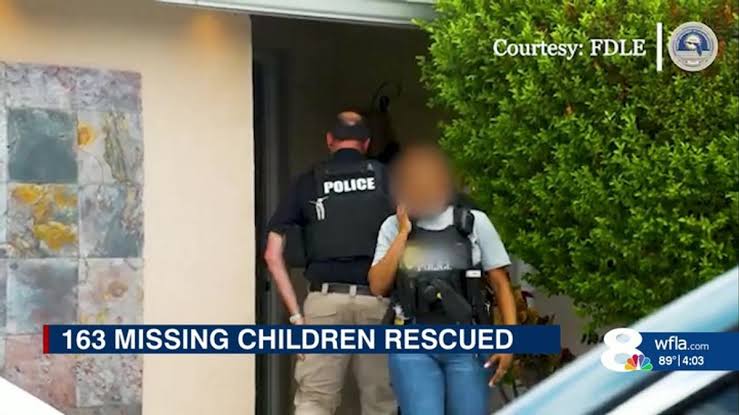
Operation Statewide Shield recovered 163 children during a five-day effort in August.
Now authorities in Brazil are checking whether at least one child missing there could possibly be connected to the Florida recoveries.
And that raises a much bigger question:
Could the Florida operation eventually help identify other missing children whose cases cross international borders?
There is no evidence yet that this is happening on a large scale.
But the possibility is being tested.
From Florida to 12 countries
Operation Statewide Shield was conducted August 17–21.
Florida officials announced on August 25 that 163 missing children had been located and recovered.
They ranged in age from two months to 17 years.
The operation covered seven major Florida regions and extended beyond the state. Officials said locations and recoveries were connected to six other states, one U.S. territory and 12 countries.
The figures from Florida alone were remarkable.
Tampa Bay: 46.
Miami: 41.
Jacksonville: 32.
Orlando: 21.
Fort Myers: 12.
Pensacola: eight.
Tallahassee: three.
But numbers cannot explain the individual circumstances.
Some children had reportedly experienced abuse, neglect, exploitation or exposure to other criminal activity.
Authorities also established recovery hubs to provide medical care, social services, child-welfare support and victim advocacy.
That means the operation was not simply a search-and-rescue effort.
It was also an attempt to stabilize vulnerable children once they were found.
Then Brazil entered the story
José Arthur Sousa Barros disappeared in Brazil on March 26.
The child was approximately one and a half years old at the time.
Months later, he remains missing.
The family has now asked Brazil’s Federal Police to check whether information about José Arthur matches any of the children recovered during Operation Statewide Shield.
The Federal Police has reportedly activated a police attaché in the United States to communicate directly with American authorities.
The inquiry could involve comparisons of physical characteristics, facial recognition, fingerprints, documents and immigration records.
But investigators have emphasized that there were initially no indications José Arthur had left Brazil.
And there has been no official announcement that he was found in Florida.
That makes the current situation one of verification, not discovery.
Why would authorities check anyway?
Because missing-child cases sometimes produce unexpected leads.
If a child is found without reliable documentation, authorities may need to compare information across jurisdictions.
A child may not know their full name.
A record may be incomplete.
A child may have been using another name.
Or authorities may simply need to eliminate a possible match.
For José Arthur’s family, an international database comparison could potentially answer one question that has haunted them for months.
Is he there?
Or is he not?
Until the records are compared, nobody can say.
The case in Brazil has also changed
The international request comes at a time when the Brazilian investigation itself has entered a new phase.
On September 3, the investigation was transferred from the police department in Eldorado dos Carajás to the Homicide Division in Marabá.
Local reporting said the move was related to the specialized structure and additional resources available to the Marabá unit.
The change comes after months without a confirmed location for the child.
More than 25 people have reportedly been interviewed, and investigators seized mobile phones for forensic examination.
Two men were temporarily arrested in April but later released.
The case therefore remains unresolved.
And the international inquiry is now another investigative path.
Could this lead to something bigger?
It is too early to say.
There is no evidence that Operation Statewide Shield uncovered a massive international trafficking network connecting Florida to Brazil.
There is no evidence that José Arthur was transported to the United States.
And there is no evidence that any of the 163 recovered children were Brazilian.
What we know is that Florida authorities reported cases connected to 12 foreign countries.
That means international cooperation was already part of the operation.
The Brazilian request simply brings one particular missing-child case into focus.
But it raises an intriguing possibility.
If authorities compare the identities of recovered children with international missing-person databases, could they discover matches that nobody expected?
Could another family eventually come forward?
Could a child recovered under one identity turn out to be someone reported missing in another country?
Or could the comparisons prove that the cases are completely unrelated?
Those are precisely the kinds of questions investigators must answer carefully.
The danger of jumping to conclusions
The story has already demonstrated what happens when people move faster than the evidence.
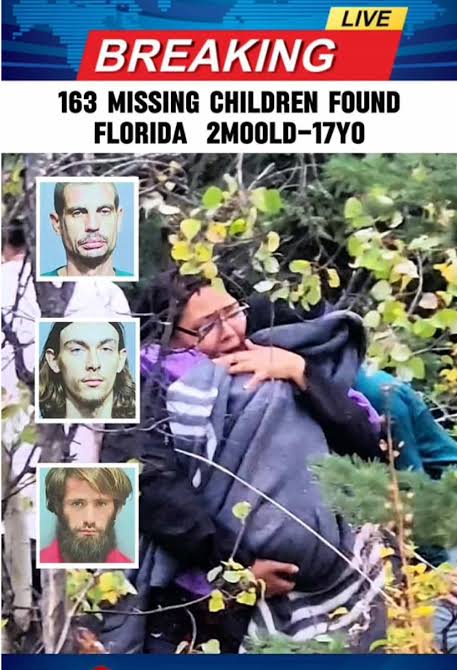
After the recovery announcement, social-media users began circulating photographs of three men and claiming they had kidnapped all 163 children.
That was false.
Fact-checkers found that the three men were linked to separate criminal allegations involving individual victims, not all 163 children.
Videos also circulated showing supposed rescues.
Some were unrelated footage from older incidents.
Lead Stories found that clips used in viral posts had appeared online before Operation Statewide Shield and came from other cases.
The same caution now applies to the Brazilian connection.
A request to investigate does not mean a child has been identified.
A possible match does not mean a match exists.
And an international connection does not automatically mean trafficking occurred.
The evidence has to come first.
What happens next?
For Florida investigators, the focus is likely to remain on individual cases.
For Brazilian authorities, the immediate question is whether José Arthur’s information can be compared with relevant U.S. records.
For his family, the wait continues.
And for the public, there is another question:
Could the 163 recovered children eventually help solve cases beyond Florida?
At this point, there is no answer.
But the fact that the question is now being formally investigated shows how far the consequences of Operation Statewide Shield may extend.
The operation lasted only five days.
The investigations could last much longer.
And if even one previously unresolved international disappearance is eventually connected to a recovered child, the significance of the operation would extend far beyond the original 163.
For now, however, the facts remain clear.
Florida recovered 163 children.
Brazil is checking a possible connection involving one missing boy.
No official match has been announced.
And the investigation continues.
The next major development may not come from another dramatic rescue.
It may come from a database, a fingerprint, a photograph, a document — or one piece of information that finally answers a family’s most painful question.