Four Legs, Two Spines, One Child: How Surgeons in Illinois Removed Dominique’s Parasitic Twin
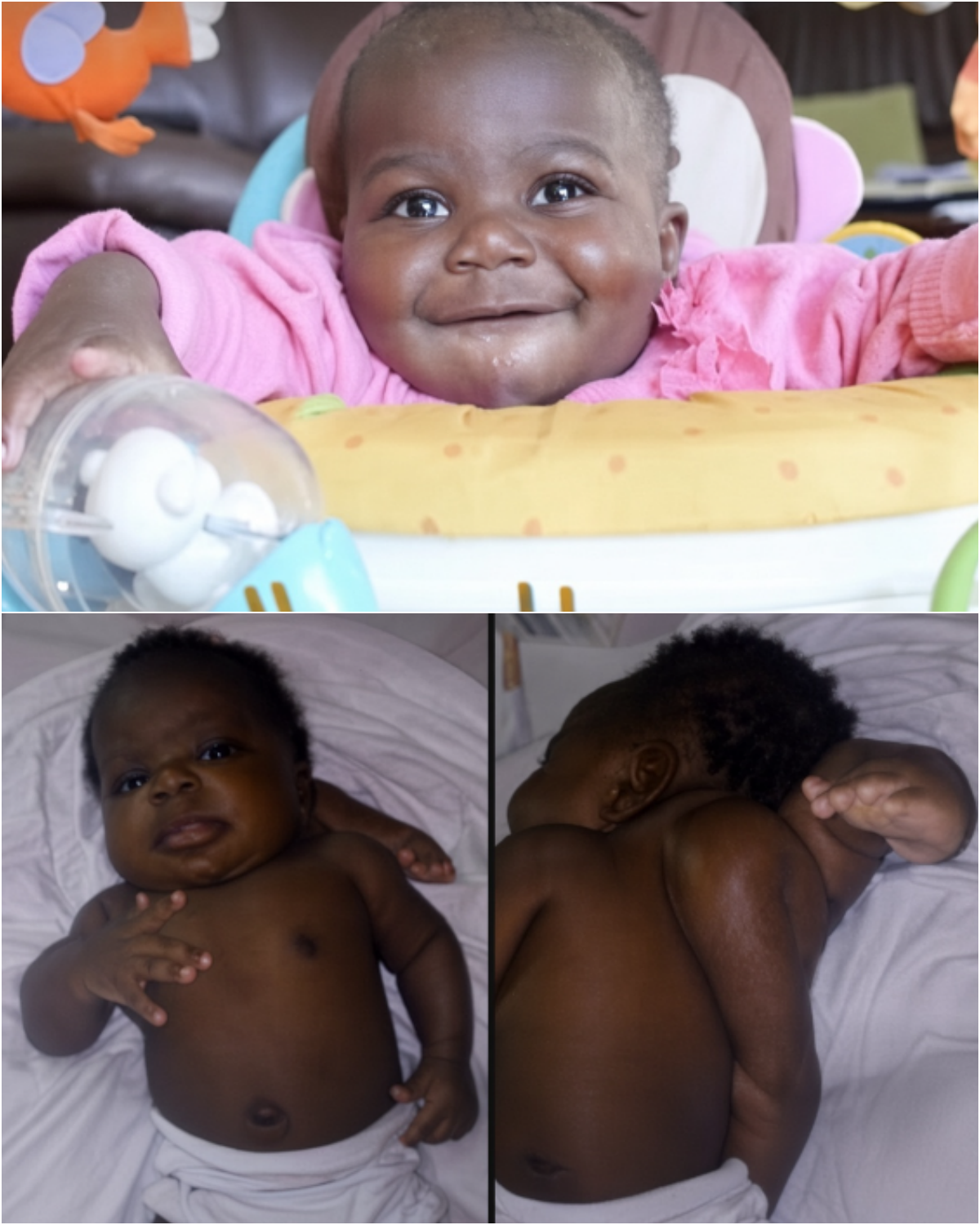
Dominique was born in Côte d’Ivoire with an extremely rare anomaly: a parasitic twin whose pelvis, bladder, and two moving legs protruded from the back of her neck and upper spine. She also had two closely connected spinal columns. The incomplete twin had never developed independently; Dominique’s heart and lungs supplied both. Without surgery she faced a shortened life, traction on her spinal cord, and a high risk of paralysis. Cases of a parasitic twin attached at the spine are so uncommon that physicians described only a handful in the medical literature.
Local hospitals could not operate. Children’s Medical Missions West arranged her transfer to Advocate Children’s Hospital in Park Ridge, Illinois. Pediatric neurosurgeon Dr. John R. Ruge, who had worked with the charity before, assembled a team of five surgeons—neurosurgery, orthopedic spine, and plastic reconstruction—supported by more than fifty clinicians. They built a 3-D model from scans, mapped shared vessels and nerves, and planned to remove the extra limbs in one piece while leaving both spines in place. The second spine, they judged, could remain without preventing a normal life.
On March 8, 2017, when Dominique was ten months old, the six-hour operation succeeded without complication. Surgeons disconnected vessels and nerves, excised a second bladder, and reconstructed the back. She sat up the next day, left the hospital after five days, and stayed with host family Nancy and Tim Swabb in the Chicago area while she recovered. Doctors expected her to walk and develop normally. In April she flew home to Abidjan and was met at the airport by her parents and sisters. Ruge called the reunion the right ending to the journey and the start of her life in Côte d’Ivoire.
The case drew worldwide coverage because the anatomy was dramatic and the outcome clean. It also showed the chain required for such care: a charity willing to fly an infant across continents, a host family, donated surgical time, and a hospital able to coordinate specialties around a single rare anatomy. Parasitic twinning is not a disease that can be prevented; it is a failure of embryonic separation. What can be offered, when resources exist, is a carefully planned separation that lets one child live with one body.
Sources
Advocate Children’s Hospital, “Dominique’s story”; CNN, “Risky surgery separates 10-month-old from parasitic twin” and follow-up reunion report; Chicago Tribune and Reuters coverage of the March 8, 2017, operation at Advocate Children’s Hospital, Park Ridge.