Born Without Arms, Feeding Herself With Her Feet: How Toddler Vasilina Knutzen Became a Viral Lesson in Adaptation
Vasilina was born in March 2015 in Russia’s Sverdlovsk region without functional arms. Her biological mother left her in an orphanage. Photos of the gray-eyed infant circulated on adoption forums. Chris and Elmira Knutzen—an American and a Russian living in Moscow, already parents of biological sons and of an adopted boy, Denis, who has neither arms nor legs—fought a court delay linked to Chris’s citizenship and brought Vasilina home. Elmira later said, “Vasilina has no arms, but God makes no mistakes.” At first the girl was developmentally delayed and underweight; the family used a sling and constant contact to help her recover.
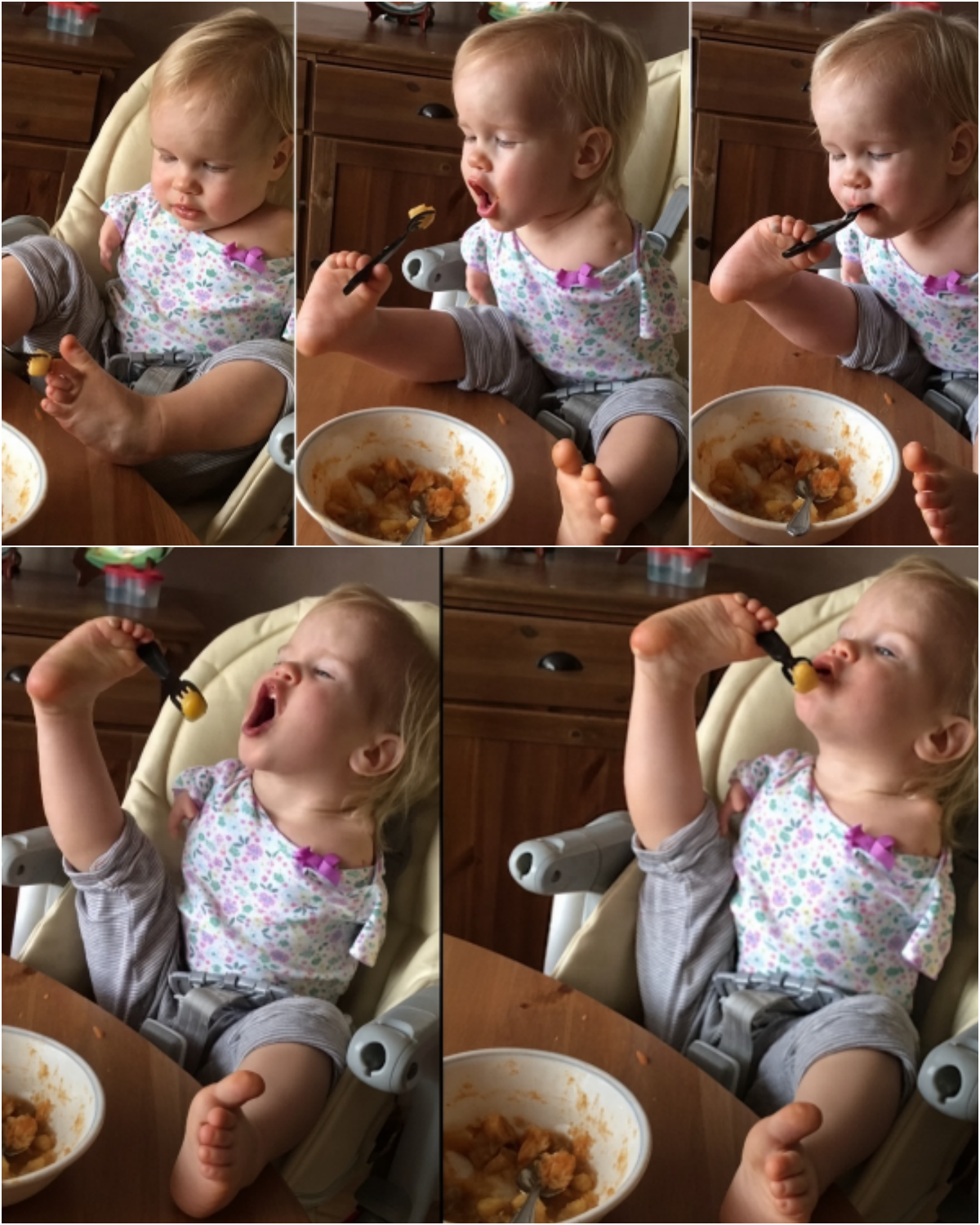
By late 2016, still a toddler, she had taught herself to use her feet the way other children use their hands. In an 18-second clip Elmira posted on Facebook with the caption “For Vasilina’s fans,” Vasilina sits in a high chair, grips a fork between the toes of her right foot, misses her mouth on the first try, repositions the utensil with the other foot, and succeeds. Her mother laughs in the background. The video gathered tens of millions of views—reports at the time cited 45 to 65 million—and more than a million shares. Commenters called her brave and inspirational. The images in circulation match that meal: a blond child in a patterned top lifting food with her foot.
The clip did not invent her skill; it recorded practice. Children born without arms commonly recruit their feet and mouth if they are given time and opportunity. Vasilina already played with toys and sand using her toes. Self-feeding is a later, more precise version of the same adaptation. The family presented the video as a proud milestone, not a medical miracle. Later profiles described her waving with her legs, sitting in a sandbox, and growing up among three brothers who treated her as the princess of the house.
Public reaction mixed admiration with the usual risks of viral disability content: a child’s ordinary competence turned into a global emblem. The more durable fact is smaller. A girl who might have stayed in an institution learned, in a family that already knew limb difference, to get food from bowl to mouth on her own terms. That is adaptation, not spectacle.
Sources
CBS News, Daily Mail, New York Daily News, and RT reports on the October 2016 Facebook video; Pravmir profiles “Vasilina: No Arms, but a Great Deal of Love” and related interviews with Elmira Knutzen.