Two Beds Instead of One: How Erika and Eva Sandoval Became Separate Girls
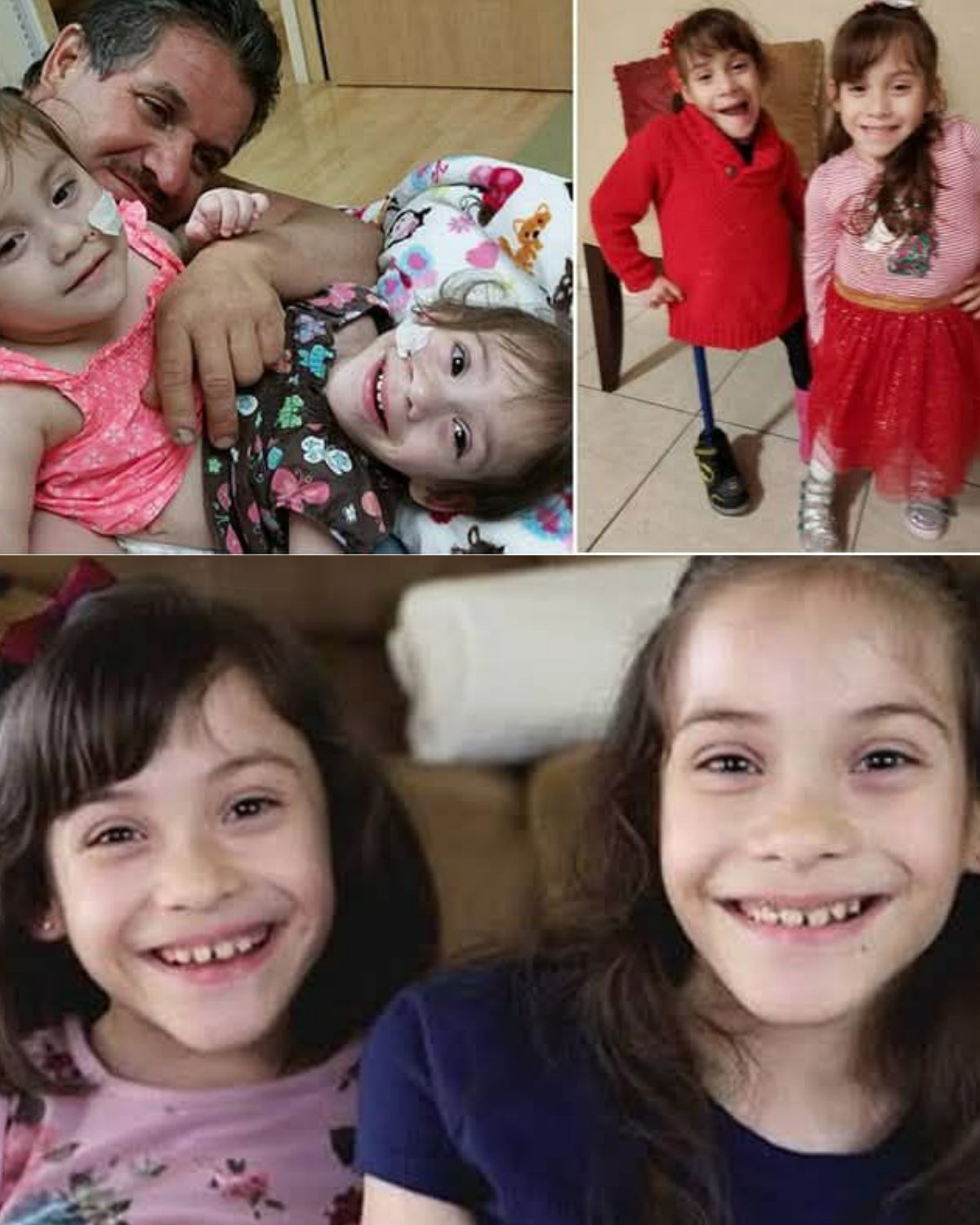
For the first two years of their lives, Erika and Eva Sandoval had never been apart. Born on 10 August 2014 at Lucile Packard Children’s Hospital Stanford, they were thoraco-omphalo-ischiopagus twins: joined from the lower chest and abdomen through the pelvis, facing each other. They had separate hearts, lungs and stomachs. They shared a liver, a bladder, parts of the digestive tract and a diaphragm. Together they had three legs and two kidneys.
Doctors were not sure at first that separation would ever be possible. As the girls grew, the imbalance became harder to ignore. Eva was larger and stronger; Erika was smaller and more frail. Play often meant Eva pulling her sister along. Surgeons told the parents, Aida and Arturo Sandoval of Antelope, California, that waiting would make reconstruction more dangerous. They also gave a blunt number: about a 30 percent chance that one or both girls would not survive the operation.
The parents chose the chance.
On 6 December 2016 a team of about 50 people began work. Lead pediatric surgeon Dr. Gary Hartman divided the shared liver and bladder. Reconstructive surgeon Dr. Peter Lorenz and colleagues closed the wounds; tissue from the unused third leg helped cover Erika’s abdomen. The first cut was late morning. The girls were fully separated by late afternoon. Eva was wheeled into another operating room — the first time she had ever been in a different room from her sister. Reconstruction ran into the early hours of 7 December. Combined time in the operating suite was about 17 to 18 hours.
Both survived.
Each girl left surgery with one kidney and one functional leg. They had to relearn sitting. Custom prostheses came later. Play therapy helped them understand that being apart was allowed. Erika, once the weaker twin, recovered faster than expected. By kindergarten they had distinct tastes — slides versus “choice time” — and were doing what other five-year-olds do. Their mother put it simply: “They’re just thriving and amazing me every day.”
Conjoined-twin separations remain rare. The Sandoval case is remembered less as a single heroic cut than as a long chain: a high-risk pregnancy, two years of shared life, a 30-percent mortality warning, and a family that accepted that number so two children could find out who they were on their own.
Sources
- Stanford Medicine Children’s Health / Lucile Packard Children’s Hospital Stanford, “Conjoined twins successfully separated,” 8 December 2016.
- Stanford Medicine, “Conjoined twins Eva and Erika Sandoval separated at Stanford Children’s” and later follow-up “Formerly conjoined twin girls are flourishing.”
- Sacramento Bee reporting, December 2016 and March 2017.
- Reuters, 9 December 2016.