Bones Like Glass: The Reality Behind a Viral “Devanch” Story
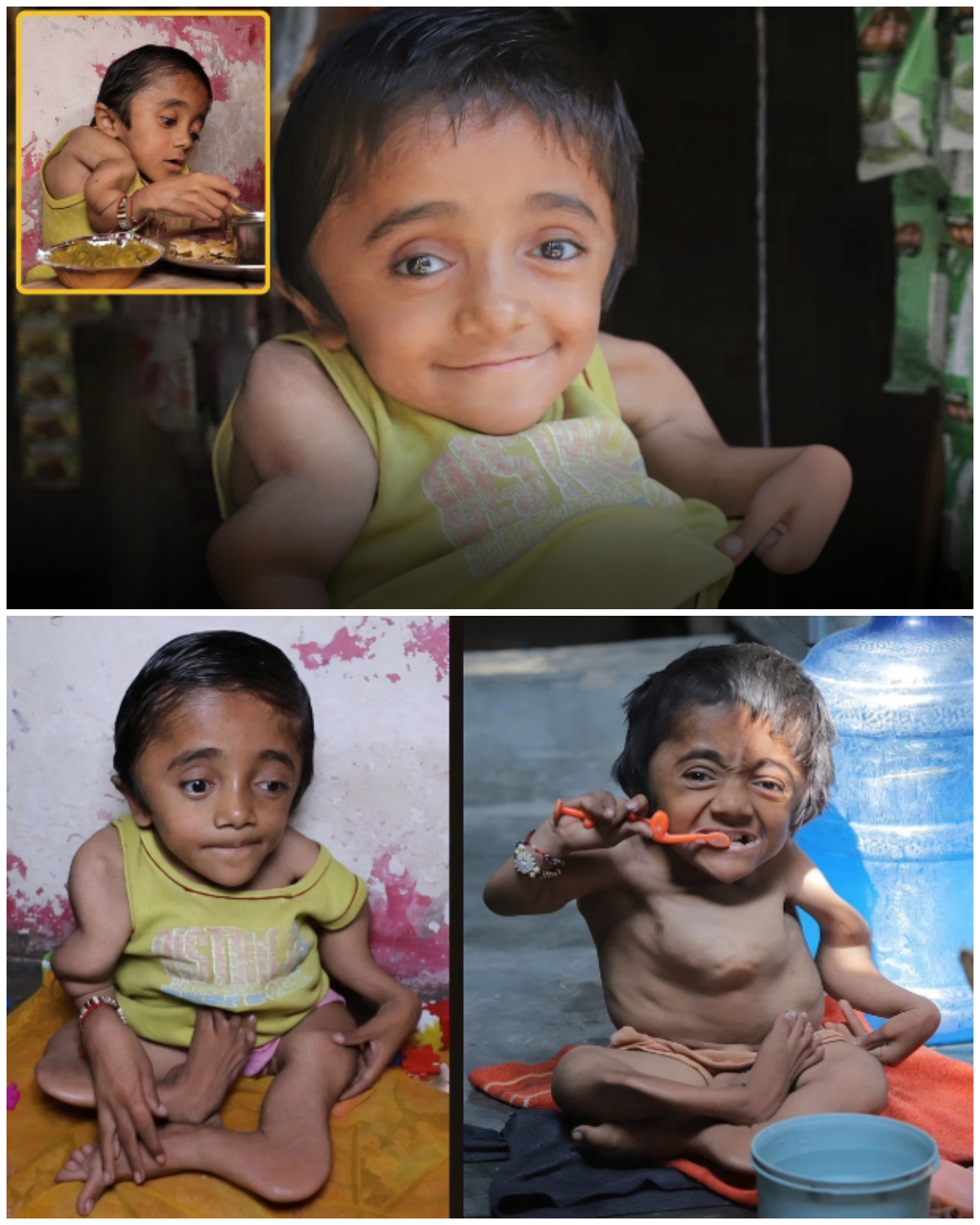
The photographs that travel with the name “Devanch” show a small Indian child in a yellow tank top, sitting on a floor or a towel, limbs short and bowed, chest narrow, smile intact. The Spanish caption claims more than 100 fractures before age eight, telescoping rods, digital school, and a future designing apps for children with limited mobility.
The images themselves match, almost frame for frame, news photos from June 2022 of a boy named Rohit, then 12, from Uttar Pradesh. International outlets—New York Post, Daily Mail, Mirror—reported that he lives with severe osteogenesis imperfecta (OI), nicknamed “glass bones.” Relatives said he had broken about 100 bones. He stood roughly 40 centimetres tall and weighed about 15 kilograms. His mother lifted him; his sister taught him to read because school would not take him. He could brush his own teeth. He said he wanted to be a singer. There is no public record that this child is named Devanch or that he became a software designer.
OI is a group of genetic disorders, most often from variants in the collagen genes COL1A1 or COL1A2. Collagen is the scaffolding of bone. When it is missing or poorly formed, bone shatters under loads that healthy bone ignores: a sneeze, a hug, the weight of a blanket. Type III—the severe, progressively deforming type—produces the short, curved limbs and barrel chest seen in the pictures. Fractures can begin before birth. There is no cure. Treatment is bisphosphonate infusions to thicken bone, surgical rods in the long bones, bracing, pain control, and extreme care in handling.
India has a large documented OI population. Centres in Vellore, Manipal, and Lucknow have published series of hundreds of patients. Recessive forms are more common there than in Western cohorts because of consanguinity. Adults such as Dhanya Ravi (“India’s Glass Woman”) and artist Girija S. have spoken publicly about hundreds of fractures and a life built around caution and work. Those stories are real. The leap from Rohit’s 2022 photographs to an eight-year-old coder named Devanch is not supported by those reports.
What the pictures do show is not in dispute: a child whose skeleton cannot keep the promises a body usually makes, and a face that still smiles while sitting on a concrete floor beside a water jar. Fragility of bone is medical fact. The extra chapter about programming and inclusive apps belongs, until proven, to inspiration copy—not to the boy in the yellow shirt.
Sources
- New York Post / Daily Mail / The Mirror, June 2022: Rohit, Uttar Pradesh, ~100 fractures, osteogenesis imperfecta
- Mayo Clinic overview of osteogenesis imperfecta
- Bone Reports / Clinical Genetics: Indian OI cohorts (SERPINF1, COL1A1/A2, recessive forms)
- The Better India / BBC News India: adult Indians living with OI (Dhanya Ravi, Girija S.)
- Family-circulated collage caption naming “Devanch” (unverified against named news case)