When One Leg Outgrows the Child: Macrodystrophia Lipomatosa
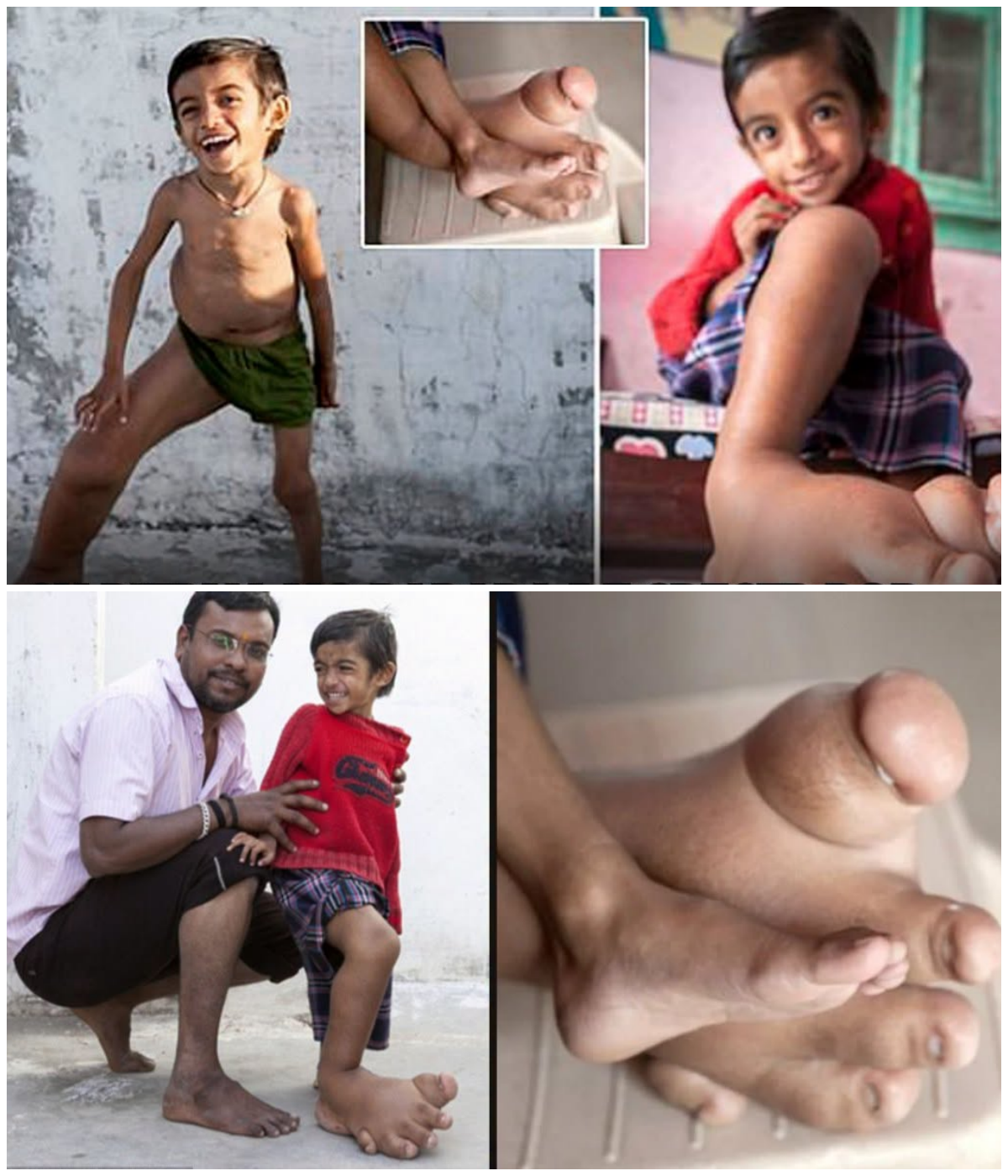
The Spanish caption does not name a patient. It describes a child whose one lower limb has become a “giant leg” from macrodystrophia lipomatosa (MDL)—localized gigantism driven by excess fibroadipose tissue. That diagnosis is real. A single famous boy whose story matches every line of the caption does not appear in international news the way Safa and Marwa or Rahul Sahu do. What follows is the condition as medicine records it.
MDL is a rare, congenital, non-hereditary overgrowth. All mesenchymal tissues in a digit or a limb enlarge; fat in a fine fibrous mesh dominates. It usually follows a nerve territory—median nerve in the hand, plantar nerves in the foot—and is almost always unilateral. Lower limbs are affected slightly more often than upper. Parents notice it at birth or in the first months. Growth can outpace the rest of the body until puberty, then often slows. The limb may be longer, thicker, heavier, and awkward to shoe or to balance on. Syndactyly sometimes travels with it.
It is not a tumor in the cancer sense and not Proteus syndrome or Klippel-Trénaunay, though those are the differentials radiologists rule out. X-ray shows lengthened, splayed bones and lucent fat. MRI shows the fat following nerves and wrapping muscle and periosteum. Biopsy, when done, confirms hamartomatous fibroadipose tissue.
There is no medicine that stops the overgrowth. Treatment is surgical and staged: debulking, ray amputation or shortening of grotesque toes, epiphysiodesis to halt length, osteotomies, custom shoes. Recurrence is common if growth is still active. Nerve injury is the main risk of aggressive excision. Vascular and neurologic exams matter because the same limb may hide a fibrolipomatous hamartoma of nerve.
Published pediatric cases—from India, Pakistan, Romania, and review series of dozens of patients—show the same pattern the caption sketches: a child who cannot run like siblings, a family waiting for a reconstructive plan, and doctors who can reduce bulk and improve gait but cannot promise a normal silhouette. Resilience in those case reports is ordinary cooperation with dressings and physiotherapy, not a branded miracle. Until a named child and hospital are attached to this text, that is the accurate story: a rare local gigantism, a heavy limb, and surgery as the only practical tool.
Sources
- Archives of Plastic Surgery review of MDL cases (PMC4513046)
- Radiopaedia: macrodystrophia lipomatosa
- Journal of Clinical Imaging Science radiological series
- Case reports: Clinical Case Reports (Pakistan, lower-limb gigantism with syndactyly); Indian Journal of Dermatology / Paediatric Dermatology; Romanian Journal of Morphology and Embryology (giant forefoot in a toddler)