After the Strike: Kinan Abu Jabbah
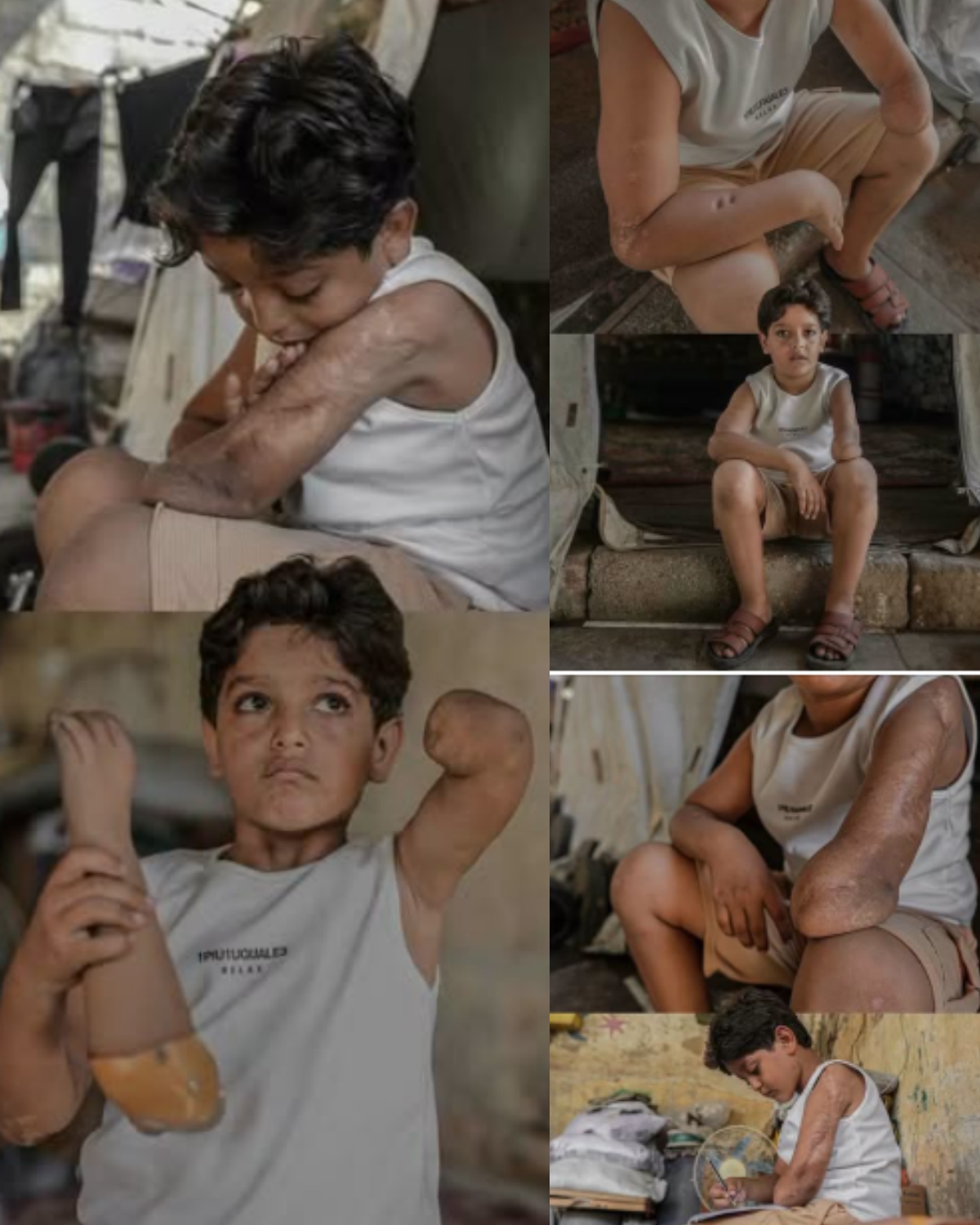
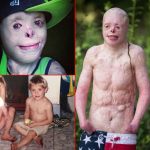
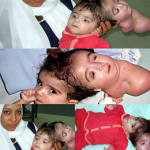
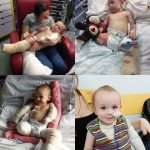
The Vietnamese note names Kinan Abu Jabbah, a Palestinian boy in Gaza who survived an airstrike that killed relatives, lost both arms, and now lives with large scars and a pair of prosthetic forearms. The photographs—a child biting a scarred stump in a wrecked room, sitting on a step, holding a silicone arm while flexing the other, a limb laid on a mattress—are consistent with that description.
That exact spelling does not appear in major English-language wires the way Mahmoud Ajjour (9, both arms lost in a March 2024 strike in Gaza City; World Press Photo of the Year 2025) or other named child amputees do. Gaza’s health authorities and the WHO have counted on the order of 5,000–6,000 war amputees, about a quarter of them children. Prosthetic workshops have been short of plaster and components for long stretches. Many children use whatever can be fitted locally; some wait for evacuation.
What the pictures show does not require a famous byline to be read: a small body learning to eat, play, and pose without hands, in a space of hanging laundry and broken walls. Double upper-limb loss in a child means someone else must dress and feed him until he masters feet, teeth, and sockets. A cosmetic forearm does not restore sensation. It can restore a silhouette.
If Kinan’s family has spoken under that name in Arabic media not indexed here, the medical facts remain the same as for the documented cohort: blast, amputation, scarce rehab, a plastic arm on a bed. The strike is the cause they name. The adaptation is what the camera records.
Sources
- User caption and photographs: Kinan Abu Jabbah, Gaza, double arm amputation after airstrike, family deaths, prostheses
- WHO / Medical Aid for Palestinians / Reuters and AP reporting 2024–2026: thousands of Gaza war amputees, high share of children, restricted prosthetic supplies
- World Press Photo 2025: Mahmoud Ajjour as a documented parallel case of bilateral arm loss in a Gaza child