“Baby Grace” Finally Had a Name — The Tragic Story of Riley Ann Sawyers
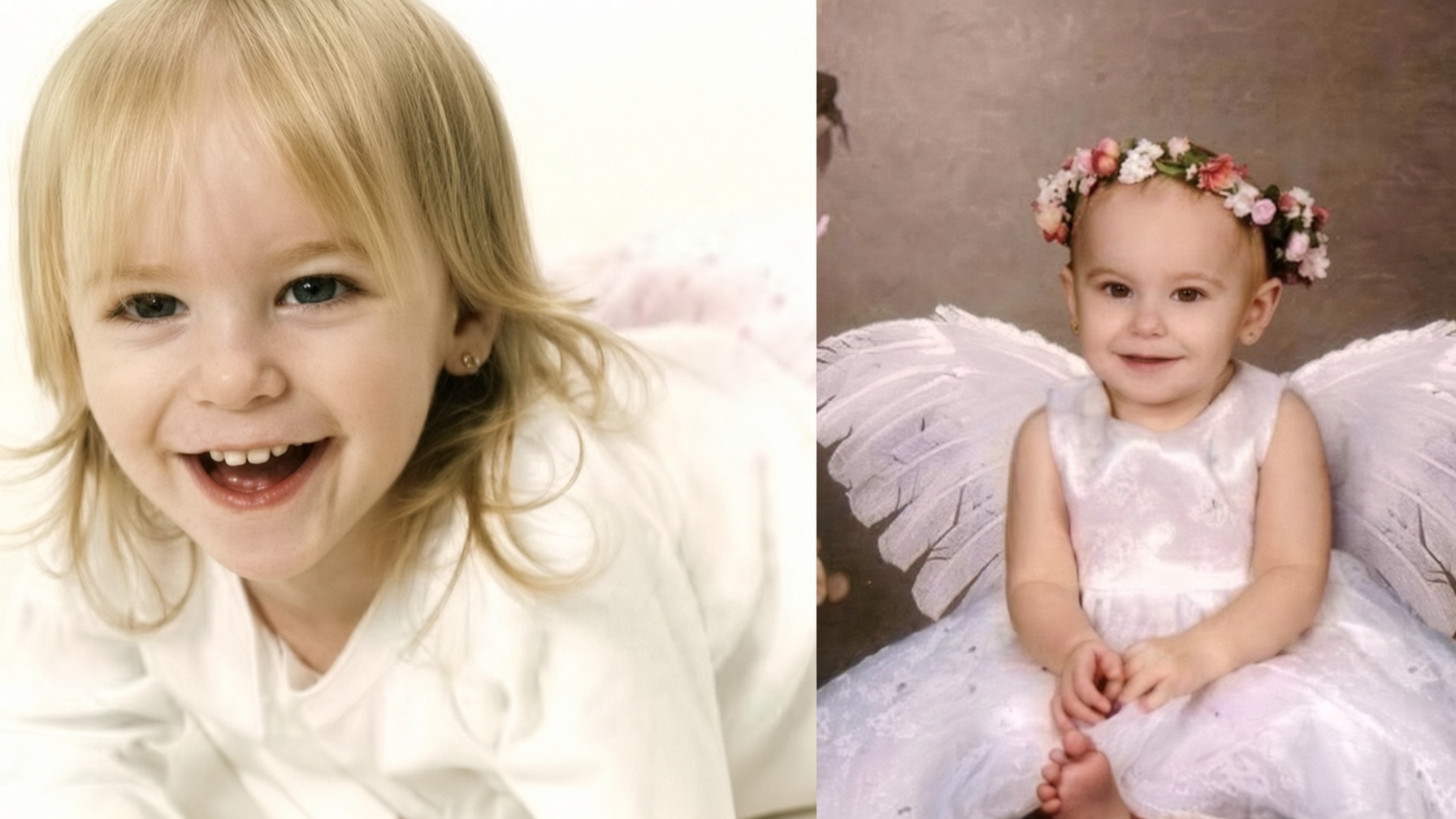
GALVESTON COUNTY, TEXAS — For several weeks in late 2007, investigators faced a heartbreaking mystery: the remains of a little girl had been discovered in Galveston Bay, but no one knew who she was.
The child became known publicly as “Baby Grace.”

She was eventually identified as Riley Ann Sawyers, a 2-year-old girl from Ohio whose remains had been discovered in Texas. DNA testing confirmed her identity on November 30, 2007, after Riley’s paternal grandmother recognized a forensic reconstruction released by investigators.
Nearly two decades later, the case remains one of the most remembered child-abuse cases in Texas, not because the perpetrators were never found, but because the investigation revealed that Riley’s own mother and her mother’s husband were responsible for her death.
Who Was Riley Ann Sawyers?
Riley was born on March 11, 2005, in Mentor, Ohio.
Her parents were Robert Sawyers and Kimberly Dawn Trenor. After the relationship between Riley’s parents broke down, Riley remained closely connected to her paternal grandmother, Sheryl Sawyers.
In 2006, Riley’s father left the family home after alleging that Trenor had physically abused him.
In 2007, Trenor moved with Riley to Texas and married Royce Clyde Zeigler II, a man she had met online. The couple settled in the Spring area near Houston.
That move separated Riley from many relatives who had previously known her well.
The Discovery That Started the Investigation
On October 29, 2007, a fisherman found a plastic container in Galveston Bay containing the remains of a young child.
Investigators could not immediately identify her.
The condition of the remains made the identification especially difficult, so authorities turned to forensic reconstruction and distributed an image intended to show how the little girl might have looked while alive.
The public quickly began calling her Baby Grace.
The case received enormous attention, with investigators appealing to people across the country for help identifying the child.
Riley’s Grandmother Recognized the Reconstruction
The breakthrough came when Sheryl Sawyers saw the forensic image.
She already knew that her granddaughter Riley had been living with her mother in the Houston area and had not been seen by the family for some time.
Sheryl contacted authorities and said she believed the unidentified child could be Riley.
Investigators then conducted DNA testing.

On November 30, 2007, authorities confirmed that Baby Grace was Riley Ann Sawyers.
What had begun as an unidentified-child investigation suddenly became a missing-child investigation centered on Riley’s family.
Investigators Turned Toward Riley’s Mother and Step-Father
After Riley’s identity was confirmed, police focused on Trenor and Zeigler.
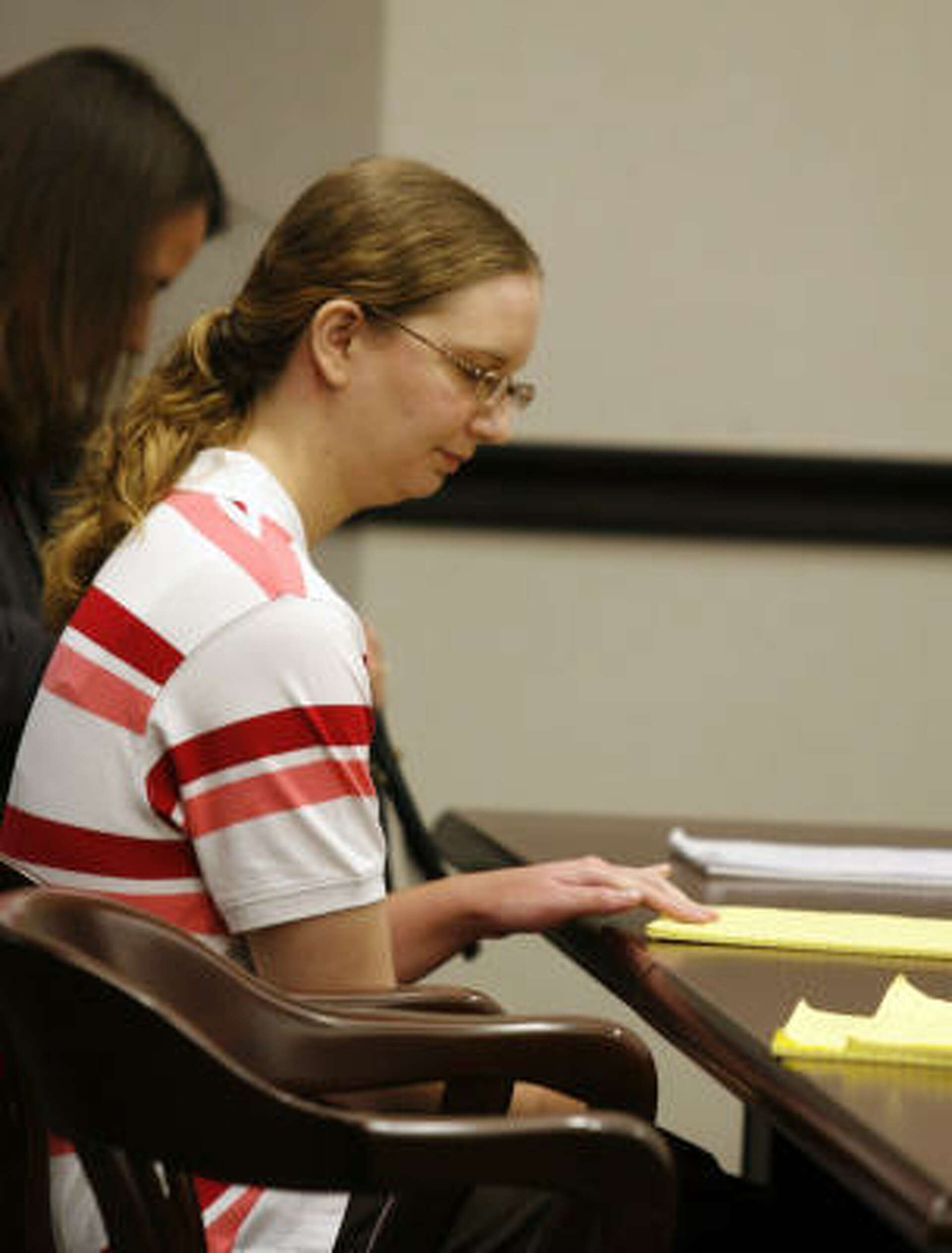
Trenor eventually provided investigators with a videotaped statement and signed affidavit describing what happened inside the family’s home.
According to the probable-cause affidavit, Trenor said she and Zeigler subjected Riley to severe physical punishment on July 24, 2007. The document says Zeigler also caused serious head injuries before Riley died.
The allegations presented in the affidavit were later incorporated into the prosecution’s case.
Investigators also determined that the couple concealed Riley’s remains for a period of time before transporting them to the Galveston area.
Evidence Showed an Effort to Conceal What Happened
The investigation uncovered purchases that prosecutors said were connected to the effort to conceal Riley’s remains.
Among the items were a large plastic storage container, garbage bags, gloves, a shovel, duct tape and concrete mix.
At trial, prosecutors presented purchase records and testimony concerning those items. A forensic expert also testified that Riley had multiple skull fractures.
The evidence helped prosecutors establish what they said was a deliberate effort to hide the child’s identity and conceal the circumstances surrounding her death.
The Case Became a National Story
The unidentified child investigation attracted national media coverage because authorities were searching for the identity of a toddler whose remains had been found in the bay.
The forensic reconstruction became particularly important.
Once Riley was identified, the public story changed dramatically.
“Baby Grace” was no longer an unknown child.
She had a name, a family and relatives who could finally mourn her properly.
Her grandmother’s recognition of the image became one of the defining moments of the investigation.
Trenor Was Convicted of Capital Murder
Kimberly Dawn Trenor eventually went to trial in Galveston County.
On February 2, 2009, a jury found her guilty of capital murder.
Texas did not seek the death penalty, and the court imposed life imprisonment without parole. The Texas Court of Appeals later affirmed the conviction in 2010.
The appellate court specifically found that the evidence was legally and factually sufficient to support the conviction.
That ruling left Trenor’s conviction and sentence intact.
Zeigler Was Convicted Later That Year
Riley’s stepfather, Royce Clyde Zeigler II, was tried separately.
On November 6, 2009, a jury found him guilty of capital murder.
Because prosecutors did not seek the death penalty, Texas law resulted in a sentence of life imprisonment without parole.
Both adults therefore received life sentences with no possibility of ordinary parole.
Riley’s Remains Were Returned to Ohio
After the criminal investigation had progressed far enough to preserve the necessary forensic evidence, Riley’s cremated remains were eventually returned to her family in Ohio.
Her family held a funeral and buried her at Mentor Municipal Cemetery.
The Texas community also created a memorial in her name, with an area later referred to as “Riley’s Island.”
The memorial helped ensure that the child once known only as Baby Grace would be remembered by her real name.
The Case Became an Example of Forensic Identification
The Riley Ann Sawyers case demonstrated how several forensic techniques can work together when a victim cannot initially be identified.
Investigators used a combination of forensic reconstruction, public appeals and DNA testing.
The reconstruction reached Riley’s grandmother.
DNA then supplied confirmation.
That sequence turned an unidentified-child case into an identified victim investigation in a matter of weeks.
The case has continued to be discussed in forensic and criminal-justice contexts because of the identification process.
The Legal Case Was Settled More Than a Decade Ago
Unlike a modern unsolved case, Riley’s case does not remain open because investigators are still searching for a suspect.
The two people convicted in connection with her death were sentenced in 2009 and remain subject to life-without-parole sentences.
In Trenor’s 2010 appeal, the Texas Court of Appeals rejected her challenges and affirmed the conviction.
A 2026 review of Zeigler’s case likewise confirms that his capital-murder conviction resulted in an automatic life-without-parole sentence.
Riley Would Have Turned 21 in 2026
Riley was born in March 2005.
That means March 11, 2026, would have been her 21st birthday.
Instead, her life ended when she was only 2 years old.
That passage of time has made the contrast especially painful for her relatives: Riley should now be a young adult, but her family continues to remember her as the little girl who became known around the world as Baby Grace.
The Name “Baby Grace” Came Before the Truth
For many people, the name Baby Grace remains attached to the case.
But that name was only temporary.
It represented a child investigators had not yet identified.
Once DNA confirmed her identity, the investigation restored the name her family had given her:
Riley Ann Sawyers.
That distinction matters because the case was never only about an unidentified body.
It was about a real child with relatives, a history and a family waiting for answers.
What Happened to the Defendants?
As of September 16, 2026, both Trenor and Zeigler remain associated with life-without-parole sentences for their convictions in the Riley Ann Sawyers case.
Trenor’s conviction was upheld on appeal in 2010.
Zeigler’s 2009 capital-murder conviction resulted in life without parole.
There is no indication in the current reporting that either has been released.
The criminal proceedings therefore remain long settled, even as the case continues to be remembered in true-crime and forensic discussions.
The Lasting Story of Riley Ann Sawyers
The most enduring part of Riley’s case may be the way she was identified.
A fisherman discovered an unidentified child.
A forensic artist helped create a face.
A grandmother saw that face and recognized her granddaughter.
DNA confirmed it.
The child known for weeks as Baby Grace finally had her identity restored.
The courts later established criminal responsibility through two separate capital-murder convictions and life-without-parole sentences.
But beyond the courtroom, Riley remains remembered as a little girl whose life ended far too early.
Latest Status — September 16, 2026
Riley Ann Sawyers was identified by DNA in November 2007 after her grandmother recognized a forensic reconstruction of the unidentified child known as Baby Grace.
Her mother, Kimberly Dawn Trenor, was convicted of capital murder in 2009 and sentenced to life without parole; her conviction was affirmed on appeal in 2010.
Her stepfather, Royce Clyde Zeigler II, was also convicted of capital murder in 2009 and received life without parole.
In 2026, Riley would have been 21 years old.
More than 19 years after her identification, her case remains a stark example of how forensic science and public cooperation can give an unidentified child back her name.
She was once known only as Baby Grace. Today, she is remembered as Riley Ann Sawyers.
Sources
Texas Courts: official capital-case records confirming Trenor’s conviction and life-without-parole sentence.