Khadija Khatoon: The Indian Woman Living With a Rare and Severe Facial Condition
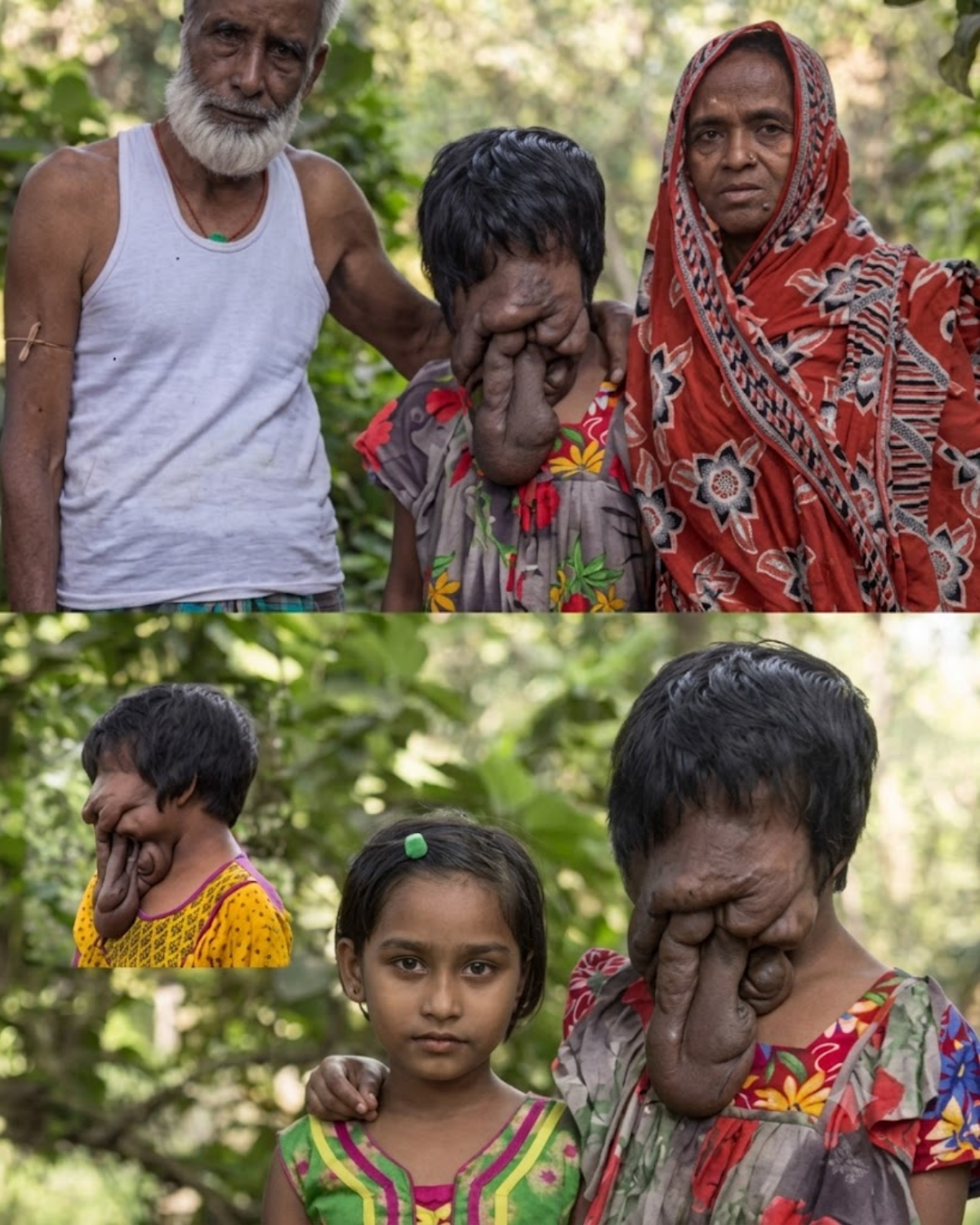
When Khadija Khatoon was born in Kolkata, India, her parents initially noticed only that something was unusual about their newborn daughter. According to her mother, Amina Bibi, Khadija had unusually thick, heavy eyelids and was unable to open her eyes properly. By the time she was about two months old, the family sought medical attention. She reportedly remained in hospital for several months while doctors conducted examinations, but the family was eventually told that little could be done for her condition.
As Khadija grew older, abnormal tissue growth progressively altered the appearance of her face. By the time she was 21, photographs showed extensive growths covering much of her facial features. Her mouth had been displaced and appeared as a small opening on the left side of her face. Media reports at the time described her as a woman who had effectively lost the recognizable features of a conventional face.
Doctors cited in contemporary reports believed that Khadija had neurofibromatosis, a group of genetic disorders associated with tumors or abnormal growths involving nerve tissue. However, reports also make clear that the precise medical details available publicly were limited, so claims about a specific subtype or exact mechanism should be treated cautiously.
The condition profoundly affected Khadija’s childhood and education. She never attended school and reportedly learned what she knew from her brothers and sisters. Her family lived with limited financial resources, making specialized medical treatment difficult to obtain. She also experienced significant social isolation and spent much of her life at home with her family.
Despite the extraordinary physical changes, Khadija spoke publicly about her life with an acceptance that surprised many people. In reports from 2015, she said that her family were her closest companions and that she was content to live as she was. She also expressed fear about undergoing major surgery, particularly because doctors had warned that an operation could carry serious risks.
Her story eventually attracted wider attention after Rupak Dutta, a local government official, encountered her in Kolkata and shared her photograph on social media in an effort to find medical assistance. The resulting publicity prompted organizations and specialists to explore possible treatment options.
In November 2015, the Nitte Meenakshi Institute of Craniofacial Surgery in Mangaluru offered Khadija free treatment. Dr. Vikram Shetty said that, if she agreed, specialists could consider reconstructive treatment in several stages. The proposal highlighted how complex her condition was and the need for careful assessment before attempting surgery.
It is important to distinguish Khadija’s documented story from some dramatic descriptions that have circulated online. She was not literally born without a face, nor is there reliable evidence that she suffered from complete facial agenesis or arhinia. Contemporary reporting instead describes a girl who was born with severe facial abnormalities that progressively became associated with extensive tissue growth. Likewise, there is no reliable source supporting claims that her family created homemade breathing or feeding devices to keep her alive.
Khadija’s case remains an extraordinary example of how a rare medical disorder can affect far more than a person’s physical appearance. Her story also drew attention to the difficulties faced by people with uncommon conditions when poverty, limited access to specialist care and social isolation intersect.
Sources: Deccan Chronicle; The News Minute; VietnamPlus; Infobae; reports citing Daily Mail and Asia Press.