Lucas Santa Maria: The Baby Who Survived a Condition Once Considered Fatal
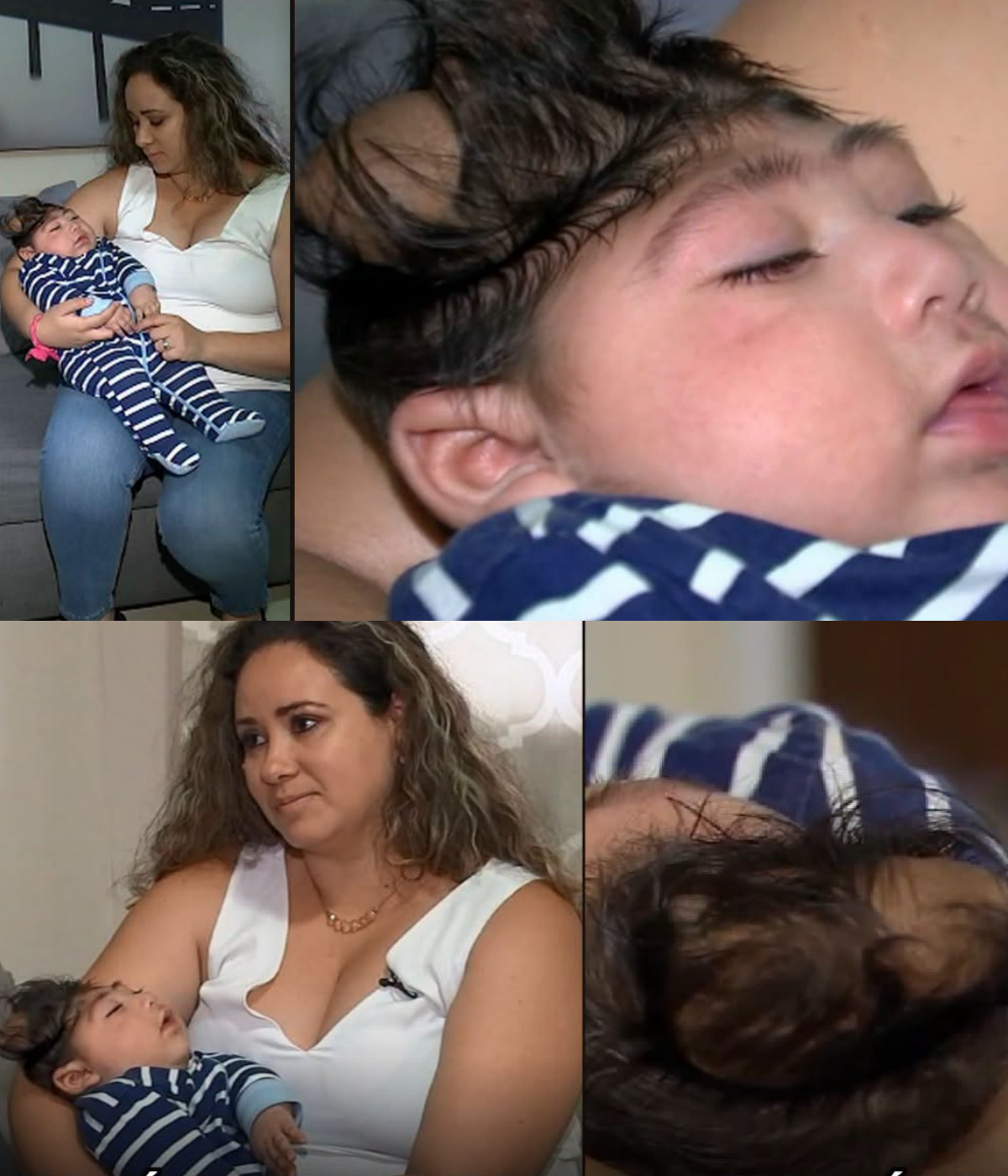
When Maria Santa Maria of Garfield, New Jersey, learned she was pregnant in 2018, she expected another routine pregnancy. But during an ultrasound at around 10–12 weeks, doctors discovered that her developing baby had exencephaly, a rare neural-tube defect in which the skull does not form properly and a large portion of the developing brain remains outside the protective skull. Doctors warned Maria that the condition was considered fatal and that her baby might not survive the pregnancy or live long after birth.
Maria decided to continue the pregnancy. As the due date approached, the family prepared themselves for the possibility that their son might survive only for minutes or hours. Maria’s three daughters were brought to the hospital to meet their baby brother, while her husband, Augusto Santa Maria, even contacted a funeral home in anticipation of the worst outcome.
Lucas was born at Hackensack University Medical Center on March 7, 2019, at 35 weeks of pregnancy. He was born without much of the skull above his eyebrows and ears, but remarkably, he was breathing on his own and was able to feed. Instead of dying shortly after birth as doctors had expected, he continued to survive.
His unexpected stability gave pediatric neurosurgeon Dr. Timothy Vogel an opportunity to attempt an unprecedented operation. Four to five days after birth, the surgical team performed a lengthy procedure designed to protect the functioning portion of Lucas’ brain. Doctors drained excess fluid, removed abnormal and deteriorating brain tissue, and closed the exposed area using scalp tissue that had developed at the base of his skull.
The operation was particularly challenging because Lucas did not have a normally formed skull over a large portion of his head. According to Dr. Vogel, the remaining healthy brain tissue needed to be protected from further damage and from complications such as bleeding, stroke and seizures. The team also anticipated that Lucas’ developing skull could gradually provide additional protection as he grew.
The results were remarkable. Lucas recovered well enough to leave the neonatal intensive care unit after about a week. At seven months old, he was eating baby food, receiving physical therapy, lifting his head, moving his legs and attempting to crawl. Doctors also observed that bone was beginning to form around portions of his brain, providing additional natural protection.
At that stage, however, physicians remained cautious about predicting his long-term development. Because Lucas was believed to be the first known child to survive exencephaly for an extended period, there was little medical precedent to indicate how his neurological development would progress.
By 2021, Lucas had reached his second birthday. Reports from that time said he continued to live with his family after undergoing the groundbreaking treatment. His case had become an important example of how an exceptionally rare and severe congenital condition could present an unexpected medical challenge and how individualized surgical care could change the outcome.
Lucas Santa Maria’s story is therefore more accurately described not simply as a child “born without half his head,” but as the story of a baby born with exencephaly, a severe neural-tube defect involving incomplete formation of the skull and exposure of developing brain tissue. His survival following specialized neurosurgery was extraordinary, particularly because the condition had previously been regarded as incompatible with prolonged survival after birth.
Sources: Hackensack Meridian Health; ABC News/Good Morning America; ABC7 New York (WABC); The Philadelphia Inquirer; Ivanhoe Newswire; North Jersey Brain & Spine.