AmieLynn and JamieLynn Finley: The Conjoined Twins Who Were Successfully Separated After Months of Preparation
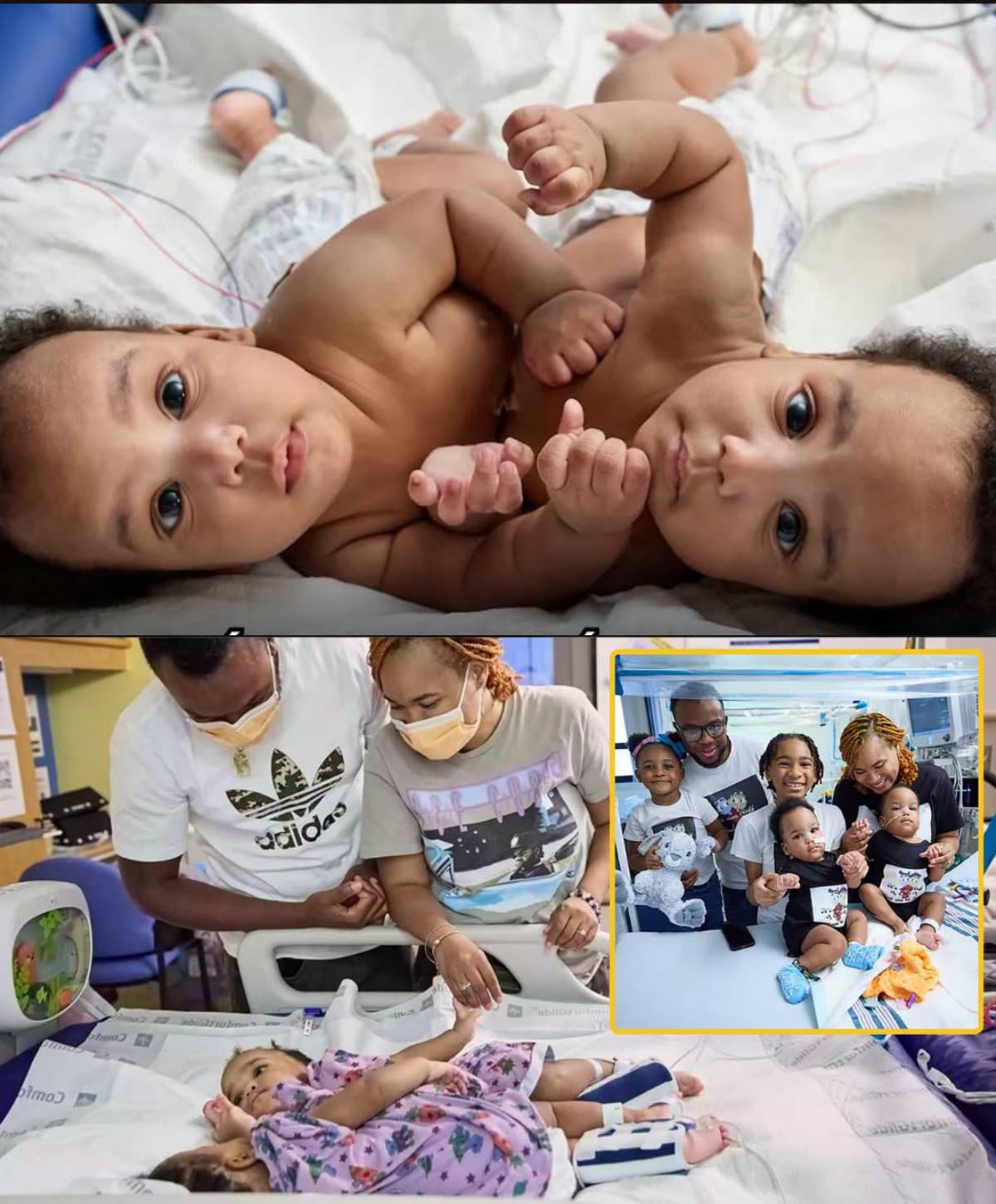
When AmieLynn Rose and JamieLynn Rae Finley were born in Fort Worth, Texas, on October 3, 2022, the twin sisters faced an extraordinarily complex beginning. They were joined from the lower part of the chest to the belly button and shared abdominal structures, including a fused liver. They were born prematurely at 34 weeks and initially required intensive neonatal care.
Their parents, Amanda Arciniega and James Finley, learned during pregnancy that they were expecting conjoined twins. From that point, doctors closely monitored the pregnancy and prepared for the possibility that the girls might eventually be candidates for separation surgery. Because conjoined twins have highly individual anatomy, detailed imaging and months of planning were necessary before surgeons could determine whether separation was feasible.
After birth, the twins remained in the hospital for several months so they could grow stronger while specialists studied their anatomy and prepared for surgery. They were transferred to Cook Children’s Medical Center in Fort Worth, where a multidisciplinary team developed a detailed surgical plan. The hospital’s specialists also used imaging and physical models to rehearse the procedure and anticipate potential complications.
On January 23, 2023, when the girls were about 16 weeks old, the highly anticipated operation took place. The procedure lasted approximately 11 hours and involved 25 medical professionals, including six surgeons. The surgical team divided into two groups during the operation, with each group ultimately responsible for one of the babies.
One of the most technically demanding parts of the procedure was separating the girls’ fused liver tissue. Although the twins were often described as “sharing a liver,” detailed reporting explained that their liver structures were fused while many of the internal systems serving each child were separate. Surgeons carefully identified the appropriate plane between the two portions before dividing the tissue and sealing blood vessels and bile ducts.
The operation also required surgeons to separate layers of skin, muscle and connective tissue before reconstructing the abdominal walls of both babies. According to the medical team, the preparation beforehand was essential because the surgeons needed to anticipate how each child’s body would look and function after separation.
The procedure was successful. After nearly four months of being physically connected, AmieLynn and JamieLynn were finally placed on separate beds as two independent patients. Their recovery, however, continued in the hospital. JamieLynn was discharged on March 21, while AmieLynn required additional recovery in the neonatal intensive care unit and went home in April.
Their progress continued after returning home. By January 2024, one year after the separation operation, the sisters were reported to be walking, talking and playing like other toddlers. Their successful recovery marked an important milestone for their family and for Cook Children’s, where the operation was the hospital’s first successful separation of conjoined twins.
The story of AmieLynn and JamieLynn also demonstrates why the treatment of conjoined twins requires much more than a single operation. Their care involved fetal specialists, neonatologists, surgeons, anesthesiologists, nurses and other specialists who worked together for months before the operation and continued caring for the sisters afterward.
Their case is particularly notable because the twins were joined through the chest and abdomen but had anatomy that made surgical separation possible. The successful procedure ultimately gave each girl the opportunity to continue growing independently, while their family watched them reach milestones that had once seemed far away.
Sources: Cook Children’s Medical Center; ABC News/Good Morning America; CBS News; Fort Worth Star-Telegram; Dallas Morning News; Pediatrix.