Abigail and Micaela Bachinskiy: Shared Skull, Shared Veins, and a Twenty-Four-Hour Separation
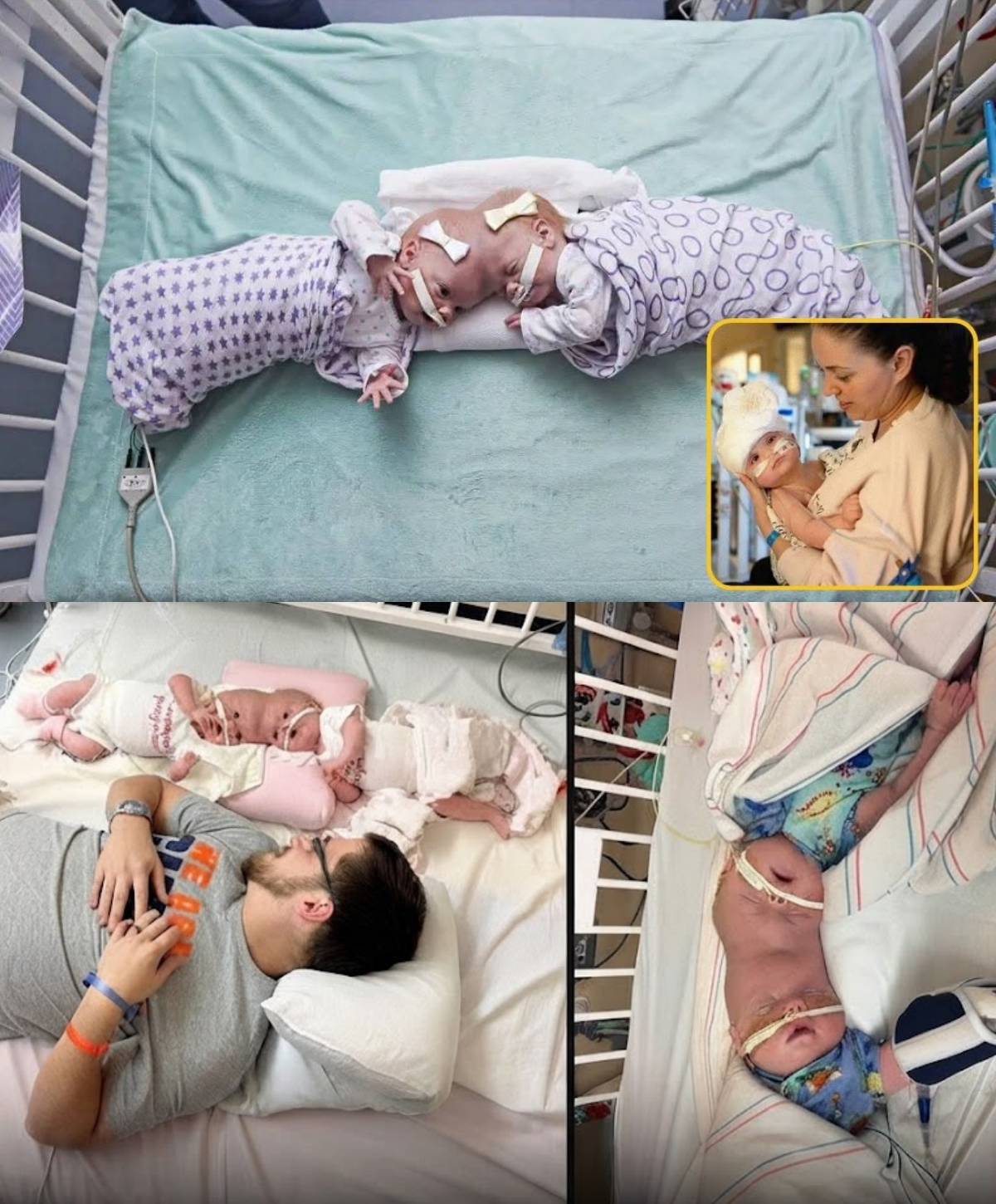
Abigail and Micaela Bachinskiy were born on 30 December 2019 at UC Davis Children’s Hospital, joined at the head—craniopagus twins, among the rarest of conjoined births. Their mother, Liliya Miroshnik, learned the diagnosis at 11 weeks. Their father, Anatoliy Bachinskiy, already a twin himself, told her they would get through it. The girls spent seven weeks in neonatal intensive care, then went home to North Highlands, California, with three older brothers, while surgeons planned whether anatomy would allow two living children. They were joined by bone, scalp and critical venous drainage. Shared cerebral vessels—not a single fused personality—are what make this operation lethal when it fails.
The team, led by neurosurgeon Michael Edwards with plastic surgery and a circulating staff of more than 30, used 3-D printed models, virtual planning and rehearsal of every turn of the beds. Tissue expanders grew extra scalp. Custom CPAP gear was built for two heads that would become two airways. The final separation ran about 24 hours across 24–25 October 2020, when the twins were roughly ten months old. Official cranial separation was called in the early morning; reconstruction of two skulls and two scalps filled the rest of the night. They left the theatre in two beds. The Spanish caption’s “more than twenty hours” and “fifty specialists” are the usual rounding of a case that hospitals describe as 24 hours and 30-plus in the room.
They recovered in paediatric intensive care, went home before Christmas and their first birthday, and were described by their mother as happy, smiling babies. That is the public ending. The quieter medical point is the same in every successful craniopagus paper: most of these twins die in the first day of life; of those who reach surgery, the limiting step is dividing a shared sinus without giving one child a stroke. Staging, distraction and navigation exist to make that cut less of a coin toss. Faith was the family’s language. The procedure was engineering of blood flow.
Seeing each other face to face is the line every campaign uses. It is true and incomplete. Two infants who have never turned their heads independently must still learn sitting, feeding and walking as separate bodies, with whatever weakness a sacrificed vein leaves behind. UC Davis called them miracle babies. The accurate sentence is narrower: a centre that had months to map vessels, expand skin and staff two teams produced two surviving girls. That is rare. It is not mysticism.
Sources
- UC Davis Health / University of California news
- PEOPLE interview with Liliya and Anatoliy Bachinskiy
- UC Davis documentary series on the 24-hour operation
- Standard craniopagus reviews on shared venous sinuses as the decisive risk