Ganesh of Assam: A Frontonasal Encephalocele, Not an Avatar
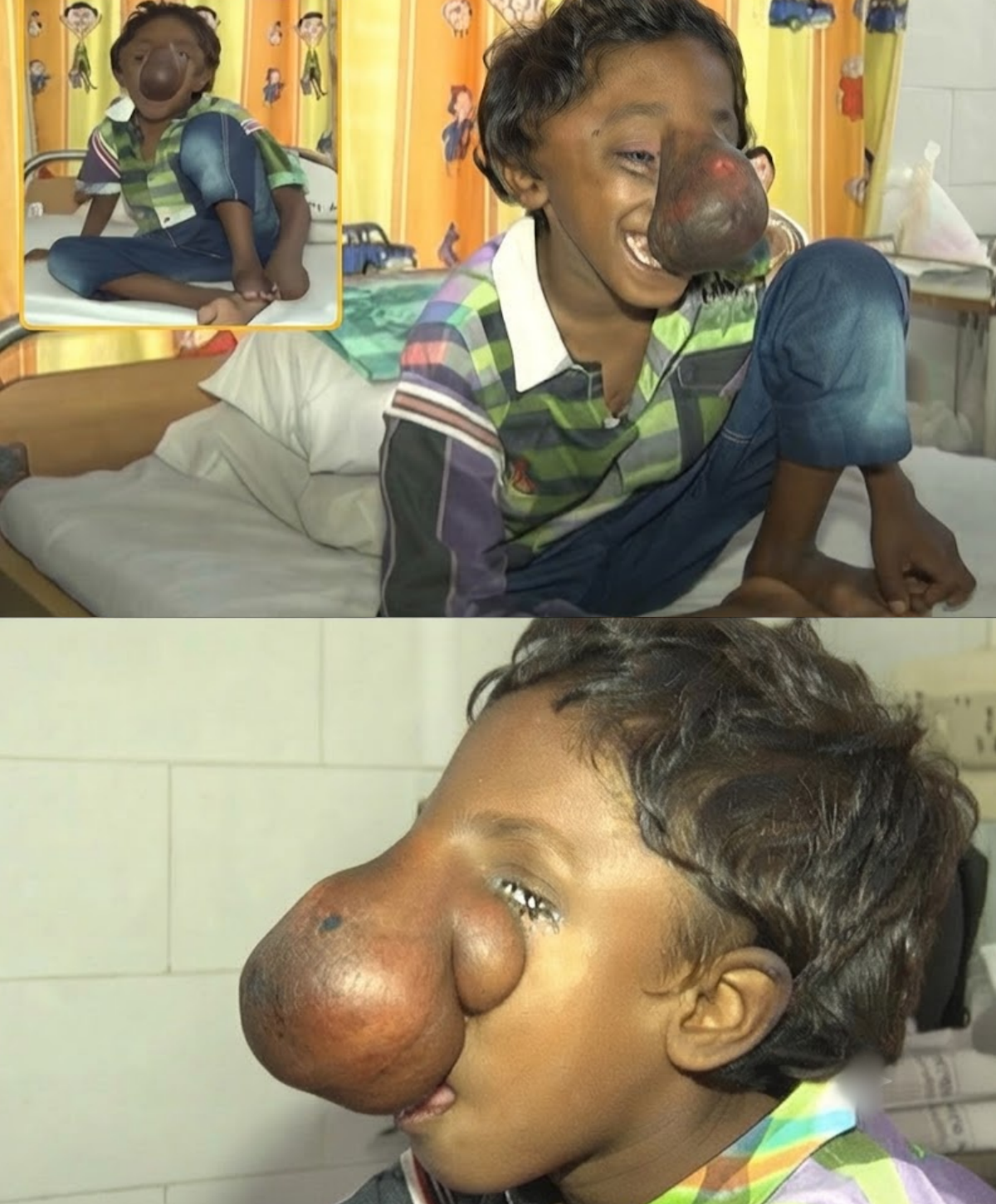
In June 2017 Indian and British papers ran photographs of a nine-year-old found by police in Assam: a heavy, trunk-like mass hanging from the midface, speech and feeding almost impossible, vision crowded. Locals called him Ganesh and treated the swelling as the elephant-headed god. He could not say who he was. Officers passed him to a child-welfare committee; the NGO Bakakhat Nirman Gut took him in. President Jiten Gogoi said volunteers fed him because he could not lift the weight of his own nose. People brought offerings. The child was in pain.
The diagnosis was frontonasal encephalocele—a neural-tube defect in which brain and meninges herniate through an unclosed gap between the frontal bone and the nose. Anterior encephaloceles are uncommon in the West and relatively more frequent in parts of South and Southeast Asia, including Assam tea-garden communities. The sac is not sacred tissue. It can leak cerebrospinal fluid, invite meningitis, distort the orbits and delay development. Leaving it for nine years made a treatable congenital defect into an emergency of airway, nutrition and infection risk.
Shibu Pillai, a neurosurgeon at Narayana Multi-specialty Hospital in Bengaluru, described a six-hour operation to reduce the mass and rebuild the nose. The priority was not resemblance to a deity. It was to put non-functional herniated tissue back or remove it, close the cranial base and give the boy a face he could eat through. The Mirror later published a postoperative smile. Long-term follow-up in the open press is thin; the medical claim that stands is the one the surgeons made before they cut: this is a skull defect, not a blessing.
The Spanish text is right to separate superstition from protocol. Worship delayed care. Folic-acid programmes and early paediatric neurosurgery prevent or repair most of these lesions in infancy. A child who reaches school age with a pulsatile trunk on his face is evidence of a health system that arrived late, not of a god who arrived early. Dignity, in this case, was a bone graft and a feeding spoon that no longer had to dodge a sac.
Sources
- India Today; India.com; The Health Site (June 2017)
- The Mirror; The Sun (Caters) on Narayana Hospital / Dr Shibu Pillai
- Journal of Neurosurgery: Pediatrics — anterior encephaloceles among Assamese tea workers (Dutta, 2010)