GRAND JURY FINDS NO CRIMINAL WRONGDOING IN NOLAN WELLS DEATH AS INVESTIGATION POINTS TO POSSIBLE DROWNING

A Mississippi grand jury has declined to indict anyone in the death of 18-year-old Nolan Xavier Wells, concluding after an extensive review that there was no credible evidence of criminal conduct or racial motivation surrounding the teenager’s disappearance and death.
The decision comes more than two months after Wells disappeared during a Fourth of July outing to Horn Island, a barrier island off the Mississippi Gulf Coast.
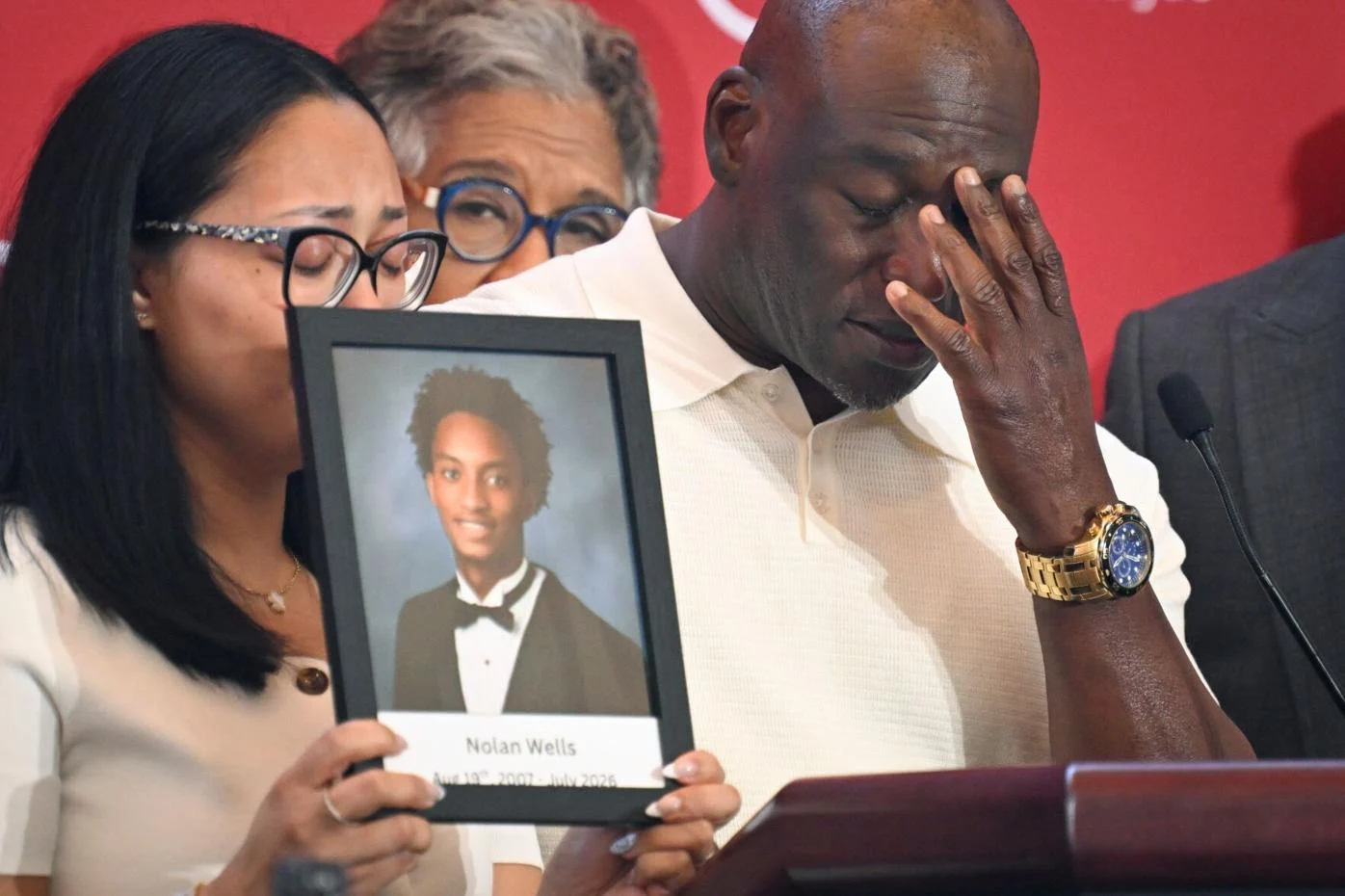
His body was recovered from the water near the island on July 6, two days after he went missing.
The grand jury ultimately found that the position, condition, time of discovery and location of Wells’ body were consistent with drowning.
However, investigators have not established drowning as an unequivocal medical cause of death. Both the state examination and an independent autopsy arranged by Wells’ family had previously left the cause and manner of death undetermined.
The distinction has remained central to the case because the circumstances surrounding Wells’ disappearance generated widespread questions and intense public speculation.
NO INDICTMENT AFTER AN EXTENSIVE REVIEW
The Jackson County grand jury reviewed a large amount of evidence before reaching its decision.
According to the report, jurors heard testimony from 43 witnesses and examined physical evidence, digital records, police reports, photographs, videos, maps, cellphone information and GPS data.
The panel also reviewed evidence involving the boats that transported people to and from Horn Island on July 4.
After considering that material, the grand jury returned what is known as a “no true bill,” meaning there was not sufficient evidence to bring criminal charges against anyone in connection with Wells’ death.
The panel specifically found no credible evidence that people aboard the boats involved in the trip had committed criminal acts related to Wells.
The decision means that, at present, no one will face criminal charges over his death.
HOW NOLAN DISAPPEARED
Wells had traveled to Horn Island with friends as part of a larger Fourth of July gathering.
According to information reviewed by investigators, Wells remained on the island after the boat he arrived on left.
Friends told authorities that he had decided to stay behind and speak with a girl he had met during the gathering.
His friends returned toward the mainland without him.
Wells was last known to have been on or near the island during the afternoon of July 4.
His mother later reported him missing.
A search followed, and his body was discovered in the water near Horn Island on July 6.
The circumstances immediately prompted questions about why Wells had remained behind and what happened during the period between his disappearance and the discovery of his body.
THE GRAND JURY ADDRESSED THE BOAT ACCOUNTS
One of the major questions surrounding the case involved the people who had traveled with Wells.
Public attention focused heavily on three boats — the Triton, Palm Beach and Tideline.
Investigators examined GPS information, surveillance footage, cellphone data and statements from people associated with the boats.
The grand jury concluded that those individuals cooperated with the investigation and provided investigators with electronic devices, GPS information, video and other evidence.
The panel said it found no credible evidence that anyone aboard those boats had engaged in criminal conduct connected to Wells’ death.
The report also rejected several claims that had circulated publicly about the boats and the people aboard them.
NO EVIDENCE OF A PHYSICAL ALTERCATION
The grand jury found no evidence that Wells had been involved in a physical fight or argument on July 4.
That finding addresses one of the major questions raised during the public debate surrounding the case.
Investigators also reviewed testimony from a person who said they saw Wells slip awkwardly from the side of a boat around the time he was last seen.
The witness could not determine whether Wells struck his head during the fall.
According to the grand jury report, however, Wells continued socializing afterward and did not appear to be injured.
That testimony became part of the evidence considered by jurors when evaluating whether an accidental fall could have contributed to what happened.

THE BRUISING FOUND ON WELLS
The investigation did uncover bruising on the back of Wells’ head.
But the grand jury concluded that the injury was not fatal.
The panel also said it found no evidence of another fatal injury or an underlying organic disease that would explain his death.
What caused the head injury remained uncertain.
That uncertainty is one reason the exact sequence of events before Wells entered the water cannot be reconstructed with complete certainty from the available evidence.
WHY DROWNING BECAME THE LEADING EXPLANATION
The grand jury’s reference to drowning was based on the circumstances surrounding where and how Wells’ body was recovered.
The report did not say that a medical examiner had definitively established drowning as the cause of death.
Instead, the panel said the evidence was consistent with drowning and described that conclusion as one reached through the available evidence and elimination of other explanations.
That distinction matters because the medical examinations were complicated by the condition of the body.
The independent examination arranged by Wells’ family had also classified the cause and manner of death as undetermined pending further investigation.
TOXICOLOGY DID NOT PROVIDE A CLEAR ANSWER
Toxicology was another part of the investigation.
The grand jury report said the toxicology results were not particularly informative because decomposition affected the reliability of the samples available for testing.
The panel did note that Wells had no cocaine detected and found no evidence that he had used cocaine.
Investigators also determined that Wells had purchased alcohol using a fake identification card.
The grand jury said there was no evidence that an adult over the legal drinking age had provided alcohol to Wells or his friends on the island.
These findings did not establish intoxication as the cause of Wells’ death.
THE PHONE QUESTION
Another issue that attracted widespread attention was Wells’ cellphone.
His phone was later brought back to the mainland after his disappearance, while Wells himself remained missing.
Some public speculation focused on why his phone was not with him.
The grand jury, however, concluded that the phone’s movement was not inherently suspicious.
The report noted that people at Horn Island frequently moved between boats and sometimes left personal belongings, including phones, on boats belonging to friends.
Jurors also found that Wells’ phone was not the only phone that returned to the mainland without its owner.
Based on the evidence reviewed, the grand jury did not consider the phone’s location evidence of criminal conduct.
THE RACE QUESTION
Wells was Black, while some of the friends who accompanied him on the trip were White.
As the case attracted national attention, allegations emerged online that race may have played a role in his disappearance or death.
Those claims became a major part of the public discussion.
The Jackson County district attorney, Angel Myers McIlrath, said investigators found no evidence supporting the allegation that Wells’ death was racially motivated.
The grand jury reached the same conclusion after reviewing the evidence.
The panel found no credible evidence that racial motivation played a role in the events surrounding Wells’ disappearance or death.
THE DISTRICT ATTORNEY RESPONDS TO ONLINE SPECULATION
McIlrath strongly criticized the wave of online allegations that had surrounded the case.
In a statement released with the grand jury report, she said the public narrative about Wells traveling to an island with White friends and only those friends returning had been presented inaccurately.
She argued that the investigation showed Wells had been part of a much larger gathering and that the evidence did not support the criminal or racially motivated theories that had spread online.
Her comments were directed at claims about the investigation rather than at the family’s grief or questions about Wells’ death.
WELLS’ FAMILY STILL HAS QUESTIONS
The grand jury’s decision has not ended the family’s concerns.
Wells’ parents and their attorney, civil-rights lawyer Ben Crump, have questioned whether the available evidence fully explains how the 18-year-old ended up in the water.
Crump has continued to call for additional transparency, including access to investigative materials and a fuller explanation of the medical findings.
The family’s position differs from the conclusion reached by the grand jury.
While the jury found no credible evidence of criminal conduct, Wells’ family has said the decision leaves important questions unanswered.
AN INDEPENDENT AUTOPSY ALSO COULD NOT DETERMINE THE CAUSE
The family previously arranged an independent autopsy.
That examination did not establish a definitive cause or manner of death.
The independent findings therefore did not provide the clear medical answer the family had hoped for.
The state medical examination also failed to conclusively establish the cause.
Instead, the evidence available to investigators pointed toward drowning as a possible explanation while leaving some uncertainty about the exact circumstances.
The grand jury ultimately accepted that the circumstances were consistent with drowning but did not claim that every question surrounding Wells’ death had been medically resolved.
THE INVESTIGATION COULD BE REOPENED
Although the grand jury has declined to bring charges, the case is not necessarily closed forever.
Mississippi has no statute of limitations for homicide cases.
The grand jury report specifically states that if credible new evidence emerges indicating that Wells’ death was not accidental, the matter can be presented to another Jackson County grand jury.
That provision leaves open a path for the investigation to be revisited if significant new evidence becomes available.
For now, however, authorities say they have found no evidence warranting criminal charges.
WHAT IS KNOWN — AND WHAT REMAINS UNCERTAIN
The investigation has established several important facts.
Nolan Wells was 18 when he disappeared during a Fourth of July gathering at Horn Island.
He was last known to be on the island after his friends departed.
His body was recovered from the surrounding waters two days later.
Investigators found bruising on his head but determined it was not fatal.
They found no evidence of a fatal injury or organic disease.
The grand jury found no evidence of a physical altercation.
It also found no credible evidence of criminal conduct by the people who traveled to and from the island with him.
And it found no evidence that racial motivation played a role.
At the same time, the exact medical cause of Wells’ death has not been conclusively established.
The grand jury found the circumstances consistent with drowning, but the medical examinations had previously listed the cause as undetermined.
That leaves an important distinction between what investigators believe the evidence indicates and what has been medically proven.
A CASE THAT ATTRACTED NATIONAL ATTENTION
Wells’ death quickly became a national story because of the unusual circumstances surrounding his disappearance, the photographs and videos circulating online, and questions raised about the people who were with him.
The attention intensified as Wells’ family sought answers and outside advocates became involved.
But the grand jury’s review was designed to examine the evidence rather than the online theories.
Jurors ultimately concluded that the evidence did not support criminal charges.
For Wells’ family, however, the conclusion does not necessarily resolve every question about what happened during his final hours.
THE CASE NOW MOVES INTO A DIFFERENT PHASE
The grand jury’s decision marks the end of the current criminal review unless new evidence emerges.
No person has been indicted in connection with Wells’ death.
Authorities say they found no evidence of criminal wrongdoing or racial motivation.
The grand jury’s findings point toward drowning as a possible explanation based on the circumstances surrounding the recovery of Wells’ body.
But the precise cause and manner of death remain an important part of the unanswered story.
For the family, the search for clarity may continue outside the criminal process.
And if credible evidence eventually emerges that changes the understanding of how Wells died, Mississippi law leaves open the possibility of presenting the case to a grand jury again.
SOURCES
New York Post — Nolan Wells grand jury findings