Mum and boyfriend jailed for girl’s murder

A two-year-old should have been learning the shape of the world through play, meals, naps, and the ordinary safety of people who were supposed to keep her well. Instead, Isabelle Welsh became the centre of a criminal case that ended, in late July 2026, with life sentences for her mother and the man her mother had brought into the home.

Alexandra Walker and Harrison Simpson were convicted of murder and child cruelty. Simpson was also convicted of sexual abuse of a child. The minimum terms — twenty-eight and a half years for him, twenty-two for her — are the law’s attempt to mark the scale of what a court found they did together. A judge at Teesside Crown Court said they were equally and jointly responsible. That phrasing matters. It refuses the convenient story in which one adult is the monster and the other is merely weak. The finding was that both failed the child they were meant to protect, and that the failure was not a single moment of panic but a course of conduct.
Before June 2025, the court accepted, Isabelle had been a happy, healthy toddler. Then a new relationship entered the house in Thornaby. Within weeks, the picture changed. The trial and sentencing described a campaign of cruelty that the couple then tried to hide. On the morning of 13 September 2025 she suffered a catastrophic head injury at home. Help was not called at once. Hours passed. Evidence of drug use was cleared away. When medical staff later wanted safeguarding steps that might have interrupted the pattern earlier, those concerns were, the judge said, overruled because they accepted a false account.
That last point is one of the case’s quieter horrors. It is not only about two adults in a flat. It is about how easily a plausible story can stall the systems designed to notice when a small child is in danger. Clinicians are not detectives. They work with what they are told and what they can see. When the person who brings the child in is also the person constructing the narrative, the window for intervention can close.
Walker was described in court as a fantasist and attention-seeker who lied from the start. Simpson gave no account. The judge rejected any version in which the mother was merely asleep after drink and drugs and stumbled upon a dying child. The court’s view was that self-preservation came first: delay, tidying, smoking outside, working out what to say. Love, if it existed in some private register, did not produce urgency when urgency was the only thing that might still have mattered.

There is a temptation, after cases like this, to treat the defendants as unexplainable aberrations. That is too easy. People who harm children they live with are not a separate species. They are adults who chose a partner, chose drugs and drink as nightly habit, chose silence when silence protected them, and chose a child as the person who would absorb the consequences. The judge put it plainly to Walker: in her own way she may have loved Isabelle, but she was more interested in herself.
Police speaking after sentence said the child should have been loved and cared for, and that the length of the suffering was hard to sit with. That is not legal language. It is the language of people who have had to look at photographs, medical notes, and a timeline of a life that should still have been opening. A two-year-old does not have a public voice. She does not write statements. The record of who she was — “happy and thriving” — is almost all that remains of her personality in the public telling. Everything else is what was done to her and what was done after.

Life sentences with long tariffs do not restore a childhood. They do two narrower things. They remove the people found responsible from the community for a generation. And they state, in the only vocabulary a court has, that the duty to a small child is not optional, not secondary to a new relationship, and not something that can be rewritten after the fact with a late 999 call and a rehearsed story.
Cases of this kind also force a harder look at how quickly a household can become unsafe once a new adult arrives and old habits — heavy drinking, drug use, isolation — fill the evenings. Safeguarding is often imagined as a dramatic rescue. More often it is a chain of smaller notices: unexplained injuries, delayed presentations, inconsistent explanations, a child who stops looking well. When those notices are dismissed or overridden, the chain breaks.
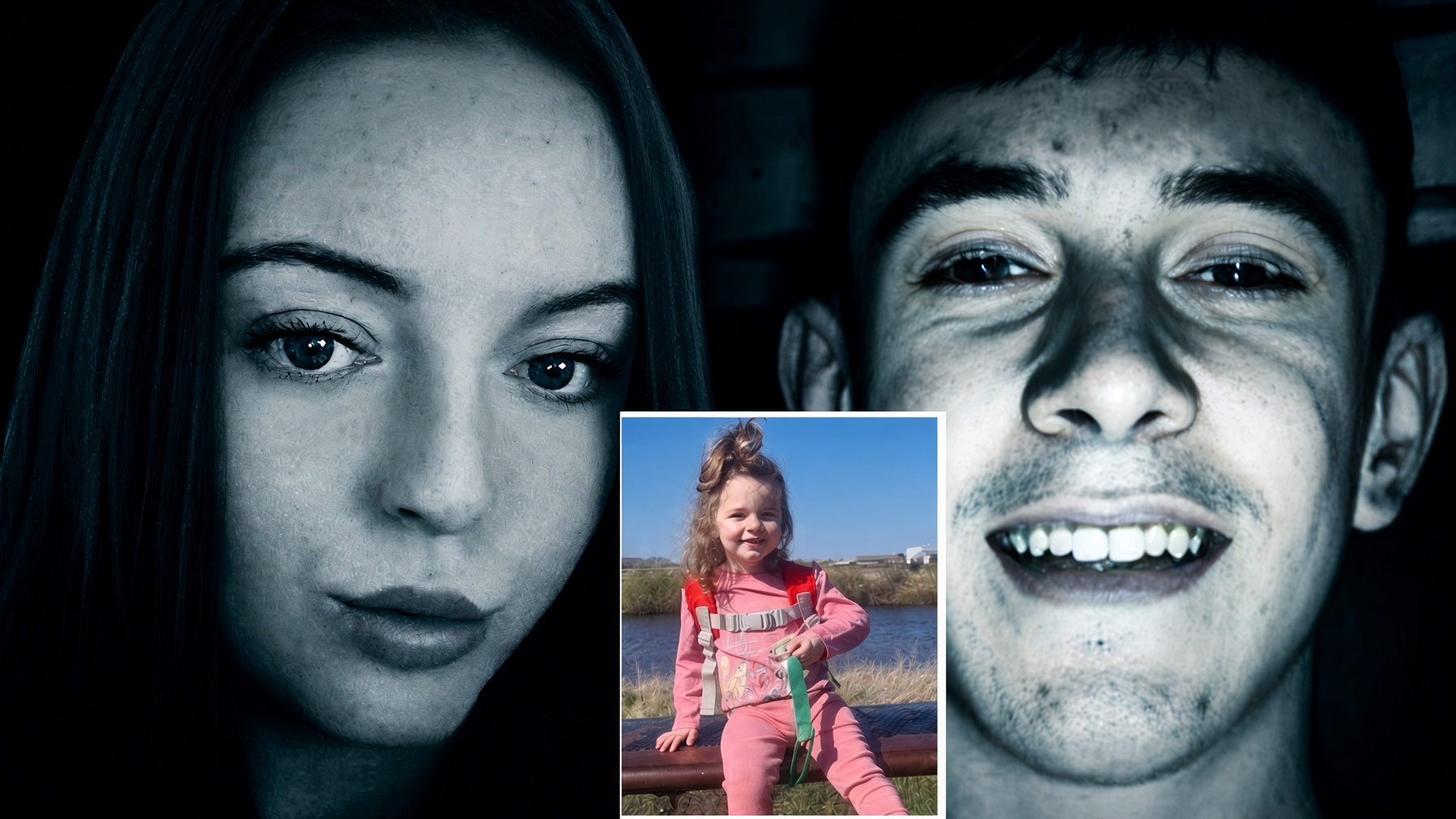
Isabelle Welsh will not grow up in Thornaby. She will not start school, make a friend, or outgrow the version of herself that the court described as thriving. The people convicted of her murder will spend decades in prison. That is the legal ending. The human ending is simpler and worse: a child who needed ordinary care was instead placed in a house where the people with power over her used that power to hurt her, hide it, and then try to survive the aftermath.
If there is a public use for writing about this at all, it is not to recycle the most lurid lines from a sentencing hearing. It is to keep the principle visible. A toddler’s safety is not a private lifestyle choice. When adults treat it as one, the law eventually arrives — too late for the child, and only just in time for a verdict.