THE DAUGHTER THEY CALLED A FAILURE – PART 3 — THE SISTER WHO KNEW
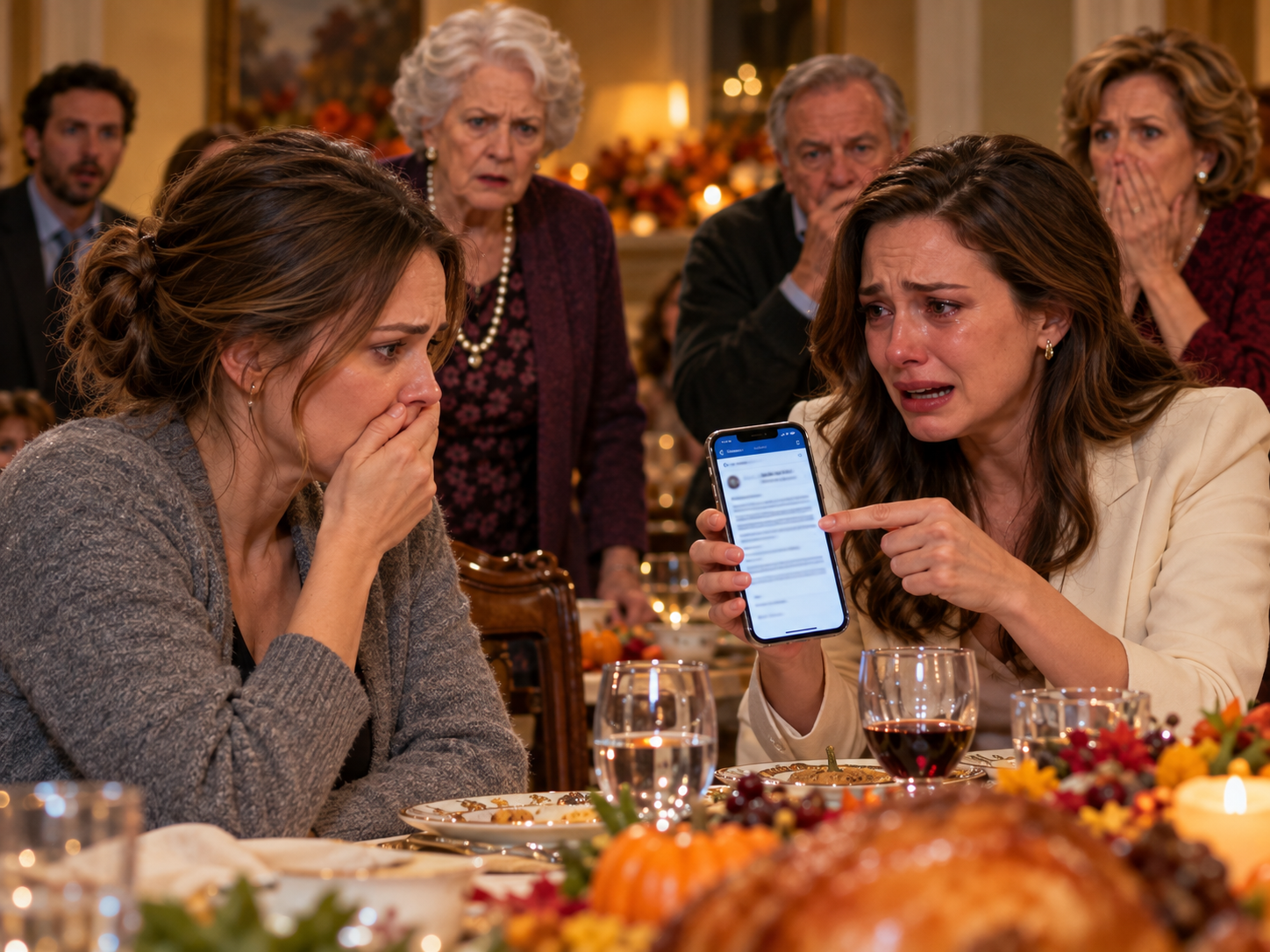
“Someone at Ashcom told me to keep quiet.”
My sister’s words hung over the Thanksgiving table like smoke after a fire.
For several seconds, nobody moved.
My mother was the first to speak.
“What on earth are you talking about, Naomi?”
Naomi didn’t answer her.
She was looking at me.
Not at our father.
Not at Grandma Rose.
At me.
And there was something in her expression I hadn’t seen since we were children.
Fear.
Real fear.
“Who told you to keep quiet?” I asked.
She swallowed.
“Richard Voss.”
My stomach tightened.
I knew that name.
Everyone in senior leadership at Ashcom Regional Health Network knew that name.
Richard Voss was the chairman of our board’s executive compensation committee and one of the most influential donors associated with St. Matthew’s Medical Center.
He had spent nearly thirty years building relationships with physicians, executives, and local politicians.
He was also a man who never said anything directly when he could make someone else deliver the message.
“What does Richard Voss have to do with you?” I asked.
Naomi looked down.
“More than you think.”
My father straightened in his chair.
“Can someone explain what is happening?”
Nobody answered.
I barely heard him.
Because suddenly, three months of strange events were beginning to make sense.
The leadership reception where Naomi had refused to acknowledge me.
The awkward conversation I’d overheard between two board members.
The unexpected resistance when our operations team requested documentation concerning several executive appointments.
At the time, I had assumed it was ordinary institutional politics.
Hospitals were full of it.
Now I wasn’t so sure.
“Naomi,” I said carefully, “tell me exactly what happened.”
She pressed both hands against the table.
“Six months ago, when the cardiothoracic department chair position opened, I was approached about applying.”
“That makes sense,” I replied. “You were one of the strongest internal candidates.”
Her eyes filled.
“You really think that?”
I frowned.
“Of course.”
Something in her face crumpled.
For years, Naomi had been the person everyone praised.
The brilliant daughter.
The successful surgeon.
The one whose accomplishments deserved applause.
I had never understood why someone so admired seemed so desperate to hear those words from me.
“Richard told me the board was concerned about appearances,” she continued.
“What appearances?”
“Two sisters holding prominent positions within the same hospital network.”
I stared at her.
“That isn’t automatically a conflict of interest. We have disclosure and recusal procedures for exactly that reason.”
“I know.”
“Then what was the problem?”
Naomi’s voice dropped.
“He said your position could become an issue if people started asking how much influence you had over my promotion.”
My pulse quickened.
I had participated in an executive meeting where the department leadership transition was discussed.
But I hadn’t selected Naomi.
I had deliberately stepped away from matters that could create a conflict.
Her appointment was supposed to rest on clinical qualifications and the medical leadership committee’s recommendation.
“Naomi, I recused myself from the relevant decisions.”
“I know that now.”
“What do you mean, now?”
She closed her eyes.
“Richard never told me that.”
I leaned back.
Something cold settled in my chest.
“He told me,” Naomi continued, “that if people discovered you were my sister, they might accuse me of getting the position because of you.”
I stared at her.
“And you believed him?”
“He made it sound like my entire career could collapse.”
I wanted to respond immediately.
To tell her how ridiculous that was.
To ask how a woman who could operate on someone’s heart had allowed a board member to frighten her with a vague threat.
But then I saw her hands.
They were trembling.
And I remembered something I had learned in healthcare administration.
Power doesn’t always need to issue an order.
Sometimes it only needs to suggest what might happen if you refuse.
“So he asked you not to tell people we were related?” I said.
Naomi nodded.
“Not exactly.”
My stomach sank.
“What exactly did he ask?”
She looked toward our mother.
“He wanted me to make sure our family didn’t talk about Ellen’s role at Ashcom.”
The room went silent.
My mother slowly lowered her wineglass.
“Excuse me?”
Naomi’s voice cracked.
“He said it would be better if everyone continued thinking Ellen worked in a lower-level hospital position.”
I felt the blood drain from my face.
There it was.
The answer to a question I had never thought to ask.
For years, my family’s ignorance had felt careless.
Cruel, sometimes.
But careless.
Now I was hearing that someone had deliberately encouraged it.
“Naomi,” I whispered, “how long?”
She didn’t answer.
“How long have you known what I actually do?”
Her tears began to fall.
“Eight years.”
Eight.
Years.
I looked at her as if I had never seen her before.
Eight years ago, I was promoted to regional director of hospital operations.
Eight years ago, Naomi was completing another demanding stage of her medical career.
Eight years ago, our mother gave a speech at Christmas dinner about how one daughter had dedicated her life to saving people while the other was still trying to find her place.
Naomi had sat beside me that night.
She had squeezed my shoulder afterward.
She had told me not to take Mom seriously.
And she had known.
All along.
“You knew?” I asked.
She nodded.
“You knew when Mom joked about me cleaning bathrooms?”
“Yes.”
“You knew when Dad told Uncle Ford I couldn’t keep a real career?”
Naomi covered her mouth.
“Yes.”
“You knew when they asked me to park behind the house during your graduation party because they didn’t want guests asking about my old car?”
She began crying harder.
“I remember.”
I stared at her.
My sister.
The person I defended when relatives complained that she was too busy to attend family gatherings.
The person whose late-night calls I answered when she was exhausted during residency.
The person I had driven to the hospital at four in the morning when her car broke down during a winter storm.
She had known.
And she had let them laugh.
Grandma Rose spoke softly.
“Naomi, sweetheart, why?”
My sister wiped her cheeks.
“Because I was afraid.”
“Of Richard?” Grandma asked.
Naomi shook her head.
And the answer that came next hurt more than anything else she’d said.
“Of not being the successful daughter anymore.”
Nobody breathed.
My mother stared at her.
“What?”
Naomi looked at me.
“Ellen, you don’t understand what it was like.”
I almost laughed.
Not because it was funny.
Because it was such a strange thing to say.
“I don’t understand?”
“No, that’s not what I mean.”
“Then tell me.”
She took a shaky breath.
“Ever since we were little, Mom introduced me as the smart one. The one who was going places. Every accomplishment became another reason for her to compare us.”
I glanced at Mom.
Her expression had hardened.
“I was proud of you,” she said.
Naomi didn’t look at her.
“I know. But after a while, it felt like being successful was the only reason anyone loved me.”
The words surprised me.
Naomi continued.
“When I heard you’d become a hospital executive, I was happy for you. I really was.”
“Then why didn’t you say anything?”
“Because you were succeeding without anyone’s approval.”
She looked down at her shaking hands.
“You didn’t need Mom to clap for you. You didn’t need Dad to brag about you. You built this entire life while they barely noticed.”
Her voice broke.
“And I hated that part of me was jealous.”
I couldn’t speak.
For thirty-five years, I had believed Naomi possessed everything I lacked.
Recognition.
Affection.
Pride.
A permanent place at the center of our family.
And now she was telling me that all those years, she had been afraid of losing it.
Mom pushed back her chair.
“This is absolutely absurd! I loved both of you!”
Grandma Rose turned toward her.
“Diane, sit down.”
“Mother, I will not be spoken to—”
“Sit. Down.”
Mom sat.
I had never heard Grandma use that voice.
Not even when Grandpa was alive.
Naomi reached for a napkin.
“I know I was wrong, Ellen.”
I watched her.
“I know saying I was scared doesn’t excuse any of it.”
“No,” I said.
“It doesn’t.”
Her face collapsed.
And strangely, I felt no satisfaction.
I had imagined moments like this before.
Mom discovering my title.
Dad realizing I earned more than he ever expected.
Naomi finally acknowledging that my career mattered.
I thought it would feel like justice.
Instead, it felt like standing inside the ruins of something I had spent my whole life trying to repair.
My father rubbed his forehead.
“Hold on. This Richard fellow manipulated Naomi because of her promotion?”
“That’s what we need to understand,” I replied.
“Then couldn’t Ellen just have him fired?”
I looked at him.
“Dad, that’s not how governance works.”
“But you’re the chief operating officer.”
“Yes. Which means I have responsibilities, not unlimited authority.”
He looked confused.
For the first time, I didn’t try to simplify my job for him.
I turned back to Naomi.
“Did Richard give you any instructions in writing?”
She hesitated.
That hesitation frightened me.
“Naomi?”
She glanced at her husband, Daniel.
Until that moment, he had barely spoken.
Now he looked as if he’d been expecting this conversation.
“Tell her,” he said quietly.
Naomi shook her head.
“Daniel, please.”
“She’s your sister.”
“I know.”
“Then stop protecting him.”
I stared at Daniel.
“You knew too?”
He lowered his eyes.
“I knew something happened during the promotion process. Not all of it.”
My chest tightened.
“What happened?”
Naomi reached into her handbag.
Her fingers trembled as she searched inside.
Finally, she pulled out her phone.
“There was an email,” she whispered.
“From Richard?”
She nodded.
“He sent it shortly before my final interview.”
“Show me.”
She unlocked her phone.
For a moment, I saw her thumb hovering over the screen.
Then she stopped.
“Ellen, before you read this, you need to understand something.”
“What?”
“I didn’t realize what he was asking me to do until afterward.”
My heart began pounding.
She turned the screen toward me.
The subject line read:
CONFIDENTIAL — LEADERSHIP TRANSITION DISCUSSION
I read the message once.
Then again.
It wasn’t an explicit order to hide my identity.
It was worse in a quieter, more calculated way.
Richard had written that Naomi’s candidacy would benefit from maintaining “appropriate distance from existing executive relationships.”
He advised her to avoid discussing family connections during the selection process.
And he added a sentence that made my stomach turn.
“Any existing perceptions regarding Ms. Hopkins’ prior employment history should not be proactively corrected without consultation.”
I stared at the words.
My prior employment history.
Cleaning hospital rooms.
He knew.
He had known exactly how my family described me.
And he’d apparently decided their misunderstanding might be useful.
But there was something else.
A reference near the bottom.
“Further guidance will follow regarding the operational review currently under executive consideration.”
I looked at Naomi.
“What operational review?”
She shook her head.
“I don’t know.”
“Did he ever explain it?”
“No.”
I read the email a third time.
The wording was carefully constructed.
Nothing openly illegal.
Nothing that directly proved misconduct.
But enough to raise questions.
Questions I intended to ask through the proper channels.
Because I recognized the date.
The email had been sent two days before our finance department flagged several unusual consulting contracts linked to St. Matthew’s expansion project.
At the time, the contracts had seemed unrelated to the leadership transition.
Now I wasn’t certain.
“Naomi,” I asked, “did Richard ever ask you to sign anything?”
She went completely still.
Daniel closed his eyes.
That told me the answer before she spoke.
“Yes.”
My throat tightened.
“What did you sign?”
Naomi’s lips trembled.
“A confidentiality agreement.”
My mind began racing.
Confidentiality agreements were common in executive recruitment.
But this was different.
“What did it cover?”
She looked at Daniel.
Then back at me.
“Not just my promotion.”
A cold silence spread across the table.
“What else?”
Naomi began crying again.
“An internal report.”
I felt my heartbeat in my ears.
“What report?”
Her voice was barely audible.
“A report about money that was supposed to improve patient care.”
I didn’t move.
I knew exactly which project might be involved.
The St. Matthew’s cardiac expansion.
A multimillion-dollar initiative intended to improve surgical capacity, staffing, and patient access.
A project my team had spent nearly eighteen months developing.
And a project that had recently begun raising questions among our financial analysts.
“What did the report say?” I asked.
Naomi looked at me with terror in her eyes.
“That some of the money wasn’t going where everyone thought.”
My mother whispered, “Oh my God.”
But I barely heard her.
Because my phone began vibrating.
Once.
Twice.
Three times.
I glanced down.
The caller ID made my blood run cold.
MARGARET ELLIS — ASHCOM GENERAL COUNSEL
Our chief legal officer.
On Thanksgiving night.
I answered immediately.
“Margaret?”
Her voice was sharp.
“Ellen, I’m sorry to call you during the holiday.”
“What’s happened?”
There was a pause.
Then she said something that made me straighten in my chair.
“We’ve received a formal allegation involving Richard Voss and the St. Matthew’s expansion project.”
I looked directly at Naomi.
She was watching me.
Her face had gone white.
Margaret continued.
“And Ellen, there’s something else.”
“What?”
“Your name appears in several of the documents.”
For one terrible second, I couldn’t breathe.
“My name?”
“Yes.”
“In what capacity?”
Margaret hesitated.
“We’re still determining that. But there’s a document carrying what appears to be your authorization.”
My fingers tightened around the phone.
“That doesn’t make sense.”
“I know.”
“Margaret, I haven’t approved anything outside our normal review procedures.”
“That’s precisely why I’m calling.”
I stood up.
Every relative at the table turned toward me.
“Are you saying someone used my name?”
“We don’t know yet,” Margaret replied. “Please don’t jump to conclusions. We need to preserve the records and conduct a formal review.”
I looked at my sister.
And suddenly, I understood why Richard Voss had been so interested in keeping our family relationship out of sight.
Why Naomi had been frightened.
Why someone had apparently decided my old reputation was worth preserving.
But I still didn’t know whether any of it was connected.
And I wasn’t going to accuse anyone without proof.
“Margaret,” I said carefully, “I’ll cooperate fully.”
“Thank you. One more thing.”
“What is it?”
“Do you know why Richard Voss requested access to your personnel history six months ago?”
I froze.
Across the table, Grandma Rose slowly stood.
She was watching my face.
And somehow, she knew.
Something far bigger than a cruel Thanksgiving joke had just entered that dining room.
“I didn’t know he had,” I answered.
Margaret was silent for a moment.
Then she said:
“Ellen, I think you need to see what we found.”
The call ended a few minutes later.
I lowered my phone.
My father looked frightened.
My mother looked confused.
And Naomi was openly crying.
“Ellen,” she whispered, “what happened?”
I looked at the fifty-dollar bill still lying beside the gravy boat.
The same bill my father had pushed toward me less than an hour earlier.
The same bill that had started everything.
Then I looked at my sister.
“I think,” I said quietly, “someone may have been using both of us.”
Naomi covered her mouth.
And Grandma Rose asked the question nobody else dared to ask.
“Ellen, is someone trying to destroy your career?”
I didn’t answer.
Because at that moment, my phone lit up with a new email.
It was from Margaret Ellis.
The subject line contained only four words.
URGENT — DOCUMENT FOR REVIEW
I opened the attachment.
And there, at the bottom of an authorization form dated six months earlier, was my name.
My title.
And a signature that looked almost exactly like mine.
Almost.
Because I knew one thing with absolute certainty.
I had never signed that document.
TO BE CONTINUED…
PART 4 — THE PRICE OF A FATHER’S JOKE