Part 2: The Forty Dollars He Offered Could Never Repay the Woman Who Had Saved His Family
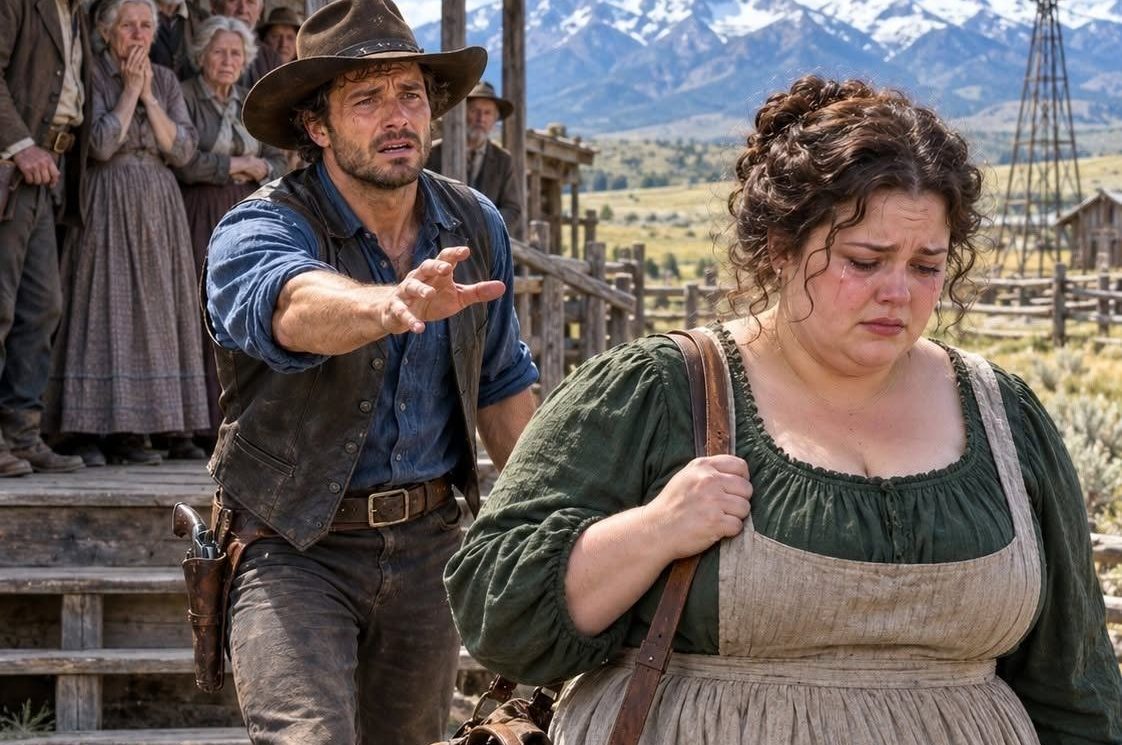
The stagecoach driver had already climbed onto his seat when Gideon Mercer reached the little station outside Wichita.
“Five minutes!” the driver called. “Anybody going east, get aboard!”
Mabel Pike stood beside the coach with her battered leather traveling bag hanging from one shoulder.
She did not look surprised to see Gideon.
That hurt him more than he expected.
For six months, he had mistaken her silence for contentment. Now, looking at the exhausted woman standing before him, he realized she had probably imagined this moment a hundred times.
“Mabel.”
She tightened her grip on the bag.
“Morning, Mr. Mercer.”
Mr. Mercer.
Not Gideon.
Not the familiar, gentle way she used to say his name when supper was ready or when Tobias needed him.
Just Mr. Mercer.
Gideon swallowed.
“I came to settle what I owe you.”
He reached into his coat and pulled out four ten-dollar banknotes.
“Your ledger says thirty. There’s forty here. The extra is for—”
“For what?”
Her voice was quiet.
Gideon stopped.
“For the trouble.”
Mabel looked at the money.
Then she laughed.
It was not a happy sound.
“Trouble?”
She repeated the word as though she had never heard anything quite so foolish.
“Mr. Mercer, when your brother had that fever in April, I sat beside his bed for three nights. When the north fence broke in June, I helped bring the cattle back before sunrise. When your wife’s anniversary came around, I found you sitting in the barn with a bottle in your hand, and I made certain Tobias never saw you that way.”
Gideon felt his face grow hot.
“Mabel, I—”
“And when the bank threatened to take your ranch, I sold the only gold brooch my mother ever gave me so the feed merchant would extend your credit.”
The money slipped slightly between his fingers.
“What?”
Mabel looked away.
“You didn’t know.”
“No.”
“Of course you didn’t.”
A gust of wind carried dust across the platform.
Gideon stared at her.
“You sold your mother’s brooch?”
“It brought twenty-six dollars.”
“Why would you do that?”
For the first time, anger flashed across her face.
“Because Tobias was hungry, Gideon!”
The stagecoach driver stopped adjusting the harness.
Two passengers turned their heads.
Mabel lowered her voice, but her words became sharper.
“Because that boy was trying to convince you he wasn’t hungry so you wouldn’t feel ashamed. Because the flour barrel was empty, and because somebody had to remember that a child cannot eat grief.”
Gideon could not answer.
He remembered the meals.
The biscuits.
The stew.
The bread appearing on the table when he had been certain there was nothing left in the pantry.
He had never asked where the ingredients came from.
He had simply eaten.
Mabel wiped her cheek.
“I didn’t leave because you were poor. I knew you were poor when I came. I left because you made me feel as though I was worth less than the work I did.”
Gideon looked at the banknotes in his hand.
“I was afraid,” he finally said.
Mabel’s expression changed.
“Of paying me?”
“Of admitting I needed you.”
The words came out roughly.
“My wife, Eleanor, held that house together. After she passed, everything fell apart. I couldn’t bear the thought of another woman becoming necessary to us. Every time I saw Tobias smiling at you, every time I heard you singing in the kitchen, I felt as though I was betraying her.”
Mabel stood perfectly still.
Gideon continued.
“So I kept telling myself you were hired help. Someone temporary. Someone I could pay when things improved and send away when I was strong enough.”
He looked directly at her.
“But the truth is, I wasn’t strong enough to do any of it without you.”
Mabel’s eyes filled.
For one terrible second, Gideon thought she might forgive him.
Instead, she shook her head.
“You don’t get to punish a living woman for loving the memory of one who’s gone.”
The words struck him like a hammer.
He lowered his eyes.
“You’re right.”
“I know.”
The driver called again.
“Last boarding!”
Gideon stepped aside.
He had ridden all that way imagining he could bring her home.
Now he understood that asking her to return would only prove he had learned nothing.
He held out the money.
“Take what I owe you. All forty. No conditions.”
Mabel hesitated.
Then she accepted it.
“Thank you.”
She moved toward the coach.
Gideon wanted to stop her.
Every instinct in him begged him to reach for her hand.
But he remembered the way she had stood in his kitchen for six months, waiting for a kindness that never came.
So he remained still.
Mabel placed one foot on the coach step.
Then she turned.
“There’s something else you ought to know.”
Gideon looked up.
“Three weeks ago, Tobias asked me whether people could become mothers without giving birth to children.”
Gideon’s chest tightened.
“What did you tell him?”
“I told him love was something a person did, not something a person claimed.”
Her voice trembled.
“He asked if I could be his mother someday.”
The world seemed to stop.
Gideon stared at her.
“What did you say?”
“I told him he already had a mother who loved him very much. And that nobody could ever take her place.”
Mabel pressed her lips together.
“Then he asked whether there might still be room in a family for somebody new.”
Gideon felt tears burning behind his eyes.
“And?”
“I told him that was something his brother would have to decide.”
The driver snapped the reins.
Mabel climbed aboard.
Gideon stood motionless as the coach began rolling down the road.
He watched until the dust swallowed it.
Then he mounted his horse and rode home.
He had lost her.
And this time, he knew exactly why.
The Mercer farmhouse was silent when Gideon returned.
Tobias sat at the kitchen table.
Before him lay the six folded flour sacks and the little wage ledger.
The boy looked up.
“Did you bring her back?”
Gideon removed his hat.
“No.”
Tobias stared at him.
“Did you ask her to?”
Gideon pulled out a chair.
“No.”
The boy’s face crumpled.
“Then why did you go?”
“To apologize.”
Tobias looked away.
“You should’ve done that months ago.”
“I know.”
For a long time, neither spoke.
Then Tobias reached beneath his chair and placed a small blue notebook on the table.
Its corners were worn.
A piece of string held the pages together.
“I’ve been writing things down,” the boy whispered.
Gideon looked at it.
“What things?”
“Things you didn’t see.”
The first page carried a date from forty-seven days earlier.
Beneath it, in a child’s uneven handwriting, were six words.
Miss Mabel cried again this morning.
Gideon’s hands began to tremble.
He turned the page.
Day 2: She gave me the last biscuit and said she wasn’t hungry.
Another page.
Day 8: Her shoes have holes. She put cardboard inside them.
Another.
Day 14: She told me I was clever when I got my sums right. Nobody has said that since Eleanor went away.
Gideon closed his eyes.
But Tobias pushed the notebook toward him.
“Keep reading.”
He did.
Day 23: Gideon shouted because supper was late. Miss Mabel had been helping the sick calf. She cried behind the smokehouse.
Day 31: She made Eleanor’s apple cake because I said I couldn’t remember how it tasted.
Day 39: Miss Mabel said she might leave. I asked her not to. She said sometimes grown people have to go where they’re wanted.
Gideon pressed his fist against his mouth.
Then he turned to the final page.
Day 47.
Only one sentence appeared.
If Miss Mabel leaves, I think this house will become sad all over again, and I don’t know if I can bear it twice.
Gideon stared at those words until they blurred.
Tobias was crying now.
“I tried to make her stay.”
Gideon reached across the table.
The boy pulled away.
“No. You don’t understand.”
“Tobias—”
“She didn’t leave because she didn’t love us.”
His voice broke.
“She left because we never made her feel loved back.”
Gideon lowered his head.
And for the first time since Eleanor’s funeral, he wept without trying to hide it.
But the notebook held one more secret.
Tucked inside its back cover was a folded piece of paper Gideon had never seen.
It was a receipt.
Dated three weeks earlier.
From the Wichita Land and Loan Office.
And written across the bottom were words that made his blood run cold.
Payment received toward the outstanding Mercer Ranch mortgage: $75.
The payer’s name was Mabel Pike.
Gideon read it twice.
Then a third time.
Seventy-five dollars.
Mabel had earned only thirty dollars in unpaid wages.
She had sold her mother’s brooch for twenty-six.
Where had the rest come from?
And why had she secretly paid money toward a mortgage he had never told her was in danger?
Gideon looked at Tobias.
“Where did she get this money?”
The boy went pale.
Then he whispered something Gideon would remember for the rest of his life.
“She sold the land her father left her.”
Gideon stopped breathing.
Because Mabel had not simply worked six months without pay.
She had surrendered the last piece of her own future to save his.
And he had let her leave with forty dollars.