Part 4: The Jet Outside the Gala

Eleanor Vale was not dead.
That was the first surprise.
The second was that she had never been Grant Holloway’s fiancée.
At least, not in the way Margaret Holloway had allowed people to believe.
Three days before the Whitmore Legacy gala, Clare found Eleanor living in a modest coastal house outside Newport, Rhode Island.
She was forty-seven, with dark hair, intelligent eyes, and the guarded expression of someone who had spent years refusing to be surprised.
When Clare introduced herself, Eleanor did not look shocked.
She looked relieved.
“I wondered how long it would take you.”
Clare remained standing.
“You knew my father?”
Eleanor nodded.
“Richard saved my career.”
“From Grant?”
“From the people around him.”
Clare sat opposite her.
Eleanor explained that she had once worked as a senior analyst for a private investment group that frequently partnered with Holloway Ridge.
She had discovered irregularities involving a proposed acquisition.
The deal involved a struggling aviation company whose assets were being valued far above their actual worth.
When Eleanor questioned the numbers, she was removed from the project.
Then someone began spreading rumors that she had been romantically involved with Grant.
The story made her appear jealous and unreliable.
“I was never engaged to him,” Eleanor said. “We attended several events together because our firms were working on the same transaction. Margaret encouraged people to believe there was something personal between us.”
“Why?”
“Because when I challenged the deal, they wanted my objections to look emotional.”
Clare thought about the articles written after her divorce.
Fragile.
Confused.
Unstable.
The same pattern.
Different woman.
“What happened to you?”
“I resigned. Richard helped me secure legal protection and relocate while the investigation continued.”
“Why didn’t you come forward?”
“I did. I gave evidence to regulators. But the inquiry ended without a public finding against Grant, and the relevant records were sealed under a settlement involving several parties.”
Clare looked down.
“So there’s nothing we can use?”
Eleanor smiled slightly.
See more Stories :
“I didn’t say that.”
She walked to a cabinet and returned with a thick blue folder.
Inside were original valuation reports.
Emails.
Board minutes.
And a handwritten memorandum signed by Richard Whitmore.
Clare examined the documents.
One name appeared repeatedly.
Margaret Holloway.
Eleanor pointed to a particular page.
“Your former mother-in-law was the one who pushed the aviation acquisition.”
“Why?”
“Because the seller was a company she secretly controlled through an investment partnership.”
Clare looked up.
“She was selling assets to her son’s company?”
“Indirectly. And at an inflated price.”
The implication was enormous.
If proven, the transaction could expose serious governance failures and undisclosed conflicts of interest.
But Eleanor was careful.
“These documents raise questions. They don’t replace a proper investigation.”
Clare nodded.
She was beginning to understand that the strongest weapon was not accusation.
It was evidence that could survive scrutiny.
That evening, Clare returned to New York with Eleanor’s folder.
Thomas and Evelyn reviewed it until midnight.
At 12:43 a.m., Evelyn looked up.
“We have enough to request an emergency review by the independent lenders.”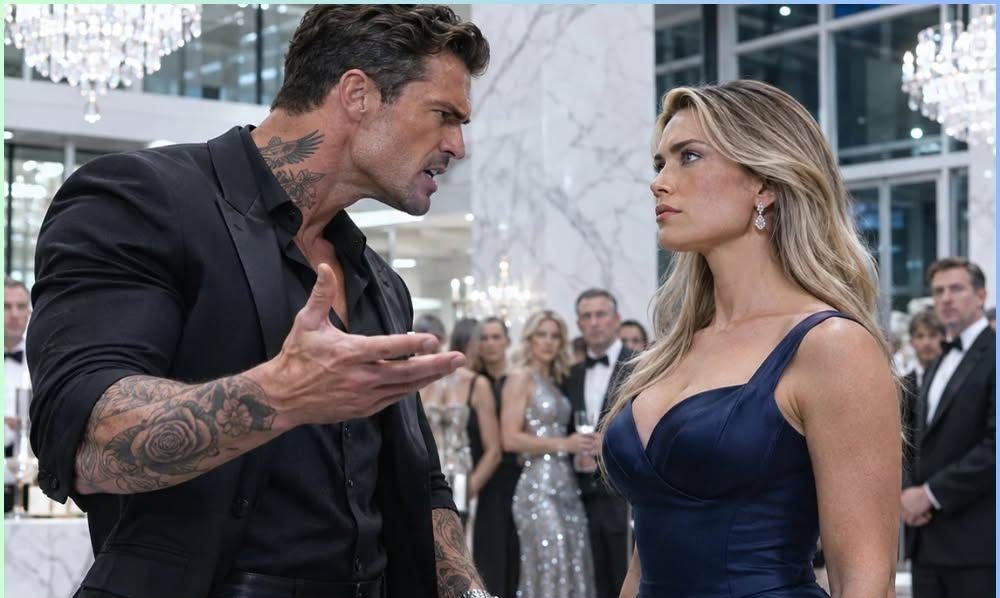
Clare sat forward.
“And Grant?”
“He’ll be notified through counsel.”
“When?”
“Tomorrow morning.”
Clare looked at the gala invitation on the table.
Tomorrow evening, Grant would stand in a ballroom surrounded by investors, journalists, and people who believed he had emerged victorious from his divorce.
He would expect Clare to be hiding.
Instead, she would be arriving as the newly disclosed beneficiary of Whitmore Legacy Holdings.
But Clare did not want a public confrontation based on documents that had not yet been independently tested.
“I want the audit process protected,” she said. “No public allegations before the investigators finish.”
Thomas nodded approvingly.
“Your father would have agreed.”
At 9:15 the following morning, Grant received a formal notice from the lending group.
An independent review committee had been convened.
Certain discretionary financing approvals would be suspended pending examination of historical transactions.
The notice did not accuse him of a crime.
But it threatened something Grant valued almost as much as money.
Control.
He called Martin Keene.
“Who authorized this?”
“The lenders.”
“Which lenders?”
Martin hesitated.
“The largest participating group.”
Grant felt his jaw tighten.
“Name.”
“Whitmore Legacy Holdings.”
Grant stared at the wall.
For the first time, he began to suspect the truth.
He called Sandra.
“Find Clare.”
“We’ve been trying.”
“Try harder.”
See more Stories :
At 4:30 p.m., Clare was preparing for the gala in a private suite at the Bellamy Grand.
Her dress was midnight blue.
Simple.
Elegant.
The same color she had worn to the first charity event she attended with her father as an adult.
Helen Ward stood behind her, fastening a delicate diamond clasp.
“You look like your mother,” Helen said.
Clare smiled.
“I wish she could see this.”
Helen touched her shoulder.
“She’d be proud.”
On the dressing table lay two objects.
Her father’s handwritten letter.
And the signed divorce agreement.
Clare looked at them.
Seven years earlier, she had entered marriage believing that love meant standing beside someone no matter what.
Now she understood that loyalty without honesty could become a cage.
At 6:12 p.m., the gala began.
Grant arrived with Sandra.
The ballroom glittered beneath enormous crystal chandeliers.
Bankers greeted him cautiously.
Several longtime associates avoided discussing business.
Grant noticed every hesitation.
Then the evening’s host approached the microphone.
“Ladies and gentlemen, tonight we honor the enduring legacy of Richard Whitmore and introduce the person who will guide the next chapter of his family’s philanthropic and investment stewardship.”
Grant stopped listening to the man beside him.
Something about the announcement felt wrong.
The host continued.
“Our chairperson is arriving from a scheduled meeting with international partners and will join us shortly.”
At that moment, Grant’s phone vibrated.
A message from Martin.
You need to see this immediately.
Attached was a photograph.
A white private jet had just landed at a nearby executive airport.
On its fuselage was a discreet blue emblem.
Whitmore Legacy.
Grant stared.
Then another message arrived.
The beneficial owner is Clare Whitmore.
He read it three times.
Clare.
His Clare.
The woman he had mocked for having nothing.
The woman he had told to disappear.
The woman who had signed the divorce papers without argument.
He looked toward the ballroom entrance.
Outside, a black limousine approached.
A few minutes later, Clare stepped through the doors.
She wore the midnight-blue gown.
Her hair fell over one shoulder.
She carried a slim black portfolio.
The room gradually fell silent.
Grant moved toward her.
“Clare.”
She stopped.
He stared at her.
“What is this?”
“An event honoring my father.”
“Don’t play games with me.”
Clare’s expression remained calm.
“I haven’t played a game with you in a very long time.”
He lowered his voice.
“You think a private jet makes you important?”
“No, Grant.”
She looked past him toward the investors waiting near the stage.
“It simply brought me here.”
He stepped closer.
“You have no idea what you’re interfering with.”
Clare met his eyes.
“I know more than I did when we were married.”
Grant’s face darkened.
“Whatever your father left you, it doesn’t give you the right to destroy my company.”
“I haven’t destroyed anything.”
“Then call off the review.”
“No.”
His voice rose.
“Clare, you don’t understand the consequences.”
Several guests turned.
Clare did not move.
“Then explain them to the independent committee.”
Grant opened his mouth.
But no words came.
Behind Clare, Thomas Aldridge approached with two members of the foundation’s board.
The host returned to the microphone.
“Ladies and gentlemen, please welcome Ms. Clare Whitmore.”
Applause spread through the ballroom.
Grant stood motionless.
Clare walked onto the stage.
She looked across the room.
Then she began.
“My father taught me that wealth is not measured by how many people are afraid to disagree with you.”
The room grew quiet.
“It is measured by what remains trustworthy after you are gone.”
Grant looked toward the exit.
And saw his mother standing there.
Margaret Holloway was pale.
She was staring at Clare.
Not with anger.
With recognition.
Clare continued.
“Tonight, I am announcing an independent transparency initiative across our investment partnerships. Every participating institution will be held to the same standard, regardless of its name or influence.”
See more Stories :
She paused.
“And I want to make something clear. No person will be condemned by rumor. The evidence will be examined properly, and the findings will speak for themselves.”
The applause was louder this time.
Grant could barely hear it.
Because Margaret had approached him.
She grabbed his arm.
“We need to leave.”
“Why?”
Her fingers trembled.
“Because I know who gave Clare those documents.”
Grant stared at her.
“Who?”
Margaret swallowed.
Then she said the words that would change everything.
“Your father.”
Grant went still.
“My father died twenty years ago.”
Margaret looked toward the stage.
“No, Grant.”
Her voice broke.
“He didn’t.”