Part 5: The Wife He Could Never Replace

Vanessa disappeared for eleven hours.
During those eleven hours, I learned three things.
My husband had lied to me for four years.
My mother’s company had been stolen through forged documents.
And the woman Ryan had introduced as his wife was connected to the last night of my mother’s life.
But the fourth truth was the one nobody had expected.
Vanessa Cole had never wanted to marry Ryan Hale.
She had been trying to expose Martin Bell.
And she had been waiting for me.
At 6:42 the following morning, my phone rang.
An unfamiliar number.
“Kate?”
Vanessa.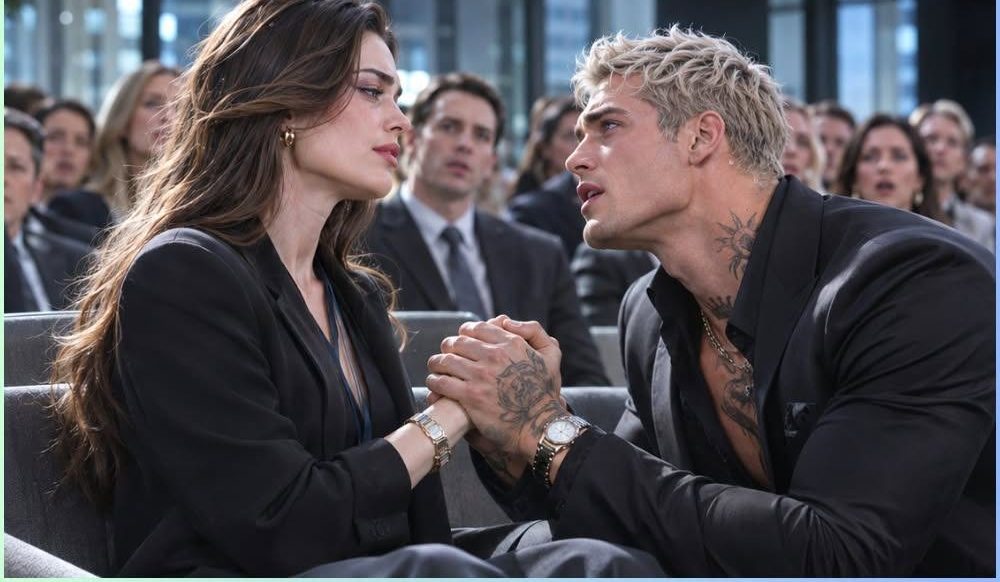
Her voice was exhausted.
“Where are you?”
“At the Denver district attorney’s office.”
I sat up.
“What?”
“I’ve been here since midnight.”
“Why?”
“Because I finally told them everything.”
She paused.
“And I need you to come.”
An hour later, I walked into a conference room on the fourth floor of a government building.
Vanessa sat beside a woman in a charcoal suit.
Her hair was pulled into a loose ponytail.
Her eyes were swollen.
But she looked directly at me.
“I’m sorry.”
I didn’t sit.
“For which part?”
She accepted that.
“All of it.”
The woman beside her introduced herself as Assistant District Attorney Rachel Moreno.
See more Stories :
“We’re reviewing allegations involving financial fraud, forged corporate documents, and misappropriation of company assets.”
I looked at Vanessa.
“Start talking.”
She nodded.
“Three years ago, I was working for a small accounting firm. Martin Bell hired us to review a transaction involving Northline.”
“The forged transfer?”
“Yes.”
“Your signature was on it.”
“I know.”
“Why?”
“Because Martin told me I was witnessing a routine document execution. The woman who signed it presented identification in your name.”
I stared.
“Someone impersonated me?”
Vanessa nodded.
“I didn’t know until months later.”
“Then why didn’t you report it?”
“I tried.”
She looked at Rachel.
“Martin threatened to accuse me of participating in the fraud. He had recordings of meetings and emails that made it look as though I’d approved the transfer.”
I crossed my arms.
“So you went to work for him?”
“Yes.”
“That doesn’t make sense.”
“It wasn’t my first choice.”
Rachel spoke.
“Ms. Cole contacted federal investigators last year. After an initial assessment, she agreed to preserve records and provide information under legal supervision.”
I looked at Vanessa again.
“You were cooperating with investigators?”
She nodded.
“And Ryan?”
Her face changed.
“Ryan knew Martin was manipulating the financing. He didn’t know I was cooperating.”
I felt a strange pressure in my chest.
“Then why pretend to be his wife?”
Vanessa swallowed.
“Because Martin wanted it.”
I stared at her.
“That isn’t an answer.”
She looked down.
“Martin believed your mother had created a hidden ownership agreement. He thought the public announcement would force you to challenge Ryan’s marital status.”
“Why would he want that?”
“Because he wanted you to reveal whatever documents you possessed before the financing closed.”
I slowly sat down.
“He used my marriage to flush out evidence?”
“Yes.”
“And Ryan agreed?”
Vanessa’s eyes filled.
“He was afraid Martin would implicate you in the fraud.”
I closed my eyes.
Ryan had tried to protect me.
By humiliating me.
By lying to me.
By letting another woman stand beside him.
And somewhere along the way, he had convinced himself that cowardice was love.
I opened my eyes.
“What happened the night my mother died?”
Vanessa reached into her bag.
She removed a small photograph.
It showed a roadside diner outside Denver.
My mother’s car was parked near the entrance.
Beside it stood a man.
Martin Bell.
“Your mother met Martin that night,” Vanessa said.
“Why?”
“She was confronting him about the missing money.”
“How do you know?”
“I was working late. Martin ordered me to bring documents to the diner. I arrived while they were arguing.”
I gripped the edge of the table.
“What happened?”
“Your mother left. Martin followed her outside. They argued again.”
My heart pounded.
See more Stories :
“Did he hurt her?”
Vanessa shook her head.
“No. I didn’t see him touch her.”
“Then what?”
“He drove away first. Your mother left several minutes later.”
Rachel leaned forward.
“Investigators reviewed the original collision report and newly recovered records. At present, we have no evidence that her death was intentionally caused.”
I exhaled shakily.
For three years, I had mourned an accident.
For one terrible night, I had feared something worse.
Now I understood that the truth could be painful without becoming a conspiracy.
Vanessa continued.
“But there was something your mother gave me before she left.”
She slid a small envelope across the table.
I recognized the handwriting immediately.
Catherine.
My hands trembled.
“Why did she give this to you?”
“She said if anything happened to her, I should make sure you received it.”
I looked up.
“And you waited three years?”
Vanessa began crying.
“I was twenty-four. Martin threatened my career, my family, everything. I was afraid.”
I wanted to hate her.
Part of me still did.
But I also saw a woman who had spent years trapped inside someone else’s scheme.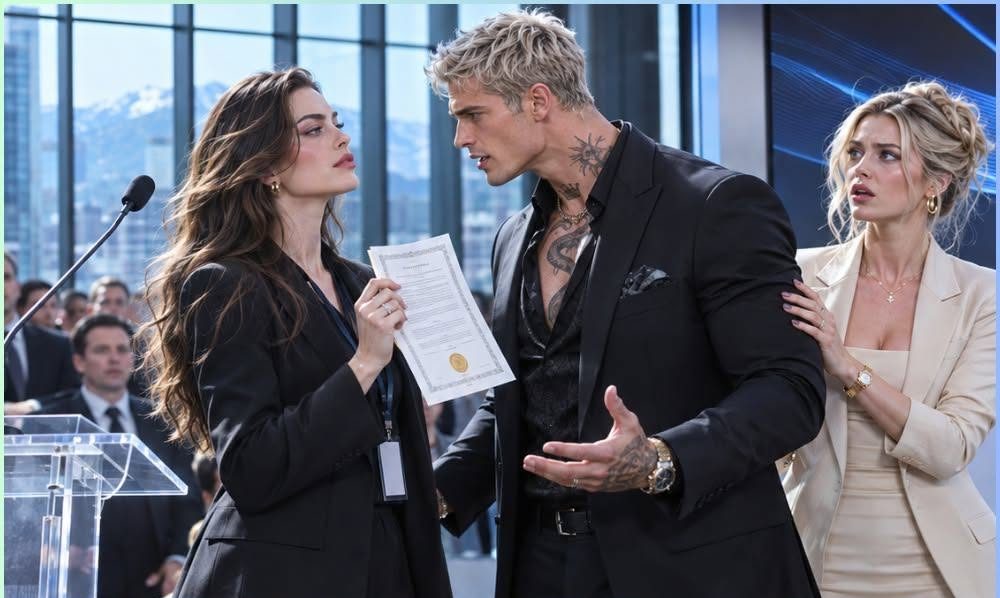
I opened the envelope.
Inside was a single page.
A handwritten statement from my mother.
And a number.
Not twelve million.
Not eighty-four million.
One hundred and sixty-eight million dollars.
I looked at Rachel.
“What is this?”
She smiled faintly.
“That’s the estimated present value of the ownership interest your mother placed in trust for you, subject to verification and the company’s actual valuation.”
I stared at the paper.
“Sixty-two percent?”
“Correct.”
Vanessa nodded.
“Martin was planning to sell control of Northline through a transaction that would conceal your claim.”
I looked at the ceiling.
For four years, Ryan had told me the company was his.
For four years, I had hidden our marriage to protect his ambitions.
And all along, the controlling interest had belonged to me.
Not because I had married him.
Because my mother had believed in me.
Three weeks later, Northline’s board convened an emergency meeting.
Martin Bell had been removed as chief financial officer pending the investigation.
The Series B financing had been suspended.
Independent auditors were reviewing the company’s books.
And the board had received the original trust documents, together with evidence challenging the stock transfer.
I walked into the conference hall wearing the same black blazer I had worn on my second day.
This time, nobody mistook me for an ordinary new employee.
Ryan stood near the front.
He looked different.
Tired.
Thinner.
There were shadows beneath his eyes.
When he saw me, he didn’t smile.
“Kate.”
I nodded.
“Ryan.”
He stepped aside.
On the stage stood a single microphone.
The board chair, Evelyn Shaw, introduced me.
“Catherine Whitmore, the beneficiary of the Margaret Whitmore trust.”
Applause filled the room.
I waited until it faded.
Then I spoke.
“Three weeks ago, I stood in this room while my husband introduced another woman as his wife.”
A few people shifted uncomfortably.
“I thought that was the worst betrayal I would ever experience.”
I looked toward Ryan.
“I was wrong.”
He lowered his head.
“The worst betrayal wasn’t the introduction. It was discovering how many people had decided I couldn’t be trusted with the truth.”
I paused.
“My mother founded the technology that became Northline. She believed it could protect communities from power failures and make energy systems more reliable.”
I looked across the employees.
“She didn’t build it so one person could hide its ownership.”
I lifted a folder.
“Today, with the board’s cooperation and subject to final legal confirmation, the company is beginning the process of restoring the ownership rights established by her trust.”
The room grew still.
“And I’m asking the board to approve an independent restructuring plan that protects employees, customers, and the technology itself.”
Evelyn nodded.
The vote was unanimous.
Then Ryan stood.
He hadn’t been scheduled to speak.
For one terrible second, I thought he was going to defend himself.
Instead, he approached the microphone.
“I owe everyone here an apology.”
His voice was rough.
“But most of all, I owe one to Catherine.”
He turned toward me.
“I told myself I was protecting her. The truth is, I was protecting my reputation. I was afraid of losing the company, and I let that fear turn me into someone she couldn’t trust.”
Nobody moved.
Ryan continued.
“I concealed information about her inheritance. I failed to challenge documents I knew were questionable. And I allowed a public lie about my marriage.”
He swallowed.
“I have offered my resignation as chief executive officer.”
A murmur spread through the room.
He looked at me.
“I don’t expect forgiveness.”
For the first time in years, I believed him.
Because he wasn’t asking for anything.
He stepped away from the microphone.
And I let him go.
Six months later, Northline had a new chief executive.
An experienced energy systems engineer named Dr. Elena Brooks.
The independent investigation had established that Martin Bell had diverted millions through unauthorized vendor arrangements. Prosecutors had filed charges, and the case was proceeding through the courts.
The ownership dispute had been resolved through a court-approved settlement recognizing the trust’s controlling interest.
Vanessa had left Northline.
She had also given me something I hadn’t expected.
An apology without excuses.
We weren’t friends.
But I no longer needed her to be my enemy.
And Ryan?
Ryan moved out of our apartment.
He took a consulting job at a small engineering company in Fort Collins.
No luxury office.
No personal assistant.
No audience waiting to applaud.
For months, he sent me letters.
Not flowers.
Not expensive gifts.
Letters.
He wrote about the choices he regretted.
The things he had been too afraid to admit.
And the ordinary moments he missed.
I never answered.
Not until the first anniversary of my mother’s death after the truth came out.
That morning, I drove to the cemetery carrying white lilies.
Ryan was already there.
Standing beside her grave.
He hadn’t seen me.
I watched him place a small photograph against the headstone.
It was the photograph from the deposit box.
My mother.
Ryan.
And the early Northline office.
He spoke so quietly I could barely hear.
“I’m sorry I broke my promise.”
I stepped forward.
He turned.
For a moment, neither of us spoke.
Then he said:
“I didn’t know you’d be here.”
“It’s my mother’s grave.”
He nodded.
“Of course.”
I looked at the flowers.
“She believed in you.”
His eyes filled.
“I know.”
“And you disappointed her.”
“Yes.”
“You disappointed me.”
“I know.”
I studied his face.
The confident founder was gone.
So was the man who believed money and success could solve everything.
Standing before me was someone smaller.
More human.
And perhaps, finally, honest.
“Ryan.”
He looked up.
“I’ve filed for divorce.”
His expression tightened.
Then he nodded.
“I understand.”
“I need you to sign the papers.”
“I will.”
I took a breath.
“And after that, I need you to stop writing letters.”
His eyes closed briefly.
“Okay.”
I turned to leave.
Then he spoke.
“Kate?”
I stopped.
“I did love you.”
I looked back.
“I know.”
That was the saddest part.
He had loved me.
Just not courageously enough.
I walked away.
And for the first time in four years, I wasn’t waiting for Ryan Hale to choose me.
I had chosen myself.
One year later, Northline opened a new research center.
The Margaret Whitmore Innovation Institute.
Its mission was to develop affordable technology for smaller utilities and underserved communities.
At the opening ceremony, I stood beside a wall displaying my mother’s photograph.
Beneath it were her words:
“Build something that matters more than your name.”
I touched the glass.
Then someone called from behind me.
“Ms. Whitmore?”
I turned.
A little girl stood beside her father.
She couldn’t have been older than nine.
“Are you the lady who owns this place?”
I smiled.
“Part of it.”
She looked around at the enormous laboratory.
“Did you invent all this?”
“No.”
I pointed toward my mother’s photograph.
See more Stories :
“She started it.”
The girl studied the picture.
“She looks nice.”
“She was.”
“Do you miss her?”
Every day, I thought.
Instead, I nodded.
“Very much.”
The little girl considered that.
Then she smiled.
“Well, I think she’d be proud of you.”
I felt tears rise.
For a moment, I couldn’t speak.
Because the girl had unknowingly given me something no investor, attorney, or corporate victory ever could.
Peace.
That evening, after the guests had gone, I returned to my office.
A package waited on my desk.
No return address.
Inside was a small wooden box.
And a letter.
My name appeared across the envelope in handwriting I recognized immediately.
My mother’s.
I froze.
There was one final document I had never seen.
The letter was dated four years before her death.
“Catherine,
If you’ve found this, then you have finally taken your rightful place.
There is something I never told you about Northline.
I didn’t build it alone.
When you were seventeen, you wrote a program for your school science project. You called it GridGuard.
You thought it was a silly little experiment.
But it became the foundation for the predictive system that made this company possible.
I wanted you to inherit Northline not simply because you were my daughter.
But because, in a way, you were its first inventor.
The company was yours long before you ever met Ryan.
Love, Mom.”
I sat down slowly.
GridGuard.
I remembered it.
A little program I had written at our kitchen table.
My mother had stayed awake until two in the morning helping me fix the errors.
I had forgotten about it years ago.
But she hadn’t.
Inside the wooden box was a tiny silver medal.
My high school science fair award.
And beneath it, a folded photograph.
Seventeen-year-old me.
Standing beside my mother.
Holding a cardboard display labeled:
GRIDGUARD: PREDICTING POWER FAILURES BEFORE THEY HAPPEN.
I laughed through my tears.
For four years, I had believed I was the invisible wife of a brilliant man.
Then I had discovered I was the rightful owner of the company he claimed to have built.
But the final truth was something even Ryan had never understood.
I hadn’t inherited a stranger’s success.
I had come home to something I helped create.
The next morning, I placed the medal on my office shelf.
Beside my mother’s photograph.
Then I opened my laptop.
There were new research proposals waiting.
Employees to meet.
Communities to serve.
A future to build.
My phone buzzed with a message from an old friend.
“How does it feel to finally have everything?”
I looked out over the mountains beyond Denver.
I thought about the marriage I had lost.
The truth I had found.
And the woman I had become.
Then I typed my answer.
“I don’t have everything.”
I smiled.
“I have something better.”
I pressed send.
“I have my own life.”
And for the first time, it was more than enough.
THE END.