Pope Leo XIV Apologizes for Holy See’s Direct Role in Legitimizing Slavery
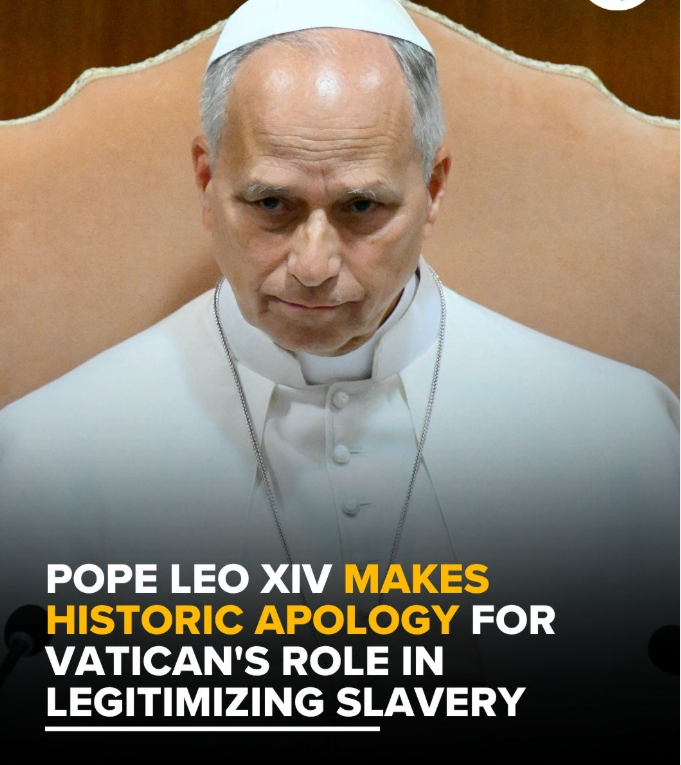
Vatican City — In a historic address, Pope Leo XIV offered a formal apology for the Catholic Church’s institutional complicity in the centuries-long practice of slavery, specifically acknowledging the Holy See’s own role in providing religious and legal justification for the subjugation of non-Christian peoples.
The pontiff described the Church’s historical record on the issue as “a wound in Christian memory,” admitting that past popes had failed to condemn slavery for centuries and had instead granted explicit authority to European sovereigns to enslave “infidels.”
“Today, we must confront this painful truth with honesty and humility,” Pope Leo XIV said. “The Holy See itself played a part in legitimizing the enslavement of peoples through papal bulls and decrees that gave moral and religious cover to colonial powers. For this, we express our deep regret and ask for forgiveness.”
While previous popes, including St. John Paul II and Pope Francis, have issued apologies for the involvement of individual Christians and Catholic nations in the trans-Atlantic slave trade, Leo XIV’s statement marks the first time a pope has directly addressed and apologized for the actions of the papacy itself in enabling the practice.
Historical records show that several 15th-century papal bulls, such as Dum Diversas (1452) and Romanus Pontifex (1455), authorized the Portuguese crown to conquer and enslave non-Christians in Africa and beyond. These documents laid important legal and theological groundwork for later European colonial expansion and the Atlantic slave trade.
Church historians have long noted that these bulls reflected the geopolitical realities and prevailing attitudes of their time, when the Church was deeply intertwined with European monarchies. However, critics have argued that the Vatican’s moral authority should have been used to challenge rather than endorse the institution of slavery.
Pope Leo XIV’s apology comes amid growing calls from historians, theologians, and some Catholic communities for a fuller reckoning with the Church’s colonial-era legacy. The statement is being viewed by observers as a significant step toward greater transparency and reconciliation.
The Vatican has not yet announced any concrete reparative actions or further initiatives stemming from this acknowledgment, but sources close to the Holy See suggest it may form part of a broader effort to address historical injustices during Leo XIV’s pontificate.
This latest apology reinforces the Catholic Church’s ongoing process of confronting its complex history, balancing its spiritual mission with an honest assessment of its past institutional failings.