66 Million Years Ago, the Dinosaurs Vanished — But Why?**
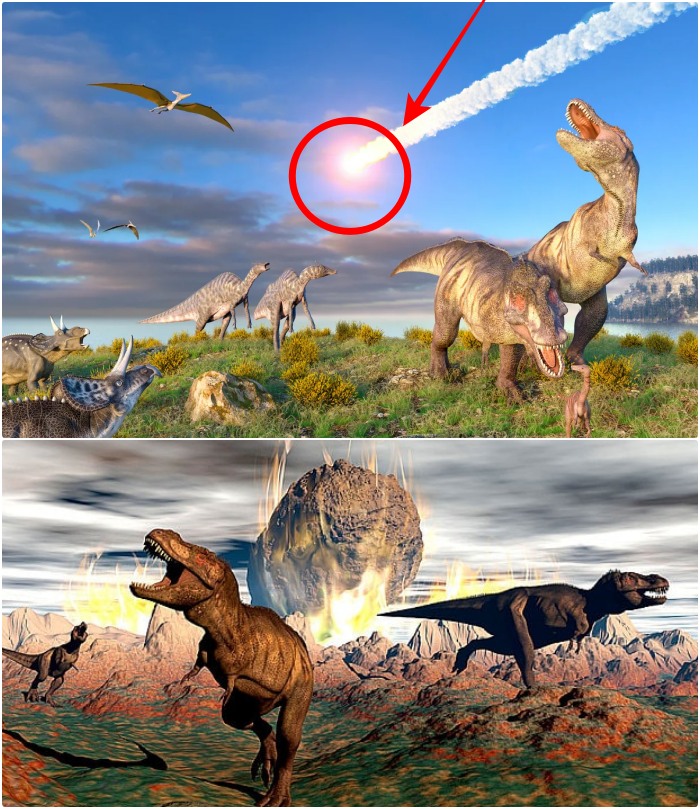
The End of the Dinosaur Age: What Caused the Mass Extinction 66 Million Years Ago?
Around 66 million years ago, a catastrophic mass extinction event brought the reign of the dinosaurs to a sudden and dramatic close, wiping out approximately 75% of all plant and animal species on Earth.
The leading scientific explanation centers on a massive asteroid impact near what is now Mexico’s Yucatán Peninsula. The collision created the enormous Chicxulub crater and unleashed devastating global effects, including massive tsunamis, widespread wildfires, a “nuclear winter” caused by dust and debris blocking sunlight, and a sharp drop in global temperatures.
In addition to the asteroid strike, many researchers believe intense volcanic activity — particularly from the Deccan Traps in present-day India — played a significant contributing role. These eruptions released enormous amounts of greenhouse gases and toxic compounds, triggering long-term climate change, ocean acidification, and ecological collapse.
While the vast majority of dinosaur species perished, one lineage survived: the theropod ancestors of modern birds. This means that, in a sense, dinosaurs never truly vanished from Earth and continue to thrive today as our feathered friends.
Ongoing paleontological and geological research continues to refine our understanding of this pivotal moment in Earth’s history. New fossil discoveries and advanced dating techniques are helping scientists piece together the precise sequence of events and the complex interplay of factors that led to one of the most significant turning points in the evolution of life on our planet.