Abul Bajandar — The Man the World Came to Know as “The Tree Man”
Abul Bajandar — The Man the World Came to Know as “The Tree Man”
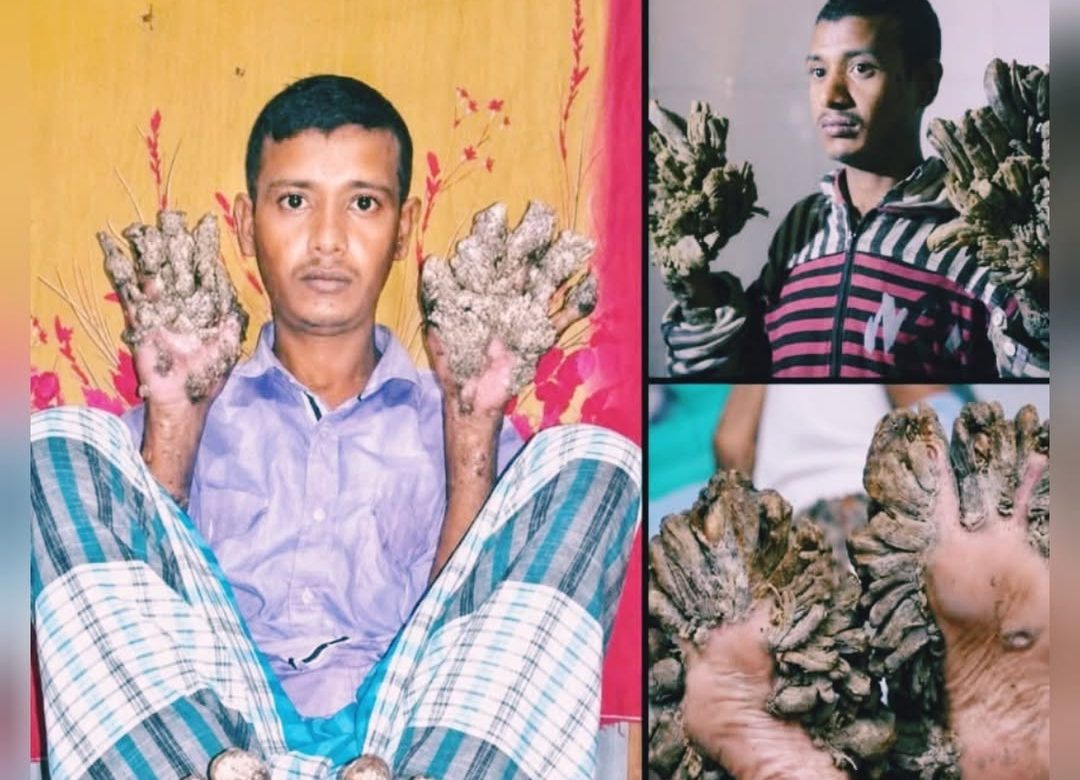
Abul Bajandar lived with one of the rarest and most challenging medical conditions ever documented.
Born in Bangladesh, Abul began developing unusual growths on his hands and feet during childhood.
At first, they appeared as small lesions, but over the years they grew larger and more severe.
Eventually, the growths became so extensive that they resembled thick bark or tangled tree roots, making even the simplest daily tasks incredibly difficult.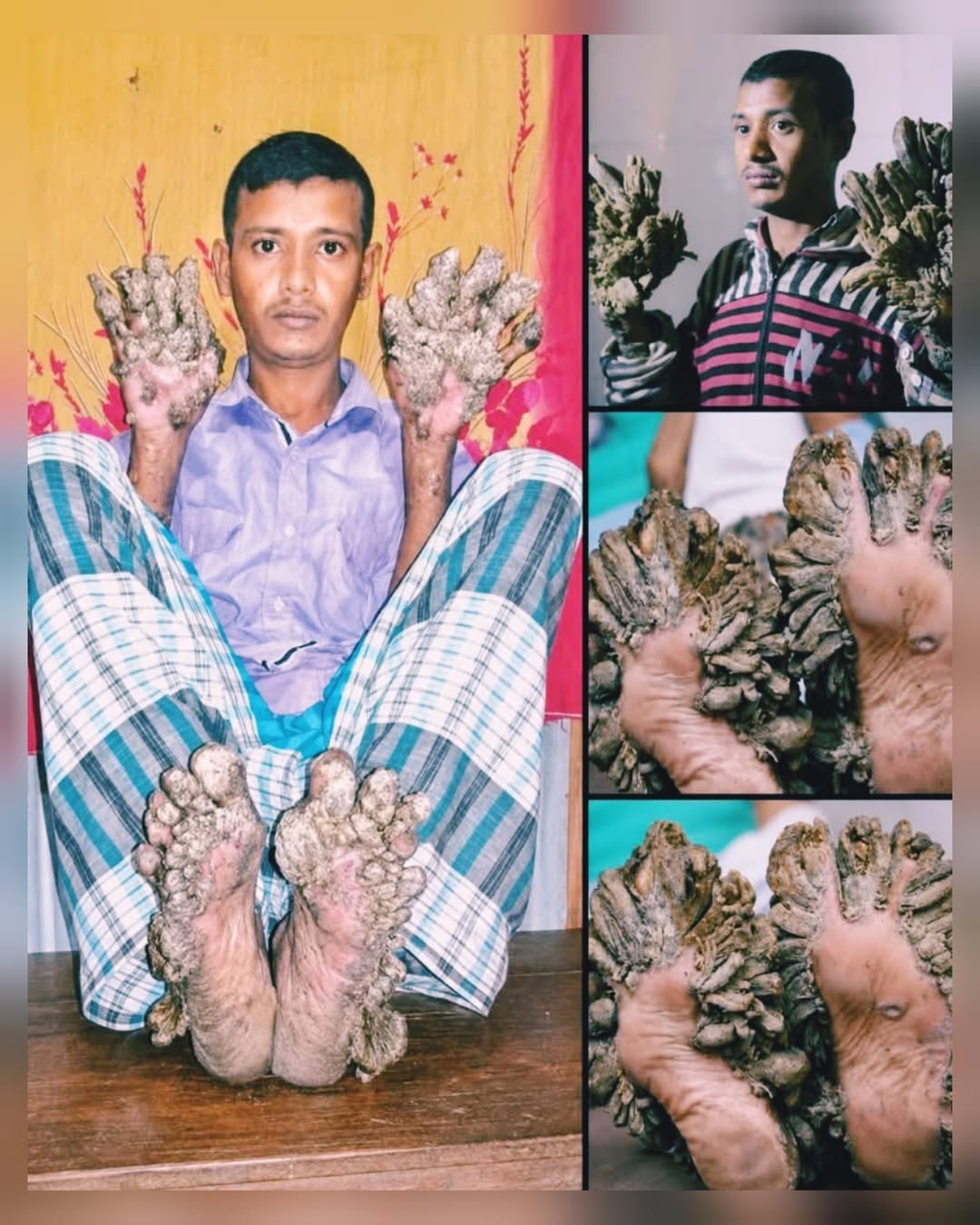
Doctors later diagnosed him with Epidermodysplasia Verruciformis, an extremely rare genetic disorder that increases susceptibility to certain strains of human papillomavirus (HPV).
The condition can cause widespread wart-like growths that become progressively disabling over time.
As the disease advanced, ordinary activities became enormous challenges.
Holding utensils, performing manual work, dressing himself, and caring for his family required tremendous effort.
The condition also affected his ability to earn a living, creating additional hardship for those who depended on him.
His story gained international attention, and people around the world became familiar with the nickname “The Tree Man.”
Behind the headlines, however, was a father determined to regain the use of his hands and improve his quality of life.
In 2016, teams of surgeons undertook a series of complex operations to remove several kilograms of affected tissue.
The procedures lasted for years and involved numerous surgeries, rehabilitation efforts, and ongoing medical care.
For a time, the results brought renewed hope.
One of the moments that touched people most was Abul’s ability to once again embrace and hold his daughter—something that had become increasingly difficult as the growths worsened.
It was a reminder that the goals of medical treatment are often deeply human, extending far beyond clinical outcomes.
Unfortunately, the condition later returned, requiring additional treatment and creating new uncertainties about the future.
Despite these setbacks, Abul continued to face his circumstances with remarkable perseverance.
His journey remains one of the most extraordinary cases in modern medicine.
But more than a medical story, it is a story about resilience, family, and determination in the face of overwhelming challenges.
Abul Bajandar’s life reminds us that courage is not always found in dramatic victories.