Maria Eduarda Rodrigues de Freitas Case Update: First Police Inquiry Completed as New Investigation Examines Missing Camera
- BichDuong
- June 25, 2026

Maria Eduarda Rodrigues de Freitas Case Update: First Police Inquiry Completed as New Investigation Examines Missing Camera
Updated June 25, 2026
Brazilian authorities have completed the first police inquiry into the death of 21-year-old Maria Eduarda Rodrigues de Freitas, who died after being launched from an abandoned railway bridge without being connected to the ropes intended to protect her.
Three instructors have been indicted for qualified intentional homicide under a theory of dolus eventualis, meaning investigators allege they accepted the possibility that their conduct could result in death. Three additional members of the event team remain under investigation over their roles in the operation and the suspected concealment or destruction of evidence.
The second investigation is examining five additional people in total. Police arrested three of them on June 20 and have reportedly asked a court to extend their temporary detention to 30 days while their individual actions are investigated.
No one has been convicted, and all allegations must still be considered by prosecutors and the courts.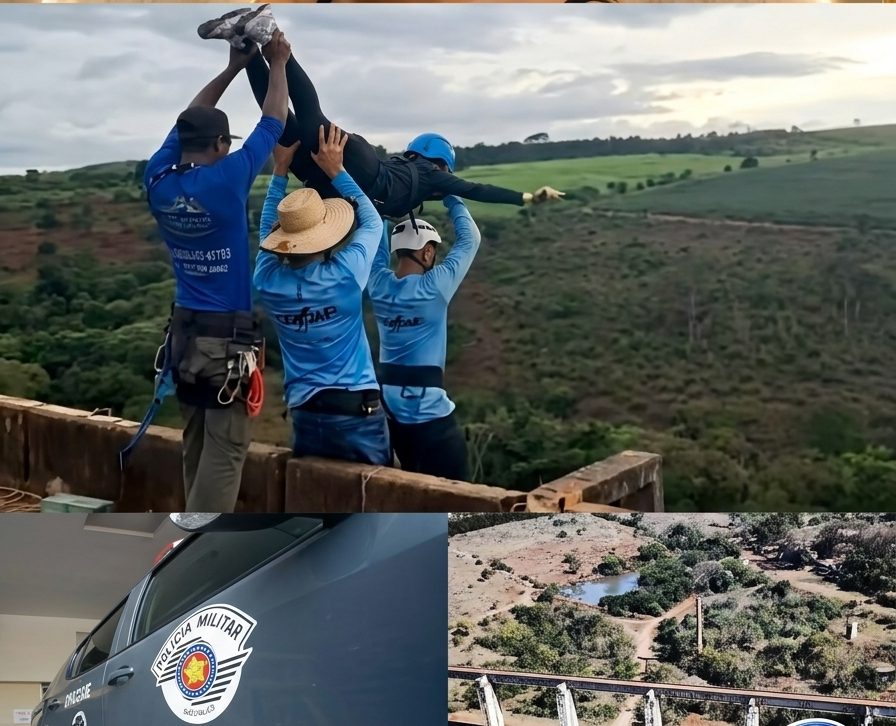
What happened to Maria?
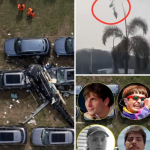
The tragedy occurred on June 13, 2026, at the Ponte do Esqueleto, commonly called the “Skeleton Bridge,” near Limeira in São Paulo state.
Maria had paid to take part in a rope-jumping activity organised by a group called Entre Cordas. Rope jumping is different from conventional bungee jumping. It uses low-stretch climbing ropes to transform a vertical fall into a pendulum-like swing rather than using an elastic cord to create repeated rebounds.
Maria reportedly requested an “airplane-style” launch. Video recorded by a witness shows instructors lifting her horizontally before releasing her from the approximately 40-metre-high structure.
The instructors were wearing safety harnesses, but Maria was not connected to the two ropes that were supposed to secure her. People at the scene could be heard raising the alarm moments after she left the platform.
Police investigator Andrea Levy said the instructors acknowledged that Maria had not been attached to the safety system. However, they reportedly could not explain who had been responsible for connecting the ropes or conducting the final inspection.
A nurse who witnessed the incident descended to the area beneath the bridge and attempted to help Maria. Emergency responders were called, but she died at the scene from multiple traumatic injuries.
Maria was buried the following day in Jandira, the city where she lived.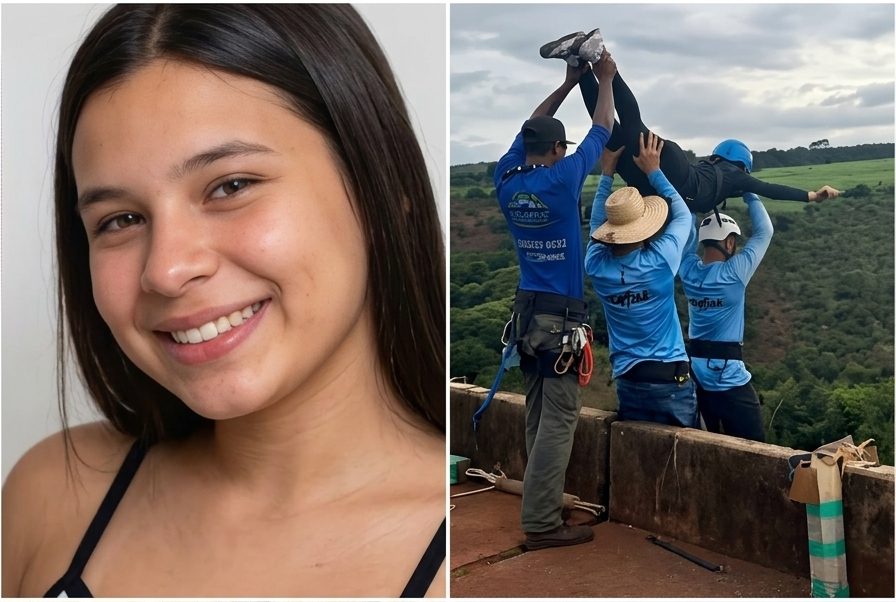
Three instructors remain in custody
The first inquiry focused on instructors Maicon Fernandes Cintra, Luis Felipe Feliciano Egoroff and Vitor de Freitas Gonçalves.
All three were detained shortly after Maria’s death. Their initial detention was later converted into preventive custody, and a request for their release was denied. They reportedly remain at a detention centre in Guarulhos.
Police interviewed 22 people during the first inquiry. Investigators then indicted the three instructors for qualified intentional homicide, alleging dolus eventualis rather than a direct intention to kill.
This legal distinction is important. Authorities are not claiming that the instructors deliberately planned Maria’s death. Instead, investigators allege that the organisation and execution of such a dangerous activity without adequate checks exposed her to an obvious and unacceptable risk.
The completed inquiry has now been forwarded to the justice system. Prosecutors must evaluate the evidence and determine which charges should formally proceed.
The suspects’ legal representatives will have an opportunity to challenge the evidence and present their defence.
New investigation focuses on three additional suspects
The second police inquiry is examining the conduct of other people connected to the Entre Cordas team.
Three suspects identified in Brazilian reporting are Evelyne dos Santos Gonçalves, João Antônio Pivetta Ribeiro da Silva and Gabriel Barros Martins. They were arrested under temporary warrants in Limeira, Indaiatuba and Rio de Janeiro.
Investigators describe Evelyne as an organiser associated with Entre Cordas. Police allege that she was responsible for registering participants and managing or publishing promotional material on social media.
Authorities are investigating the deletion of the group’s Instagram account after Maria’s death. Police and prosecutors believe the account may have contained photographs, videos, advertisements or other information relevant to determining how the operation was organised.
Deleting an account does not automatically prove an attempt to destroy evidence. Investigators must establish who deleted it, why it was removed and whether relevant material was intentionally made unavailable.
Evelyne reportedly told police that she did not see Maria’s launch because she was registering other participants at a location without a direct view of the platform. She described hearing the crowd react and then hearing the impact.
Gabriel is being investigated after allegedly leaving the location following the tragedy. Police are seeking to determine whether his departure and subsequent actions were connected to the disappearance of evidence.
Mystery surrounding Maria’s camera
One of the biggest remaining questions concerns a camera Maria reportedly wore to record her experience.
Police allege that João Antônio was positioned at the bottom of the bridge, where his role included helping participants remove equipment after completing their jumps. Witnesses reportedly saw him approach Maria and remove the camera after she fell.
João has denied taking it. He reportedly told investigators that he approached Maria only to determine whether she still had a pulse.
Another investigative account alleges that the camera was later carried to the upper part of the bridge and placed inside a plastic bag. Police are now attempting to reconstruct the device’s movements and determine whether its disappearance was intentional.
The camera has not been recovered.
Authorities consider it an important piece of evidence because it may contain a first-person recording of Maria’s preparations, the instructions she received and the conversations among team members immediately before the launch.
Police are also examining electronic devices seized during searches and looking for digital files that may have been deleted after the incident.
The second inquiry is investigating possible procedural fraud alongside potential responsibility for crimes against life. Those suspicions remain allegations and have not been proven in court.
Activity had no official authorisation
Federal authorities previously confirmed that Entre Cordas did not have permission to conduct sporting activities at the bridge.
The structure was connected to an abandoned railway project and had become a popular location for extreme-sports groups despite repeated safety concerns.
Access had previously been restricted, but barriers were reportedly removed or bypassed. Local officials said they had raised concerns about the bridge before Maria’s death.
The municipality of Limeira has now reinforced barriers and warning signs around the area. It has also requested that the federal government demolish the structure and called for a federal investigation into how unauthorised activities continued there.
As of June 25, the demolition has been requested and discussed, but no confirmed date for removing the bridge has been publicly announced.
What happens next?
The first police inquiry is complete, but the wider case remains active.
Prosecutors must decide how to proceed against the three indicted instructors. Meanwhile, the second inquiry will attempt to determine the responsibility of the other team members, recover the missing camera and establish whether digital or physical evidence was deliberately concealed.
For Maria’s family, the case is about more than one missed connection. It concerns the absence of a reliable inspection process, an unauthorised commercial activity and a chain of decisions that allowed a participant to leave a 40-metre-high platform without the equipment meant to save her.
Maria was a daughter, a student and a young woman with plans for her future. The criminal investigation may eventually establish individual responsibility, but it cannot restore the life lost through a failure that investigators say should never have occurred.