Baby Born with 800-Gram Facial Tumor — Nearly a Third of His Body Weight — Defies the Odds
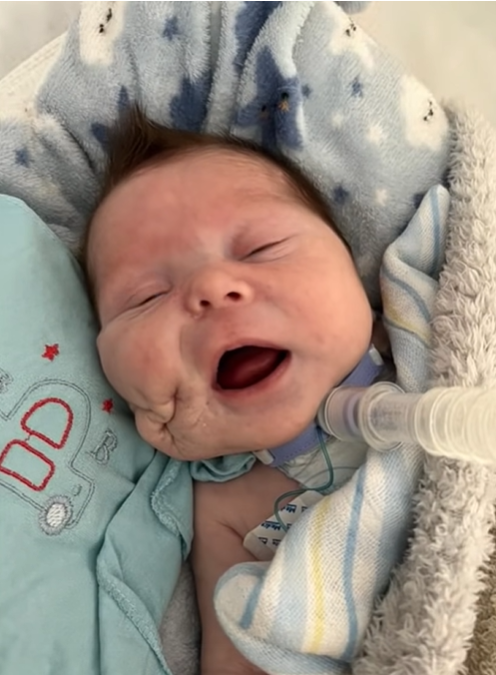
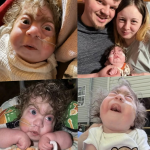
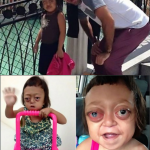
When Braian Demjenski Pereira was born in Curitiba, Brazil, he carried an extraordinary burden: a rare congenital tumor weighing approximately 800 grams that covered much of his face and mouth. The mass accounted for nearly 28.5% of his total body weight.
The condition is known as epignathus, an extremely rare type of oropharyngeal teratoma that arises during embryonic development, typically from the palate or base of the tongue. Incidence is estimated at roughly 1 in 1 million live births. In Braian’s case, doctors classified it as an immature teratoma (grade 3).
The growth was first detected on ultrasound at 18 weeks of pregnancy. As the pregnancy progressed, the tumor expanded and eventually covered Braian’s entire mouth, raising serious concerns about his ability to breathe at birth. At 35 weeks, a large multidisciplinary team performed a cesarean delivery. Immediately after birth, surgeons carried out a tracheostomy — the only reliable way to secure his airway.
In the critical first hours, Braian suffered four cardiorespiratory arrests, one lasting 25 minutes. Medical staff administered adrenaline and provided intensive support. Against expectations, he survived and showed no major neurological sequelae.
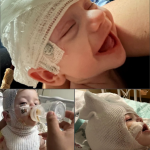
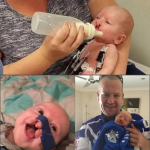
The tumor was surgically removed in the first weeks of life at Hospital Nossa Senhora das Graças. Braian was born weighing about 2.88 kg including the mass; after removal, the tumor alone weighed roughly 795–800 grams. He spent three months in the hospital and required a feeding tube and ongoing respiratory support.
Today Braian is thriving relative to the severity of his start. He has undergone multiple therapies — including respiratory physiotherapy, speech therapy, and oncology follow-up — and continues to need specialized care. Facial reconstruction surgeries are planned for the future. His parents, Marciliana Demjenski and Valmir Pereira, describe him as their “miracle baby” and have shared his progress publicly to raise awareness and support for ongoing treatment.
Epignathus can obstruct the airway and is often life-threatening without careful prenatal planning and immediate postnatal intervention. Braian’s survival and subsequent development highlight both the rarity of the condition and the importance of coordinated fetal and neonatal surgical care.
Sources
- Metrópoles, Revista Crescer, and Banda B reports on Braian Demjenski Pereira (2024–2025)
- Family accounts and medical details from Hospital Nossa Senhora das Graças, Curitiba
- Clinical descriptions of epignathus from pediatric oncology and fetal medicine sources