Science and Precision: The Historic Separation of Craniopagus Twins from Bangladesh
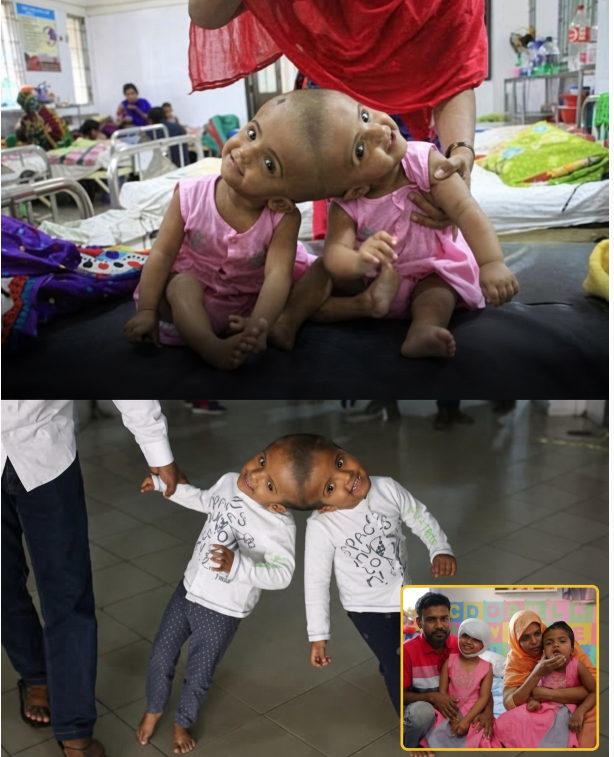
In Bangladesh, sisters Rabeya and Rukaya (also referred to as Rabia and Rukia) were born joined at the top of the skull—a rare condition known as craniopagus twinning. The shared cranial structure limited their ability to sit independently and created life-threatening risks due to interconnected cerebral venous circulation.
A humanitarian medical alliance, led by Hungary’s Action for Defenceless People Foundation (Cselekvés a Kiszolgáltatottakért Alapítvány), coordinated a multi-stage separation process involving Bangladeshi and Hungarian specialists. The project, known as “Operation Freedom,” required extensive preparation over roughly 18 months.
The first phase, performed in Bangladesh in 2018 under the direction of neurosurgeon Dr. István Hudák, successfully separated the shared major cerebral veins through endovascular techniques. In early 2019 the twins traveled to Budapest, where plastic surgeon Dr. Gergely Pataki and colleagues implanted a specially designed Hungarian tissue-expander system at Semmelweis University. Over subsequent months the expanders gradually stretched the scalp and soft tissue to create sufficient coverage for later reconstruction.
The final separation took place on August 1–2, 2019, at the Combined Military Hospital in Dhaka. A multidisciplinary team of more than 30–35 specialists—primarily Hungarian neurosurgeons, plastic surgeons, and anesthesiologists working in rotation with Bangladeshi colleagues—carried out the marathon procedure lasting approximately 30 to 33 hours. Surgeons carefully divided the remaining venous networks, separated the bony skull structures, and performed complex plastic reconstructions of the scalps.
Both girls survived the operation in stable condition. Further reconstructive surgeries and intensive rehabilitation followed. By March 2021 the family returned to their hometown of Pabna, Bangladesh, where the twins continued recovery and independent development under ongoing medical supervision.
The successful separation of these craniopagus twins stands as a notable example of international medical collaboration, technical precision, and humanitarian commitment in one of the rarest and highest-risk forms of conjoined-twin surgery.
Sources
- AP News: “Conjoined Bangladeshi twins separated by Hungarian doctors” (August 2019)
- Action for Defenceless People Foundation (cselekves.org) official announcements and updates on Operation Freedom
- Semmelweis University reports on the tissue-expander phase (2019)
- Index.hu English: detailed account of the 33-hour final separation surgery
- Additional contemporary reports from Euronews, Xinhua, and related medical coverage confirming the multi-stage process, team size, and outcomes