Isla: The Little Heart Warrior Who Defied the Odds
Before she was born, Isla’s parents learned that their daughter’s heart was not developing normally. The diagnosis was Tetralogy of Fallot (TOF), a serious congenital heart defect that would completely change the course of their family’s future.
Tetralogy of Fallot is a condition present at birth involving four abnormalities of the heart: a hole between the lower chambers, narrowing of the pathway from the heart to the lungs, an aorta positioned over the ventricular septal defect, and thickening of the right ventricle. Together, these changes can reduce the amount of oxygen-rich blood reaching the body.
For Isla’s family, the diagnosis brought fear and uncertainty. But it also marked the beginning of an extraordinary story of courage.
A Difficult Beginning
Isla was born in June 2021 and was quickly admitted to intensive care, beginning a childhood shaped by hospital stays, procedures and constant medical monitoring.
Infants with Tetralogy of Fallot can experience low oxygen levels, sometimes causing the skin or lips to appear blue or gray. The severity varies from child to child, depending largely on how much blood can reach the lungs.
For babies with significant disease, treatment may be required early in life. Doctors may sometimes use a temporary procedure to increase blood flow to the lungs before performing a complete repair.
Surgery at Just Two Months Old
By the time she was only two months old, Isla had already undergone her first procedure.
At five months, she faced an even greater challenge: open-heart surgery to repair the underlying heart defect.
Complete repair of Tetralogy of Fallot generally involves closing the hole between the ventricles and relieving the obstruction that restricts blood flow from the heart to the lungs. Depending on the child’s anatomy, surgeons may also repair or replace the pulmonary valve or enlarge the pathways leading to the lungs.
For her parents, watching their tiny daughter undergo major cardiac procedures must have been an overwhelming experience. Yet Isla continued to move forward—healing, growing and gradually returning to the simple joys of childhood.
A Heart Warrior
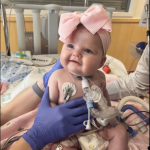
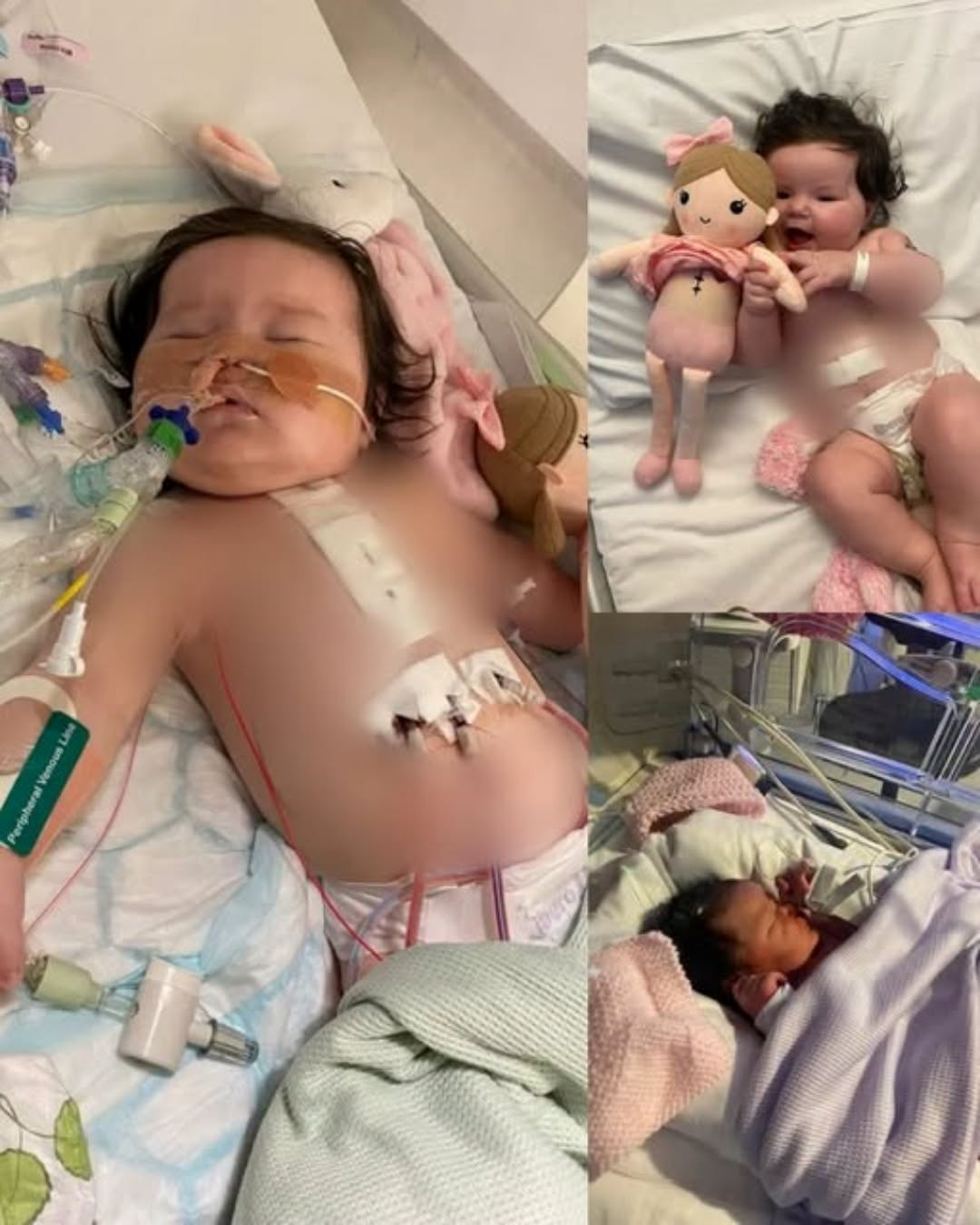
The photographs tell a story that medical terminology cannot fully capture.
In one image, Isla is surrounded by tubes and monitoring equipment in the hospital. In another, she is resting with her doll beside her. Together, the images show two very different sides of her journey: the frightening reality of serious congenital heart disease and the childhood that exists beyond the hospital room.
Through surgeries and recovery, Isla showed remarkable resilience.
Her journey is not necessarily over. Children who undergo repair for Tetralogy of Fallot require regular, often lifelong, follow-up with cardiology specialists. Some may eventually develop problems involving the pulmonary valve, blood-flow pathways or heart rhythm and may require additional procedures or surgery later in childhood or adulthood.
That possibility, however, does not define Isla’s life.
Looking Toward the Future
Today, Isla is described as a happy, growing child full of life and determination.
Her family knows another surgery may be necessary as she grows, but they also know how far she has already come.
Her story is a reminder of how early diagnosis, advances in pediatric cardiac surgery and dedicated medical care can give children with complex congenital heart defects the opportunity to grow up and experience life beyond the hospital.
Most importantly, Isla’s journey is not simply a story about a heart defect.
It is the story of a little girl who entered the world facing enormous challenges—and continued to smile, grow and thrive.
She is, in every sense, a heart warrior.
Sources
- American Heart Association — Tetralogy of Fallot: overview of the condition, its four structural abnormalities, surgical treatment and long-term follow-up.
- Mayo Clinic — Tetralogy of Fallot: Symptoms and Causes: information on diagnosis, symptoms, oxygen levels and the congenital nature of the condition.
- Mayo Clinic — Tetralogy of Fallot: Diagnosis and Treatment: diagnostic testing, temporary procedures, complete repair and long-term care.
- Mayo Clinic — Tetralogy of Fallot Surgery: background on surgical repair and the long-term outlook for children with repaired TOF.