Alex’s Story: A Tiny Heart Fighting Against the Odds
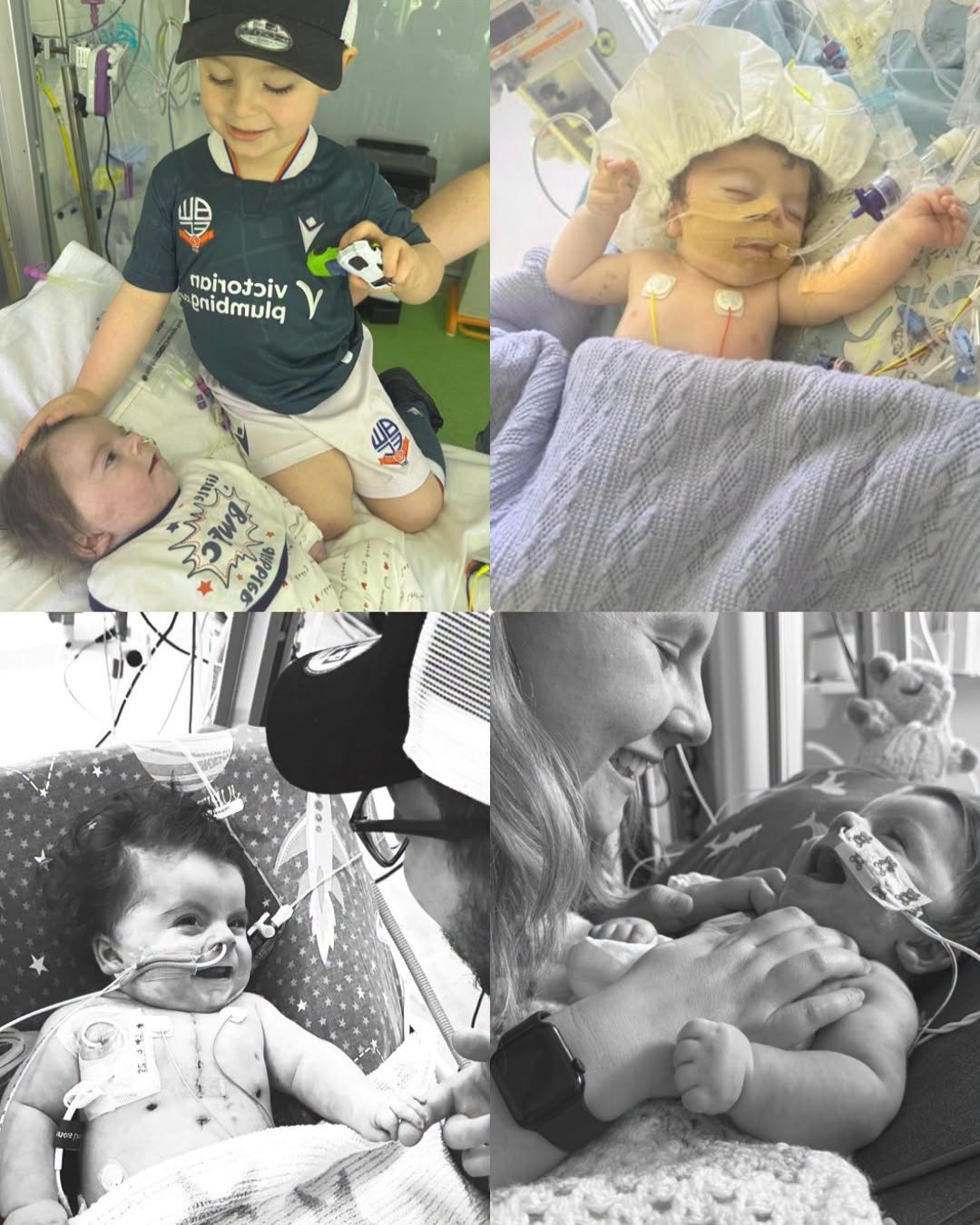
At her 20-week pregnancy scan, Jody expected to see the reassuring images of her growing baby. Instead, she received news that would change her family’s life forever: her unborn son, Alex, had Hypoplastic Right Heart Syndrome (HRHS).
HRHS is a rare and complex congenital heart condition in which structures on the right side of the heart—including the right ventricle and, in some cases, the tricuspid or pulmonary valve—are severely underdeveloped or unable to function normally. The condition can lead to a single-ventricle circulation, in which one ventricle must do much of the heart’s pumping work.
For Jody, the diagnosis came as a devastating shock. Yet it was also the beginning of a journey that would reveal just how much strength could exist in one very small child.
A Diagnosis Before Birth
According to Jody’s account, doctors first became concerned during her 20-week scan when they were unable to obtain clear images of Alex’s heart. Further specialist assessment confirmed the diagnosis at 22 weeks and four days of pregnancy.
At that stage, doctors were uncertain whether Alex would ultimately be able to undergo a two-ventricle repair or would need a single-ventricle pathway. They discussed the possibility of staged treatment, including a future Fontan circulation.
The diagnosis was only the beginning of the uncertainty.
Later in pregnancy, Alex was found to have a small femur and fetal growth restriction. Genetic testing was subsequently performed, adding another layer of concern to an already complicated pregnancy.
A Difficult Start to Life
Alex was born prematurely at 36 weeks by planned Caesarean section, weighing just 4 pounds 6 ounces.
His arrival was followed by an emergency transfer to a larger specialist hospital. He required an emergency balloon atrial septostomy, which did not provide the desired result, followed by placement of a stent to improve his circulation.
For babies with severe single-ventricle heart defects, procedures such as catheter-based interventions, shunts or stents may be necessary to maintain adequate blood flow while doctors determine the most appropriate surgical pathway. Treatment varies substantially according to the child’s individual heart anatomy.
For Jody and her family, the medical terminology translated into something much simpler and much more frightening: their tiny baby was fighting to stay alive.
Another Diagnosis
While Alex was receiving intensive cardiac care, his family received another difficult piece of news.
Doctors suspected that he had Cornelia de Lange syndrome (CdLS), a rare developmental disorder that can affect growth, development, the digestive system and multiple other parts of the body. Genetic testing eventually confirmed the diagnosis in Alex.
Most cases of Cornelia de Lange syndrome result from new, or de novo, genetic changes and occur in children with no previous family history of the condition.
For Alex, the diagnosis helped explain some of the additional challenges he was facing, including growth and gastrointestinal difficulties. But it did not change the way his family saw him.
To them, he was still simply Alex—their son and little brother.
Five Weeks at Home
After a difficult beginning, Alex was eventually discharged on Christmas Eve.
His family was able to spend five precious weeks together at home.
Those weeks offered something that hospital life could not: ordinary family moments. Alex could be with his parents and his older brother, away from intensive-care equipment and surrounded by the people who loved him most.
But the relief did not last.
Alex was readmitted to hospital at the end of January, beginning another prolonged period of uncertainty.
At one point, doctors feared that his heart might not be strong enough for him to come off the ventilator. Yet Alex surprised them once again. He eventually came off respiratory support and gradually gained weight, reaching approximately 6 kilograms as doctors prepared him for a Glenn procedure.
When Surgery Does Not Go as Planned
The Glenn procedure is part of the staged surgical approach used for some children with single-ventricle heart defects. It redirects blood from the upper body directly to the pulmonary arteries, reducing the workload on the single functioning ventricle. A later Fontan procedure may complete the circulation pathway in children who are suitable candidates.
For Alex, however, the Glenn procedure failed because of severe clotting.
His prolonged stay in intensive care had required numerous intravenous lines, affecting the veins and arteries that surgeons needed for the procedure.
The setback was devastating. Doctors told the family that Alex might not be able to undergo another Glenn procedure and might not be eligible for a heart transplant, although his medical team would continue to reassess his situation.
Yet once again, Alex kept fighting.
A Smile Through It All
Despite everything he has endured, Alex is described by his mother as a very smiley child.
He loves his big brother Zachary, enjoys kisses on his chin, listens to music and dances with his parents. Even amid serious medical complications, his personality continues to shine through.
His medical journey remains uncertain, but his family’s perspective has changed.
Jody describes Alex as a child who has taught them resilience, advocacy and a new appreciation for life. His journey has also shown them that strength is not measured by size, the number of surgeries someone has survived or how healthy a heart looks on a scan.
Sometimes, strength is simply waking up and trying again.
A Little Boy With an Extraordinary Will
Alex’s story is not a story of an easy victory.
It is a story of uncertainty, setbacks and difficult decisions. It is also a story of a family refusing to give up hope while doctors continue to explore what may be possible for their child.
Advances in pediatric cardiology, surgery and critical care have dramatically improved the outlook for children born with complex congenital heart disease, although many continue to require lifelong specialist follow-up and may need additional procedures as they grow.
For now, Alex continues to take life one day at a time.
His heart may be different. His path may be harder than most children’s. But surrounded by his parents, his brother and a family determined to stand beside him, Alex continues to show an extraordinary will to live.
His journey is far from over—and neither is his fight.
Sources
- Tiny Tickers — “Hypoplastic Right Heart Syndrome: Alex’s Story” — Jody’s firsthand account of Alex’s prenatal diagnosis, birth, cardiac procedures, Cornelia de Lange syndrome diagnosis, hospitalization and current condition.