Science and Humanity: How a Life-Changing Operation Gave Angel a New Future
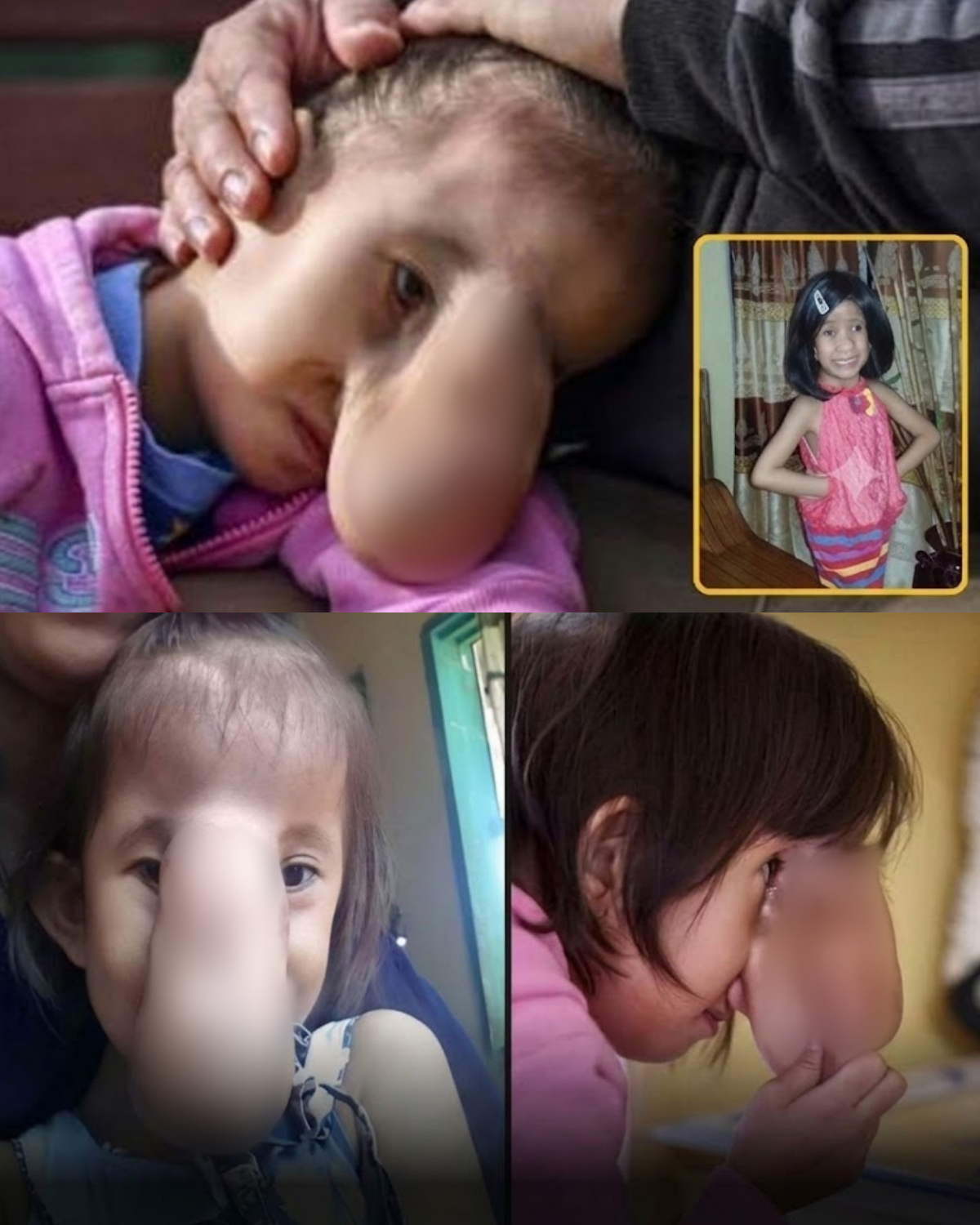
For years, Angel’s face was dominated by a rare medical condition that made even ordinary childhood activities difficult. Born in the Philippines with a severe frontal encephalocele, Angel developed a large protrusion containing abnormal tissue and fluid through an opening in the skull.
Her condition not only dramatically changed the appearance of her face, but also affected her vision, breathing and ability to sleep comfortably. As she grew older, the protrusion became increasingly difficult to live with—and she also faced cruel comments from other children because of her appearance.
But eventually, a combination of medical expertise and charitable support gave Angel an opportunity for a new beginning.
Born With a Rare Brain Hernia
Angel was born to Cypres Salon and her husband, Dale, in the Philippines. Doctors quickly recognized that she had an encephalocele, a congenital defect that occurs when part of the brain or the membranes surrounding it protrude through an opening in the skull.
In Angel’s case, the encephalocele was located in the front of her skull and formed a large mass over the middle of her face. Reports about her case said the protrusion eventually covered much of her left eye, forcing her to move it aside to see properly. It also interfered with sleeping and breathing.
Encephaloceles are rare neural tube defects. They can occur in different areas of the skull, with occipital encephaloceles being the most common type. Frontoethmoidal encephaloceles are particularly complex because they can involve the bones of the forehead, nose, eye sockets and surrounding structures.
A Difficult Childhood
Angel underwent an operation in the Philippines when she was still very young. According to her family’s account, the procedure successfully separated the hernia from her brain, but the large external mass remained.
As Angel grew, it continued to affect her daily life. She had difficulty seeing clearly, playing normally and sleeping comfortably. Her parents even worried that the protrusion could obstruct her airway if she rolled onto her back while sleeping.
There was another challenge that no operation could immediately solve: the way other people treated her.
Angel was subjected to stares and cruel comments because of her appearance. In one particularly painful incident reported by her mother, another child called her a “monster.” Yet Angel responded with kindness rather than anger, showing a remarkable resilience even at a very young age.
Her mother, however, continued to see the daughter behind the condition—a cheerful child who loved to smile, play and look at herself in the mirror.
A Journey to Australia
The cost and complexity of removing Angel’s encephalocele made treatment difficult for her family. Her parents had limited financial resources and had already spent years trying to find a solution.
Eventually, their search led them to Interplast, an organization whose surgical teams provide reconstructive care for people who cannot otherwise access specialized treatment. Interplast evaluated Angel and recommended that she travel to Australia for more complex surgery. The Children First Foundation helped arrange her journey to Adelaide, where she would receive treatment at the craniofacial unit of the Women’s and Children’s Hospital.
For Angel’s family, the opportunity represented far more than cosmetic surgery. The goal was to address a serious structural problem while improving her ability to see, breathe, sleep and participate in everyday childhood activities.
The Four-Hour Operation
In Australia, a multidisciplinary medical team carried out a complex operation lasting approximately four hours.
According to reports, surgeons removed around 200 grams of abnormal brain tissue and fluid from the protrusion and used bone taken from Angel’s hip to close the opening in her forehead. The procedure was designed to repair the skull defect and reconstruct the affected area of her face.
The operation was successful.
When Angel’s father sent Cypres a photograph after the procedure, her daughter’s face was covered in bandages and stitches—but the enormous protrusion that had dominated her appearance was gone.
For a mother who had spent years worrying about her child’s health and future, the image represented an emotional turning point.
A New Beginning
Angel returned home with her family several weeks later. Although additional surgery would eventually be needed to further reconstruct her nose, the removal of the encephalocele dramatically changed her everyday life.
She could see more easily, play more freely and sleep without the same concerns about the mass obstructing her airway. Most importantly, the attention she received from strangers and other children changed.
Interplast later reported that Angel was happy and back home with her family following the surgery.
Her story demonstrates what can happen when advanced medical expertise is combined with humanitarian support. For families living with rare congenital conditions, access to specialized surgery can sometimes depend not only on medical knowledge, but also on organizations willing to help patients cross financial and geographic barriers.
More Than a Medical Transformation
Angel’s story is ultimately about more than the transformation of her face.
Before surgery, her mother described a little girl who remained optimistic despite the difficulties surrounding her. Even when other children reacted cruelly to her appearance, Angel continued to show affection and kindness.
The surgery did not create that strength. It simply gave that strength more room to shine.
Her journey also highlights why encephalocele repair can require highly specialized care. Modern treatment may involve neurosurgeons, craniofacial surgeons and other specialists working together to close the skull defect, protect neurological structures and reconstruct the face. Medical literature describes frontal encephalocele repair as complex precisely because the defect can involve several important anatomical structures.
Angel’s experience is therefore a powerful reminder of the intersection between science and humanity. A rare congenital condition shaped the beginning of her life, but it did not have to determine the rest of it.
With the help of her family, charitable organizations and a team of specialists in Australia, Angel was given something every child deserves: the opportunity to grow up, play, dream and be seen for who she is—not simply for the condition she was born with.
Sources
- Now To Love, “Gorgeous girl with nose deformity finally receives life-changing surgery” — details of Angel’s family, diagnosis, experiences and treatment in Adelaide.
- That’s Life, “Four-year-old girl flown to Australia for treatment of her rare facial hernia” — background on Angel’s encephalocele, difficulties with vision and breathing, and the Australian surgery.
- Interplast, December newsletter — confirms that Angel was born with a large brain hernia, was assessed by an Interplast team in the Philippines and was brought to Australia for complex surgery with assistance from Children First Foundation.
- NCBI / PMC, Giant Frontoethmoidal Encephalocele in an Infant: A Case Report — medical background on encephaloceles and multidisciplinary craniofacial reconstruction.
- Neurocirugía, Frontoethmoidal encephalocele: Report of a case — medical discussion of frontal encephalocele and the complexity of surgical reconstruction.