Tessa Evans: The Girl Born Without a Nose Who Turned Her Difference Into a Message of Hope
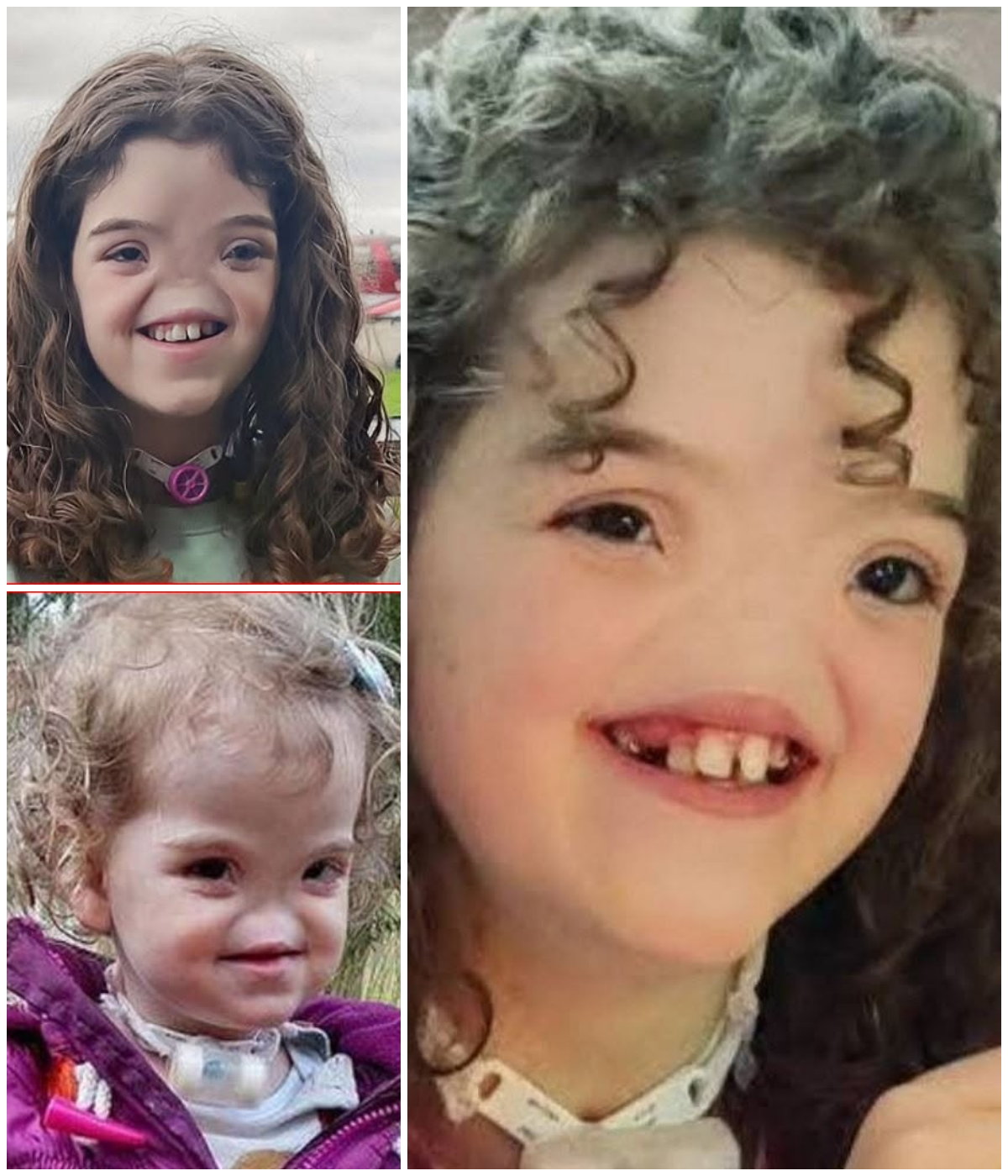
When Tessa Evans was born in Maghera, Northern Ireland, in 2013, her parents were confronted with an extraordinarily rare medical condition. Tessa had been born without a nose because of congenital arhinia, a developmental disorder in which the nose fails to form normally before birth. In Tessa’s case, the condition was later described as part of Bosma arhinia microphthalmia syndrome (BAMS), a rare disorder that can involve abnormalities of the nose, eyes and other facial structures.
The condition presented major challenges from the very beginning. Tessa did not have a normal nasal airway or sense of smell, and she spent her first weeks of life in intensive care. Reports from her family said she eventually learned to breathe through her mouth. Although she could cough, sneeze and catch colds, she had no sense of smell because the structures responsible for olfaction had not developed normally.
For her parents, Gráinne and Nathan Evans, the early years were filled with uncertainty. They had experienced an apparently normal pregnancy and had no indication that their daughter would be born with such a rare facial difference. Rather than allowing the condition to define Tessa’s life, however, the family chose to support her development and encourage her to participate in everyday activities like other children.
At the age of two, Tessa became part of an extraordinary medical milestone. In 2015, surgeons at Great Ormond Street Hospital in London fitted her with a custom-made nasal implant designed using 3D-printing technology. Rather than immediately creating a permanent external nose, the implant was placed beneath the skin to gradually stretch the surrounding tissue as Tessa grew.
The technique was carefully adapted to her growing face. Because Tessa was still a young child, a permanent reconstruction would have been difficult to maintain as her facial bones and skin developed. The plan therefore involved replacing the implant with larger versions over time, allowing additional tissue to develop gradually. Contemporary reports described the procedure as a pioneering approach and said Tessa was the first person to receive this type of nasal implant.
The treatment was not simply cosmetic. Facial reconstruction can have important psychological and social implications, particularly for children who have highly visible congenital differences. At the same time, Tessa’s medical team had to consider the unique anatomy associated with arhinia and the fact that a reconstructed nose would not automatically restore a normal sense of smell or a functional nasal airway.
Tessa subsequently underwent additional stages of treatment. In 2017, when she was four, she returned to Great Ormond Street Hospital for a second implant. Her family explained that the procedure was expected to be repeated as she grew, with the ultimate goal of creating a more permanent nasal prosthesis later in adolescence.
Despite these challenges, Tessa developed a reputation for her cheerful personality and confidence. By the time she began school, reports described her as comfortable participating in activities alongside other children. Her story increasingly became associated not simply with a rare medical condition, but with the idea that children with visible differences should be given the same opportunities to learn, socialize and express themselves.
That message reached a much larger audience in 2023, when 10-year-old Tessa appeared on Ireland’s Late Late Toy Show. Her family said they hoped her appearance would help represent children with facial differences and inspire others. Tessa was thrilled to meet actress Alisha Weir, star of Matilda the Musical, during the program.
Her public appearances also demonstrated how far she had come from the fragile newborn who had spent weeks in intensive care. Instead of allowing her unusual appearance to limit her ambitions, Tessa became an outspoken example of confidence and acceptance. Her mother has repeatedly emphasized that she sees her daughter as beautiful and extraordinary exactly as she is.
It is important, however, to separate the inspirational message surrounding Tessa’s story from some of the simplified descriptions that circulate online. She was not born with all senses functioning normally: her lack of a normal olfactory system means she cannot smell. Likewise, arhinia is not simply an absence of the visible nose; it can involve complex abnormalities of the nasal passages, sinuses and surrounding facial structures.
Tessa’s journey is ultimately about much more than reconstructing a missing facial feature. It is about growing up with a difference in a world that often places enormous importance on appearance. Her family’s support, specialist medical care and her own personality have allowed her to demonstrate that a congenital condition does not have to determine the limits of a person’s life.
Her story continues to resonate because the most remarkable transformation is not necessarily the physical one. It is the confidence with which Tessa has learned to face the world. By sharing her experiences, she and her family have helped encourage a broader understanding of facial differences—and a reminder that inclusion begins when people are seen for who they are rather than judged by how they look.
Sources
- The Irish News — Tessa Evans and the 2023 Late Late Toy Show. Contemporary reporting on Tessa at age 10, her diagnosis of Bosma arhinia microphthalmia syndrome and her family’s hopes that her appearance would inspire other children with facial differences.
- Great Ormond Street Hospital / medical sources on Tessa’s treatment. Reports and documentation of the pioneering nasal implant approach used to gradually expand facial tissue as Tessa grew.
- Derry Now — Tessa’s first day at school. Background on congenital arhinia, her lack of a sense of smell and the first nasal implant procedure.
- Derry Now — Second stage of Tessa’s surgery. Details of the second nasal implant procedure performed at Great Ormond Street Hospital in 2017.
- UOL Notícias — 3D-printed nasal implant. Contemporary medical reporting explaining that the implant was designed from a 3D model of Tessa’s skull and was intended to be replaced as she grew.
- Tessa’s family journal, Tessa: Born Extraordinary. First-hand family documentation of her treatment, including the 2015 implant and subsequent stages of reconstruction.