One Year After Iryna Zarutska’s Death, Her Family Takes Charlotte to Court Over Transit Security Failures

CHARLOTTE, NORTH CAROLINA — One year after 23-year-old Iryna Zarutska was fatally stabbed aboard a Charlotte light-rail train, her family is taking legal action against the city and the private company responsible for transit security.
The wrongful-death lawsuit, filed in Mecklenburg County, accuses the City of Charlotte and Professional Security Services of failing to provide adequate protection on the Charlotte Area Transit System, or CATS.

The family’s lawsuit argues that Iryna’s death was not simply the result of one violent act, but also exposed broader weaknesses in the city’s public-transit security system.
The allegations have not been proven in court.
A Young Woman Killed on Her Way Home
Iryna Zarutska was a 23-year-old Ukrainian woman who had come to the United States after fleeing the war in Ukraine.
On August 22, 2025, she boarded a CATS LYNX Blue Line train in Charlotte.
Surveillance footage later showed Iryna sitting in the train shortly before she was attacked from behind.
Authorities accused Decarlos Dejuan Brown Jr. of fatally stabbing her.
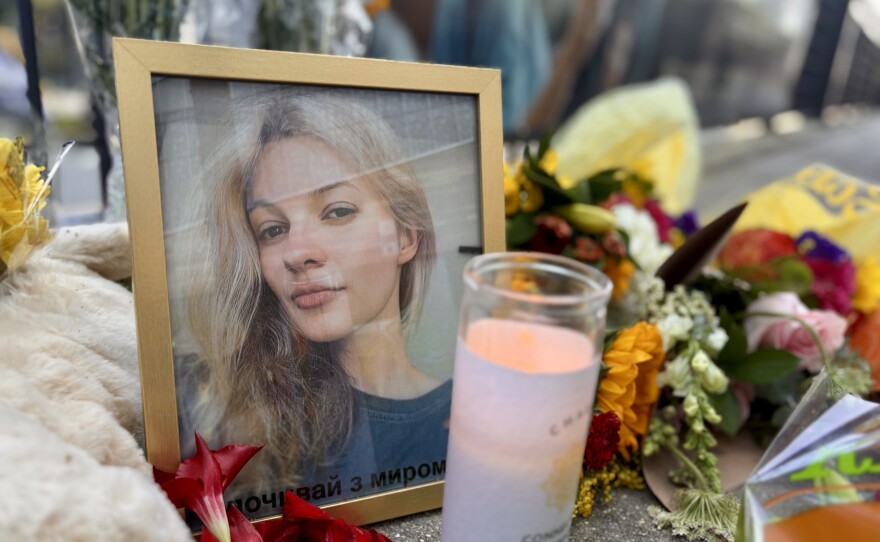
The attack shocked Charlotte and quickly attracted national attention after surveillance video was released.
Iryna died from her injuries.
Her death also triggered an intense debate about transit safety, security staffing, fare enforcement and the treatment of people with serious mental-health problems within the criminal justice system.
Family Alleges “Systemic Failures”
The new lawsuit focuses heavily on what the family describes as longstanding security failures within the CATS system.

According to the complaint, the city and its private security contractor knew about safety problems involving crime and disorder on the light-rail system but failed to implement sufficient safeguards.
The lawsuit specifically points to inadequate security staffing, insufficient fare enforcement and the absence of physical barriers that could prevent people without valid tickets from entering the system.
The family’s attorneys argue that these failures created conditions in which a dangerous individual could remain on the transit system without being stopped.
They contend that better security measures could have prevented the attack or allowed authorities to intervene before Iryna was killed.

Security Staffing Is a Major Issue
One of the most significant allegations concerns the number of security personnel assigned to CATS.
According to the lawsuit, Charlotte had funded positions for hundreds of security officers, but the number of officers actually working was substantially lower.
The complaint alleges that at the time of Iryna’s death, only 183 of 219 funded security positions were filled.
Even more striking, the lawsuit says only 11 of 39 possible armed security positions were occupied.
The family argues that those staffing shortages left trains and stations vulnerable.
The lawsuit also alleges that no security guard was present inside the train car where Iryna was attacked.
The city and the security contractor will have an opportunity to respond to the allegations in court.
The Lawsuit Also Questions Fare Enforcement
Another major point raised by the family concerns fare enforcement.
The lawsuit alleges that CATS lacked sufficient measures to prevent people without valid tickets from entering the system.
The family argues that physical barriers such as turnstiles, combined with stronger fare enforcement, could have reduced the ability of unauthorized passengers to enter trains and stations.
The issue has become especially controversial because authorities have said Brown was able to ride the system before the attack.
The lawsuit does not claim that fare evasion itself caused Iryna’s death. Rather, it argues that weak enforcement was part of a broader security system that failed to adequately protect passengers.
A State Audit Also Raised Concerns
The family’s allegations come after increased scrutiny of Charlotte’s transit system.
A recent report from North Carolina State Auditor Dave Boliek highlighted problems involving security, fare enforcement and other aspects of the transit system.
Those findings have given additional attention to the family’s argument that the problems were not isolated.
The lawsuit essentially asks whether officials knew the system had weaknesses and, if so, whether they did enough to address them before Iryna was killed.
That question will now become part of a civil court case.
Iryna’s Death Sparked Changes in North Carolina
The killing had consequences far beyond Charlotte.
The case became part of a larger political and public debate over violent crime, bail policy, mental health and public transportation safety.
North Carolina lawmakers subsequently passed legislation known as Iryna’s Law, which included changes to bail policies for certain violent offenders.
The legislation was presented by supporters as part of a broader effort to address repeat violent crime.
Critics argued that the law would not necessarily have prevented the attack and that the circumstances surrounding Iryna’s death were more complicated than a single criminal-justice policy.
Her name nevertheless became closely associated with the state’s debate over public safety.
The Man Accused of Killing Her Remains in the Legal Process
Decarlos Brown Jr. was arrested after Iryna’s killing and charged with first-degree murder in North Carolina.
He was also charged federally in connection with violence against a mass-transportation system resulting in death.
However, his criminal proceedings have been complicated by questions surrounding his mental competency.
A state evaluation determined that Brown was not competent to proceed to trial, and his federal case has also involved competency proceedings.
That means the criminal case has not moved forward in the conventional way many people expected after the killing.
The new lawsuit filed by Iryna’s family is separate from Brown’s criminal prosecution.
It is a civil action seeking accountability from the entities the family says failed to provide adequate security.
One Year Later, Her Family Wants Accountability
For Iryna’s family, the lawsuit represents a different effort to seek answers.
The criminal case focuses on the person accused of carrying out the attack.
The civil lawsuit focuses on whether institutions responsible for public safety also failed in their obligations.
The family’s attorneys have described the case as an attempt to expose what they believe were systemic problems that existed before Iryna ever stepped onto the train.
They argue that the tragedy should not simply be remembered as a random act of violence.
Instead, they want the case to lead to lasting changes in how Charlotte protects passengers.
Charlotte Has Not Yet Provided a Full Response
The City of Charlotte has not publicly resolved the allegations made in the lawsuit.
Because the case has only recently been filed, the claims remain allegations rather than established findings.
Professional Security Services also faces the same allegations and will have the opportunity to defend itself in court.
The lawsuit seeks damages of more than $25,000, along with punitive damages and other relief.
The eventual court proceedings could force the city and its contractor to provide more detailed information about staffing levels, security procedures, fare enforcement and the decisions made before August 22, 2025.
A Tragedy That Changed Charlotte
The anniversary of Iryna’s death comes at a time when her case continues to influence discussions about safety on public transportation.
For many Charlotte residents, the image of a young woman sitting quietly on a train before being attacked remains one of the most disturbing aspects of the case.
Iryna had come to the United States looking for safety after fleeing the war in Ukraine.
Instead, she lost her life while traveling through Charlotte.
Her family now hopes the lawsuit will force officials to confront what they believe were preventable failures.
The legal battle could take considerable time.
But the family’s message is clear: they do not want Iryna’s death to become another unsolved chapter in a larger debate about transit safety.
They want accountability — and they want changes that they believe could protect the next passenger.
What Happens Next?
As of August 25, 2026, the wrongful-death lawsuit against the City of Charlotte and Professional Security Services has been filed and is moving into the legal process.
The allegations concerning inadequate security staffing, fare enforcement and other CATS safety measures have not yet been proven.
Meanwhile, the criminal case against Decarlos Brown Jr. remains complicated by competency issues.
One year after Iryna Zarutska was killed, however, her family’s fight has entered a new phase.
The criminal courts will determine Brown’s legal fate.
The civil courts will now be asked to consider a different question:
Did failures within Charlotte’s transit-security system contribute to a death that could have been prevented?
That question may ultimately determine whether Iryna’s final journey becomes a catalyst for lasting changes across Charlotte’s public transportation system.
Latest Case Status — August 25, 2026
Iryna Zarutska was killed aboard Charlotte’s LYNX Blue Line on August 22, 2025.
Her family has filed a wrongful-death lawsuit against the City of Charlotte and Professional Security Services.
The lawsuit alleges systemic failures, including inadequate security staffing and weak fare enforcement.
The complaint alleges that only 183 of 219 funded security positions were filled and that only 11 of 39 potential armed-security positions were staffed at the time.
The family alleges that no security guard was inside the train car during the fatal attack.
The allegations have not been adjudicated.
Decarlos Brown Jr. remains accused of Iryna’s killing, but his criminal proceedings have been complicated by competency findings.
The civil lawsuit is now a separate avenue through which Iryna’s family is seeking accountability and damages.
Sources: WBTV, ABC11, WCCB Charlotte and other reporting cited above.