🚨 Lindsay Clancy Trial Nears Final Showdown as Experts Clash Over Her State of Mind

PLYMOUTH, MASSACHUSETTS — The Lindsay Clancy trial is entering its final stage as prosecutors and defense attorneys present sharply conflicting explanations of what was happening inside the Massachusetts mother’s mind when her three young children were killed.
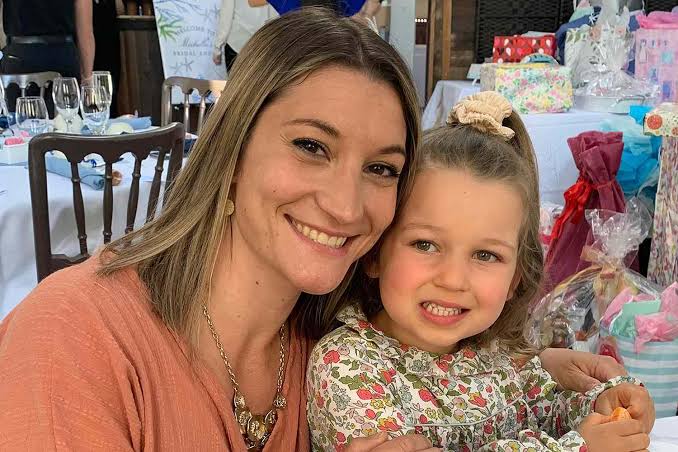
Clancy, 36, has pleaded not guilty to three counts of first-degree murder in connection with the January 2023 deaths of her children, Cora, 5, Dawson, 3, and Callan, 8 months.
The defense does not dispute that Clancy was responsible for the children’s deaths. Instead, her attorneys argue that she was experiencing severe postpartum psychosis and should not be considered criminally responsible because she was unable to understand or control her actions.
🧠 Defense Expert Says Clancy Was Psychotic
The defense recently rested its case after calling forensic psychiatrist Dr. Phillip Resnick, a nationally recognized expert in cases involving parents who harm their children.
Resnick testified that Clancy was experiencing psychosis and delusional thinking when the children were killed.

According to his assessment, Clancy believed she was protecting her children and preventing them from suffering.
His testimony was central to the defense argument that Clancy’s mental illness fundamentally changed her perception of reality.
The defense has also presented evidence about Clancy’s deteriorating mental health before the incident, including psychiatric treatment, medication changes and attempts to seek professional help.
⚖️ Prosecutors Offer a Very Different Explanation
Prosecutors have attempted to convince jurors that Clancy was seriously mentally ill but remained capable of understanding right from wrong.
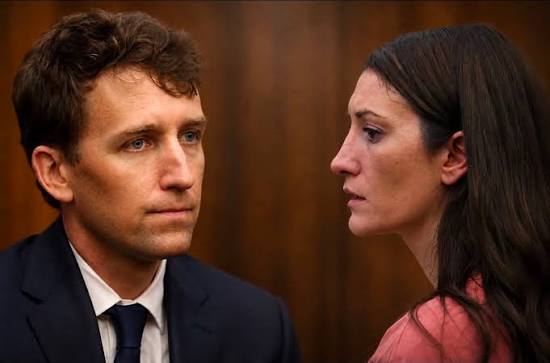
Their first rebuttal expert, psychiatrist Dr. Avram Mack, testified that Clancy suffered from a major depressive episode but that he found no convincing evidence of psychosis, mania or hypomania leading up to the killings.
Mack also testified that even the presence of psychosis would not automatically mean someone could not distinguish right from wrong.
His testimony directly challenged the central theory presented by the defense.
🔊 The Mysterious Voice Has Become a Key Issue
One of the most disputed elements of the case is Clancy’s account that she heard a male voice telling her to harm her children and then herself.
Defense witnesses have pointed to that alleged voice as evidence of a severe psychotic episode.
But prosecution experts have questioned the account.
Forensic psychiatrist Dr. Gregory Saathoff, the prosecution’s final rebuttal witness, testified that Clancy’s descriptions of the voice contained inconsistencies.
He also questioned the characteristics and timing of the alleged hallucination, arguing that it did not fit the typical pattern of a psychotic command hallucination.
🧩 Prosecutors Say Her Actions Showed Control
The prosecution has focused heavily on what Clancy did before, during and after the children’s deaths.
Dr. Kirk Heilbrun, a forensic psychologist who evaluated Clancy, testified that the individual steps she took that night reflected a series of decisions.
Prosecutors have used that testimony to argue that Clancy remained capable of making choices and understanding the consequences of those choices.
Heilbrun ultimately rejected the defense’s explanation that an acute psychotic episode had taken away her ability to control her actions.
🚨 Defense’s Mistrial Request Rejected
The trial encountered a dramatic courtroom dispute earlier this week when Heilbrun referred to Clancy’s Catholic background while discussing her mental state.
Defense attorney Kevin Reddington argued that the testimony amounted to prosecutorial misconduct and asked Judge William Sullivan to declare a mistrial.
The judge rejected the request.
Sullivan nevertheless sharply criticized the religious references and instructed jurors that the comments were inappropriate and should be disregarded.
He specifically told the jury that the witness’s understanding of Catholic teachings was irrelevant to their decision.
The incident became another major flashpoint in a trial already marked by intense disagreements over psychiatric evidence.
💔 The Children Were Found in the Family’s Basement
The case stems from January 24, 2023, when Clancy’s three children were found unresponsive in the basement of the family’s Duxbury home.
Prosecutors allege that Clancy strangled the children using exercise bands.
Her husband, Patrick Clancy, had left the house to pick up food and medicine.
When he returned, he found the children and Clancy, who had apparently attempted suicide by jumping from a second-story window.
Clancy survived but suffered severe injuries and remains paralyzed from the waist down.
🏥 Her Mental Health History Is Central to the Trial
The defense has spent weeks presenting evidence about Clancy’s mental-health struggles in the months leading up to January 2023.
Witnesses described her seeking help from multiple medical providers.
She also reportedly contacted a suicide hotline, visited an emergency department and voluntarily entered a psychiatric hospital.
The defense argues that those events demonstrate how severely her condition had deteriorated before the killings.
Prosecutors, however, say the evidence does not establish that she was experiencing postpartum psychosis at the time of the incident.
👩⚕️ Experts Agree She Was Mentally Ill — But Not on Responsibility
One of the most unusual aspects of the trial is that the psychiatric experts largely agree on one point:
Clancy was suffering from significant mental illness.
The major disagreement is what that illness meant for her criminal responsibility.
Defense experts say psychosis prevented her from understanding reality and controlling her actions.
Prosecution experts say she was severely depressed and had other psychiatric problems but retained awareness and control.
That distinction could ultimately determine the verdict.
⚖️ The Jury Faces a Difficult Legal Question
The jurors are not simply being asked whether Clancy was mentally ill.
They must determine whether her condition meets the legal standard required for a finding of lack of criminal responsibility.
The prosecution must convince the jury that Clancy was legally responsible for her actions.
The defense, meanwhile, is attempting to establish that her mental state was so severely impaired that she should not be held criminally responsible.
That makes the competing expert testimony especially important.
🔥 Trial Approaches Its Final Days
After more than five weeks of testimony, the case is now approaching closing arguments.
The prosecution’s final rebuttal witnesses have focused on challenging the postpartum-psychosis theory and Clancy’s account of the alleged voice.
Closing arguments are expected shortly, followed by jury deliberations.
The jury will then have to weigh weeks of testimony, medical records, expert evaluations and evidence surrounding the final hours before the children were found.
A Case That Has Captured National Attention
The Clancy trial has attracted enormous attention because it raises difficult questions about postpartum mental illness, psychiatric treatment and criminal responsibility.
Supporters of Clancy have argued that the case highlights how women experiencing severe mental-health problems can struggle to obtain appropriate treatment.
Prosecutors have emphasized that mental illness does not automatically eliminate criminal responsibility.
The case has also generated demonstrations outside the courthouse, with supporters wearing pink and calling attention to postpartum mental-health disorders.
What the Jury Will Ultimately Decide
The evidence has produced two dramatically different pictures of the same woman.
The defense portrays Clancy as a severely psychotic mother whose perception of reality had collapsed.
The prosecution portrays her as a seriously ill woman who nonetheless understood what she was doing and retained the ability to make decisions.
Now, after weeks of testimony, those competing interpretations will soon be placed in the hands of the jury.
The question is no longer simply what happened inside the Duxbury home — it is whether Lindsay Clancy’s mental state made her legally responsible for what happened there.
Sources: ABC News: ABC News — Prosecution expert says Clancy was criminally responsible