Supatra Sasuphan: The Thai Girl Who Turned a Rare Condition Into a Story of Courage and Self-Acceptance
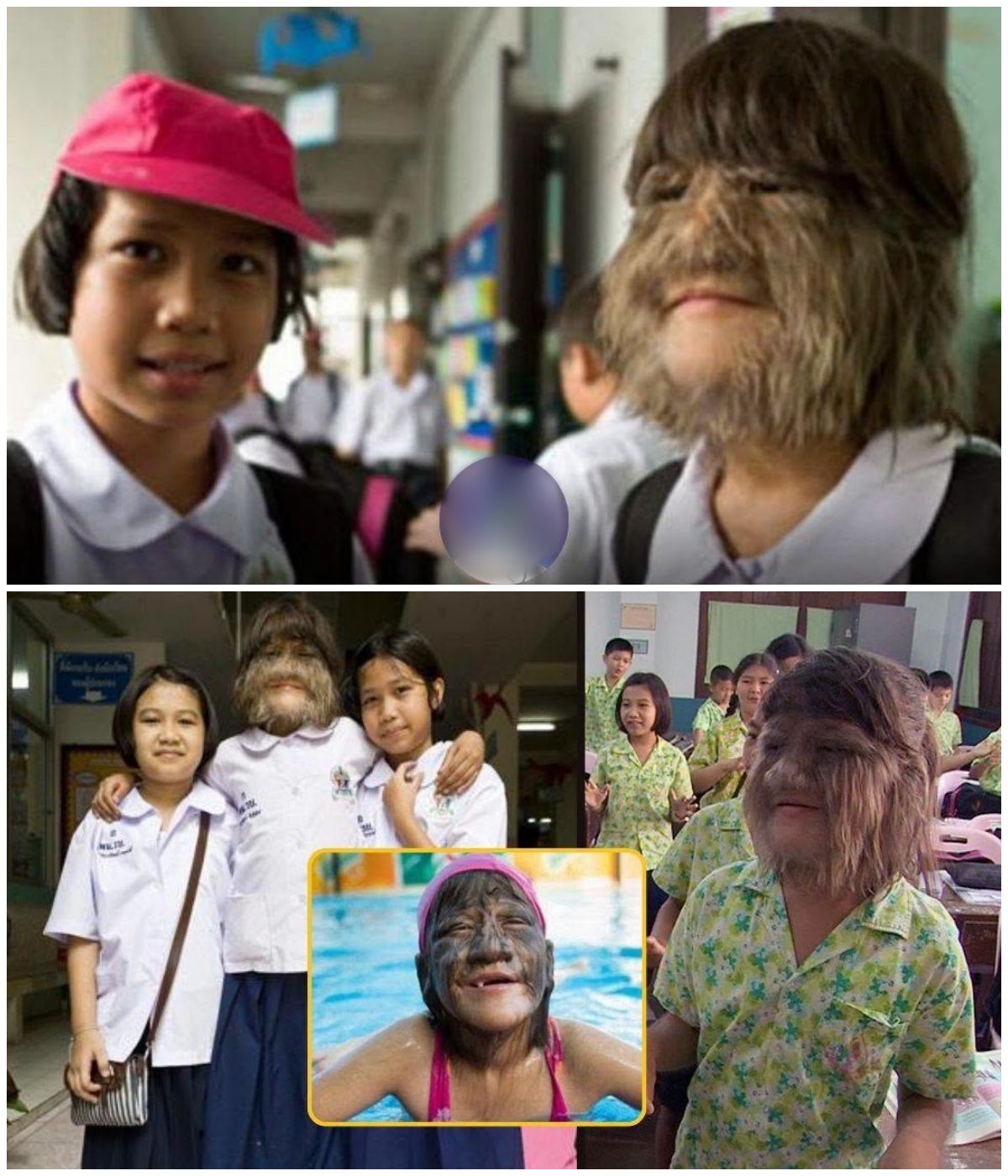
When Supatra Sasuphan was growing up in Bangkok, Thailand, she quickly learned that her appearance would attract attention. Born with an extremely rare form of congenital hypertrichosis, Supatra developed unusually dense hair across her face and much of her body. The condition became the defining feature of her childhood, but instead of allowing other people’s reactions to determine how she saw herself, she gradually transformed her story into one of confidence, resilience and self-acceptance. In 2010, when she was still a child, Supatra was recognized by Guinness World Records as the “hairiest teenager” according to the Ferriman-Gallwey method, bringing international attention to her unusual medical condition.
Supatra’s condition has commonly been described in media reports as Ambras syndrome, a rare form of congenital generalized hypertrichosis characterized by excessive hair growth, particularly on the face, ears and other parts of the body. Medical literature, however, points out that the term “Ambras syndrome” has historically been used inconsistently for several forms of congenital hypertrichosis, so doctors today may use more specific diagnostic terminology depending on the patient’s characteristics.
The condition is extraordinarily uncommon. A rare-disease database lists Ambras-type congenital generalized hypertrichosis as having a prevalence of fewer than one case per million people. It typically begins at birth and can involve extensive vellus-type hair growth over the face, ears and shoulders, while the palms, soles and mucous membranes are generally spared.
For Supatra, the physical difference became noticeable very early in life. Her thick hair covered much of her face and extended across other areas of her body. She was subjected to cruel nicknames from other children, including comparisons to animals and mythical “wolf” figures. In a world where children can be particularly sensitive to differences in appearance, such treatment could easily have left lasting emotional scars. Yet Supatra gradually developed an unusually positive attitude toward her condition.
Her family also explored medical options. Several attempts were made to reduce the excessive hair with laser treatments, but the results were unsuccessful and the hair continued to grow back. This experience illustrates one of the difficulties associated with congenital hypertrichosis: while hair-removal methods can temporarily reduce visible hair, they do not necessarily address the underlying biological cause of abnormal hair growth. Modern medical literature similarly emphasizes that hypertrichosis is a complex group of conditions with different genetic and clinical causes, meaning treatment must be tailored to the individual.
Despite the difficulties, Supatra refused to let her condition become the only thing people saw in her. As a schoolgirl, she enjoyed spending time with friends, swimming, dancing and studying like other children. After receiving the Guinness recognition, she even said that being included in the record book made her happy and helped change the way some classmates viewed her. Reports at the time described her as becoming one of the more popular students at her school.
Her attitude was perhaps best captured by the way she spoke about her appearance. Rather than constantly seeing her hair as something that made her less worthy than other people, she came to regard it as part of what made her unique. That change in perspective did not mean the condition suddenly became easy. She still had to deal with unwanted attention, grooming challenges and the possibility of hurtful comments. But she increasingly refused to define herself through other people’s judgments.
Supatra’s story also helped draw attention to the difference between hypertrichosis and hirsutism, two conditions that are sometimes confused. Hypertrichosis refers to excessive hair growth in areas that are not necessarily related to androgen-dependent patterns, while hirsutism generally refers to excessive terminal hair growth in women in a male-pattern distribution. Congenital generalized hypertrichosis can have a genetic basis and may occur as an isolated condition or alongside other abnormalities.
Years after she first became internationally known, Supatra’s life continued to change. In 2018, photographs began circulating showing her with her facial hair shaved, a personal decision that demonstrated another aspect of her relationship with her condition. The change did not mean that the underlying disorder had disappeared; rather, shaving became a way for her to manage her appearance on her own terms. Later reports also described her as having married and living a considerably more private life away from the intense media attention of her childhood.
What makes Supatra’s story particularly powerful is that her journey was never simply about hair. It was about the way society responds to people who look different. When she was younger, strangers and classmates often focused on the unusual feature that covered her face. Over time, however, Supatra became known for something very different: her confidence, humor and willingness to live openly despite a condition she never chose.
Her experience also reflects a broader issue faced by people with visible medical conditions. A recent medical review of hypertrichosis notes that excessive hair growth can have significant psychological and social consequences, including distress and stigmatization, particularly among children and adolescents.
Supatra’s response was not to pretend that the condition did not exist. Instead, she learned to live with it. She continued her education, maintained friendships and eventually built an adult life beyond the headlines. Her story became a reminder that acceptance does not necessarily mean loving every aspect of a difficult situation. Sometimes, it means refusing to allow that situation to determine your sense of worth.
The girl once called a “wolf child” became a symbol of something far more human: the ability to remain joyful when the world insists on staring. Her Guinness World Record may have made Supatra famous, but it was her attitude toward herself that made her story memorable.
Today, her journey stands as an example of resilience in the face of a rare genetic condition. Medical science continues to study the different forms of congenital hypertrichosis, while Supatra’s life demonstrates another lesson that cannot be measured in a laboratory: physical differences may shape someone’s experience, but they do not define who that person is.
For Supatra Sasuphan, the most important record was never the one written in a Guinness book. It was learning to look beyond the judgments of others and recognize her own value.
Sources
- Guinness World Records
- National Organization for Rare Disorders (NORD)
- Orphanet
- PubMed / Clinical Genetics
- European Journal of Dermatology
- Italian Journal of Pediatrics
- JAMA Dermatology
- Pattaya Mail
- 20minutos
- Antena 3