🚨 UPDATE: “Gentleman’s Agreement” Comes Under Fire as Karmelo Anthony’s Appeal Takes a Major Turn
McKINNEY, TEXAS — A private agreement between prosecutors and defense attorneys that was intended to keep inflammatory information out of Karmelo Anthony’s murder trial has become a central issue in his fight to overturn his conviction.
The agreement, described in court filings as a “gentleman’s agreement,” was designed to keep potentially damaging information about both Anthony and 17-year-old Austin Metcalf away from the jury.
Anthony’s new attorneys later argued that the arrangement ultimately affected his ability to present his defense — particularly his decision about whether to testify.
But the legal battle has since moved forward, and a judge has now rejected Anthony’s request for a new trial.
⚖️ The Private Agreement Became a Key Appellate Issue
According to court filings, attorneys on both sides agreed before Anthony’s June murder trial that they would avoid introducing certain information about the personal histories and alleged behavior of Anthony and Metcalf.
The purpose was to keep the proceeding focused on the confrontation that ended with Metcalf’s death rather than allowing the case to become dominated by accusations about either teenager’s past.
The agreement was especially significant because the case had already generated intense national attention, racial controversy and threats against people connected to the proceedings.
Anthony’s new legal team later argued that the arrangement became a problem when disagreements emerged over what could actually be discussed in court.
🗣️ Defense Says Anthony Lost Confidence in the Trial Strategy
One of Anthony’s original attorneys, Toby Shook, testified during the new-trial hearing that the defense had intended for Anthony to take the witness stand.
Anthony ultimately chose not to testify.
His attorneys argued that prosecutors’ position concerning the agreement contributed to that decision.
According to the defense, Anthony became concerned that if he testified, the prosecution could introduce damaging information that had previously been excluded.
The defense argued that this left Anthony in an unfair position and prevented him from fully explaining his version of the confrontation.
The prosecution disputed that interpretation.
Assistant District Attorney Bill Wirskye testified that there was never an agreement preventing Anthony from testifying.
He argued that the restrictions were designed to protect the integrity of a trial that had attracted enormous public attention.
🔎 What the Jury Never Heard
The recent proceedings revealed that prosecutors possessed information about Anthony that had not been introduced during the original trial.
That included alleged threatening messages, accusations concerning an ex-girlfriend and other disturbing material.
Prosecutors later argued that the information could have provided additional context about Anthony’s behavior.
But it was kept from the original jury under the agreement.
At the same time, potentially damaging information concerning Metcalf was also excluded.
That material reportedly included allegations involving racist language, bullying and other incidents from Metcalf’s past.
The agreement therefore prevented jurors from hearing a much broader and more contentious picture of both teenagers.
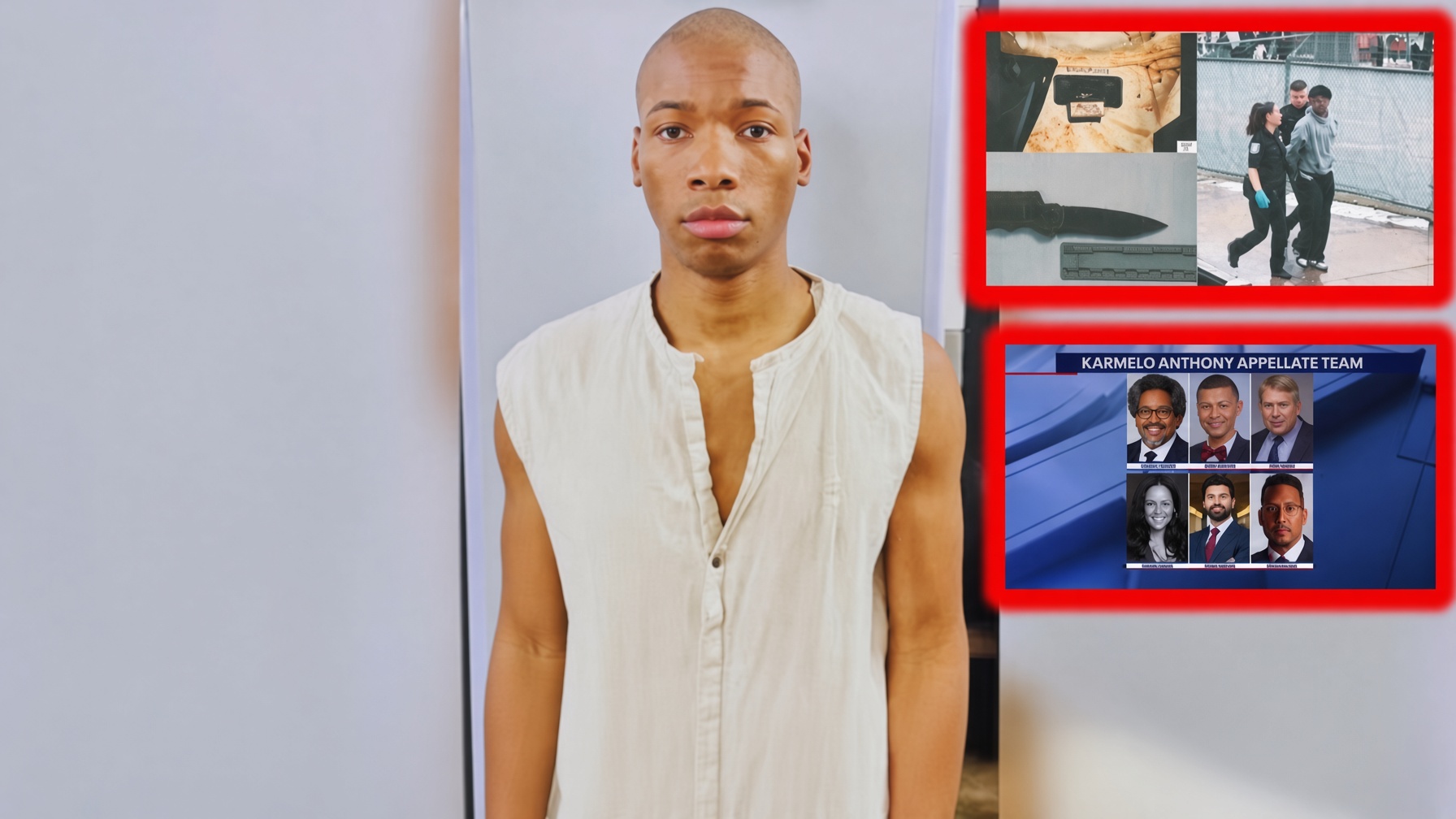
🎯 The Original Trial Focused on What Happened at the Track Meet
The murder case arose from an April 2, 2025 confrontation at a high school track meet in Frisco.
Anthony was near a tent being used by members of Metcalf’s team when Metcalf approached him.
A confrontation followed.
Anthony acknowledged stabbing Metcalf but argued that he acted in self-defense.
Metcalf, 17, suffered a fatal stab wound.
The jury rejected Anthony’s self-defense claim and convicted him of murder.
He was sentenced to 35 years in prison in June 2026.

👨⚖️ Original Judge Was Removed From the Appeal
The retrial fight also led to a significant judicial change.
Anthony’s defense successfully sought the recusal of Judge John Roach Jr., who had presided over the original trial.
The defense argued that comments Roach made after the conviction created questions about his impartiality during the post-trial process.
A different judge, retired Kaufman County District Judge Michael Chitty, was assigned to consider the motion for a new trial.
That hearing became the setting where the private agreement and previously undisclosed background information were examined in detail.
🚨 Judge Ultimately Rejects New Trial
After a two-day hearing, Judge Chitty rejected Anthony’s request for a new trial on August 22, 2026.
His written decision was brief, stating that he had reviewed the motion, record, evidence, arguments, briefs and applicable law before deciding that the motion should be denied.
The ruling means the original murder conviction remains intact.
Anthony’s 35-year sentence also remains in effect.
📢 Defense Says the Legal Fight Is Not Over
Anthony’s attorneys have made clear that they intend to continue challenging the conviction.
Attorney Russell Wilson said the defense disagrees with Judge Chitty’s ruling and believes the issues raised in the motion deserve further appellate review.
The defense plans to continue the appeal before the Fifth Court of Appeals in Dallas.
This means the recent ruling is not necessarily the final word on Anthony’s legal battle.
The appellate court could eventually review questions surrounding the original trial, including the issues raised about the private agreement and Anthony’s decision not to testify.
The Prosecutor Stands by the Original Verdict
Collin County District Attorney Greg Willis has defended the original proceedings and said prosecutors remain confident in the jury’s verdict.
Following the denial of the new-trial request, Willis emphasized that defendants have the right to appeal while expressing sympathy for the Metcalf family.
The prosecution has maintained that the unusual restrictions surrounding the original trial were justified by the extraordinary public pressure surrounding the case.
Why the “Gentleman’s Agreement” Matters
The agreement itself did not determine whether Anthony was guilty.
Its significance lies in how it may have shaped the trial.
By keeping the teenagers’ backgrounds largely outside the courtroom, the jury was asked to evaluate the confrontation primarily through the evidence surrounding the track-meet encounter.
Anthony’s new attorneys later argued that this limitation had consequences because it affected whether their client could take the stand.
The prosecution maintains that the arrangement protected both sides and prevented the trial from becoming a battle over inflammatory allegations unrelated to the central confrontation.
That disagreement is now part of the appellate record.
A Case Still Dividing Public Opinion
The Anthony-Metcalf case has continued to generate intense public reaction.
Anthony is Black and Metcalf was white, and racial issues became intertwined with public discussion of the case even though prosecutors and defense attorneys maintained that the legal question was whether the stabbing was murder or lawful self-defense.
The trial also produced significant harassment and threats directed toward people connected to both families.
Those circumstances were among the reasons prosecutors said extraordinary precautions were necessary during the original proceedings.
New Evidence, Same Verdict
The recent hearing exposed information that the original jury never considered.
But that new information did not produce a new verdict.
Instead, Judge Chitty concluded that the defense had not established a sufficient legal basis to overturn the conviction.
Anthony therefore remains a convicted murderer under Texas law while his attorneys pursue the next stage of the appeal.
The Next Battle Is in the Appeals Court
Anthony’s case has now moved beyond the question of whether Judge Chitty would order a retrial.
The defense says substantial constitutional and procedural issues remain.
The prosecution says the original jury reached a valid verdict after hearing the evidence that was properly admitted.
The Fifth Court of Appeals will eventually have the opportunity to consider the arguments presented by Anthony’s legal team.
That process could take considerable time.
For now, however, the original conviction stands.
A private agreement designed to keep the most inflammatory evidence out of Karmelo Anthony’s murder trial became the centerpiece of his attempt to obtain a second trial. The judge rejected that effort — but Anthony’s attorneys are not walking away.
Sources: Associated Press — Texas judge denies Karmelo Anthony’s new-trial request