A Football in Her Mouth: Grace, the Africa Mercy, and Four Hours That Opened an Airway
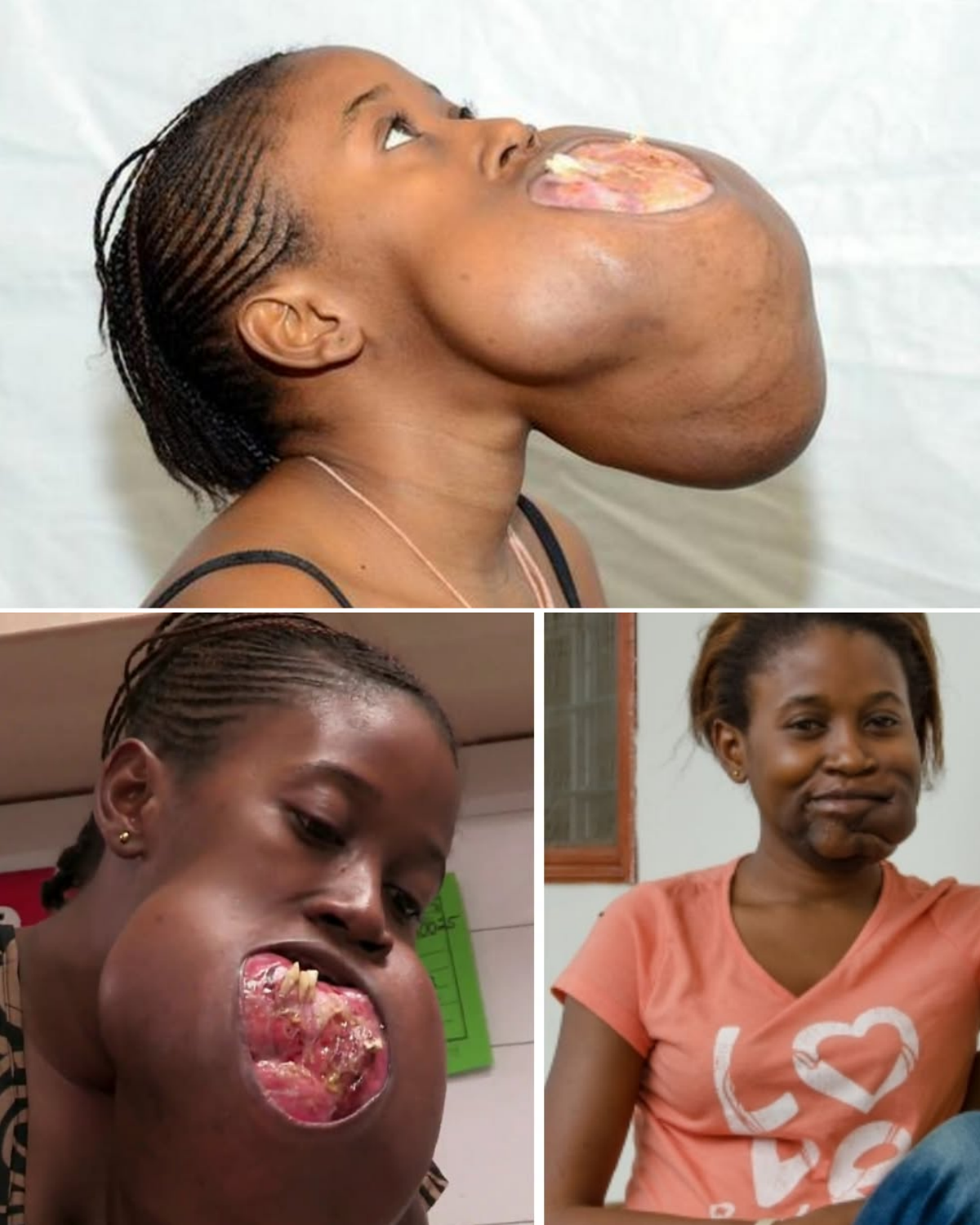
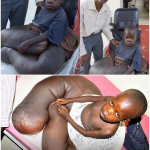
For nearly ten years the swelling in Grace’s mouth kept growing. By 17 it was the size of a football, 2.2 kilograms of tumor rising from the center of her lower jaw — cells that normally make tooth enamel gone wrong. It filled her face from the inside and the outside. Doctors said if it kept expanding she would suffocate. She could still speak and eat. She stayed indoors. Local hospitals in Congo did nothing she could use.
A pastor in a neighboring country saw her, posted her story, and a reader named Mercy Ships. The Africa Mercy, a converted rail ferry turned hospital, was in port. Grace was one of the first patients up the gangway. Volunteer maxillofacial surgeon Dr. Gary Parker and his team operated for about four hours. They opened the neck, separated tumor from remaining jaw, took the mass, several teeth and most of the mandible, then spanned the gap with titanium plates. A later stage added a prosthetic jaw. The work was free.
Parker’s forecast was functional: when she healed she could have artificial teeth, chew, and live a normal life in appearance and use. Grace said she wanted to go back to school and, one day, work for Mercy Ships.
Ameloblastoma-type and similar odontogenic tumors are common on Mercy Ships’ maxillofacial lists because they grow for years where there is no surgeon. They are usually benign and locally destructive. The ship’s job is not mystery medicine. It is resection plus reconstruction for people who would otherwise die of a blocked airway in a country that cannot pay for titanium. Grace’s after photographs show a smaller, scarred face and a smile that was not possible when her mouth was full of tumor. That is the entire point of the four hours.
Sources
- Mercy Ships / Mercy Ships New Zealand, “Grace, Congo 2013.”
- Metro, The Mirror, Daily Express, October 2014 (Barcroft images; comments by Dr. Gary Parker).
- HuffPost UK report on the Africa Mercy operation.