FOUR LEGS, TWO SPINES, ONE CHILD: DOMINIQUE’S EXTRAORDINARY JOURNEY TO A NEW LIFE
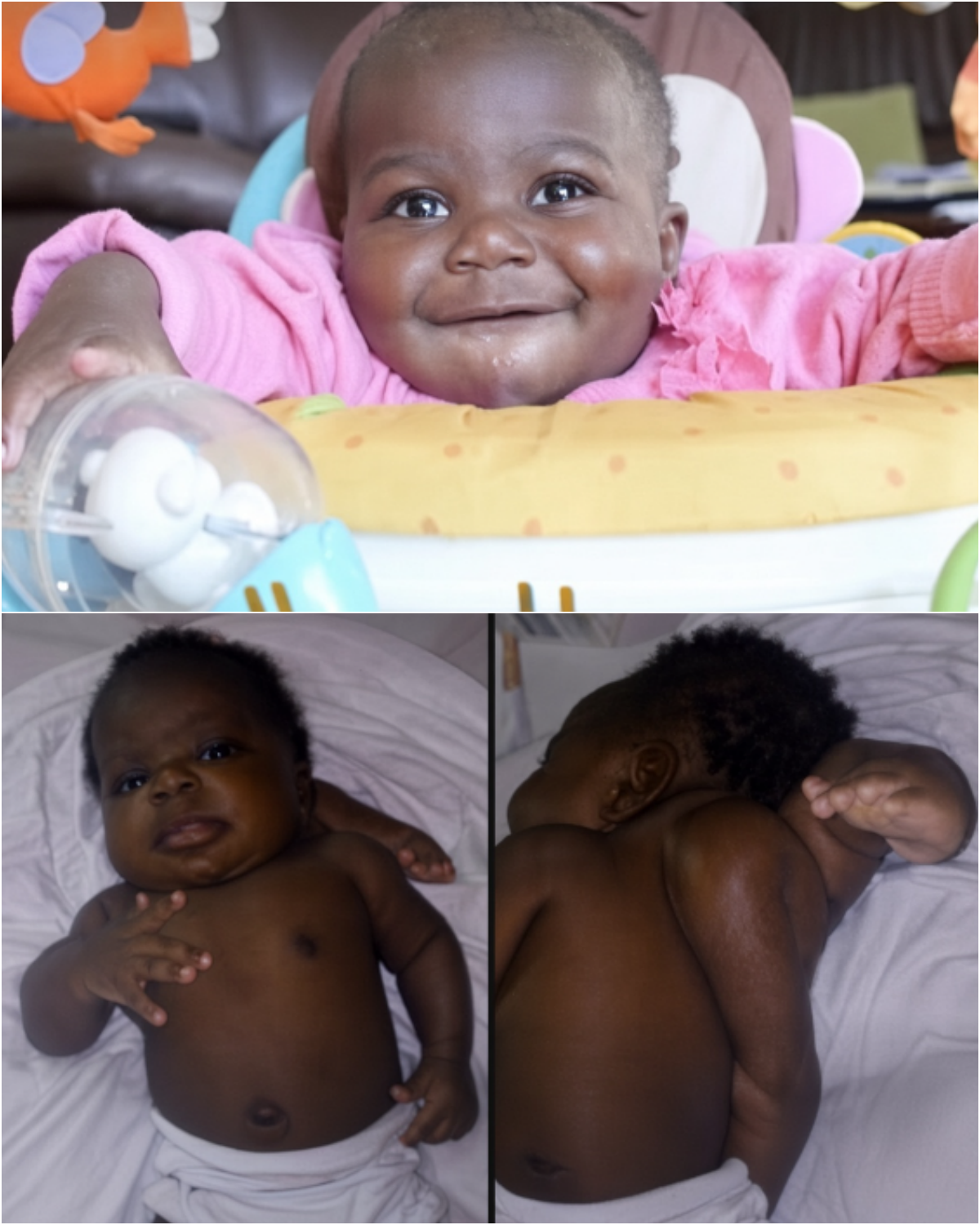
When Dominique was born in Côte d’Ivoire, doctors discovered an exceptionally rare condition that made her case unlike almost anything they had seen before.
A parasitic twin had developed incompletely and was attached to Dominique’s back, with a pelvis, bladder, and two moving legs extending from the area around her neck and upper spine. Dominique also had two closely connected spinal columns.
The undeveloped twin could not survive independently and depended on Dominique’s circulation. Without complex surgery, doctors believed she could face serious complications, including spinal cord problems, paralysis, and a shortened life.
Because local medical facilities did not have the resources needed for such a complicated operation, Children’s Medical Missions West helped arrange Dominique’s transfer to Advocate Children’s Hospital in Park Ridge, Illinois.
Pediatric neurosurgeon Dr. John R. Ruge, who had previously worked with the organization, brought together a multidisciplinary team that included specialists in neurosurgery, orthopedic spine surgery, and plastic reconstruction. More than 50 medical professionals were involved in planning and supporting the procedure.
Before surgery, the team created a detailed 3-D model using Dominique’s medical scans. They carefully studied the shared blood vessels, nerves, and spinal structures to determine how the extra body parts could be separated safely.
On March 8, 2017, when Dominique was just 10 months old, surgeons performed the six-hour operation. The procedure successfully separated the parasitic twin while preserving Dominique’s two spinal columns. Doctors also reconstructed the affected area of her back.
Remarkably, Dominique was able to sit up the following day. She was discharged from the hospital five days after surgery and remained in the Chicago area with her host family, Nancy and Tim Swabb, during her recovery.
Doctors expected her to continue developing and eventually walk normally.
Several weeks later, Dominique returned to Côte d’Ivoire. When she arrived in Abidjan, she was welcomed by her parents and sisters—a deeply emotional reunion after months of medical treatment far from home.
Her case attracted international attention not only because of the extraordinary anatomy involved, but also because of the cooperation required to give her access to specialized care.
From an international medical charity and a hospital team to volunteer support and a host family, many people played a role in Dominique’s journey.
Parasitic twinning occurs during embryonic development and is extraordinarily rare. When separation is medically possible, treatment requires highly individualized planning based on the anatomy of each case.
For Dominique, that carefully coordinated effort gave her the opportunity to return home and begin the next chapter of her life.
Sources: Advocate Children’s Hospital, “Dominique’s Story”; CNN, reports on Dominique’s surgery and reunion; Chicago Tribune; Reuters.